

Gold Giltwood Armchairs
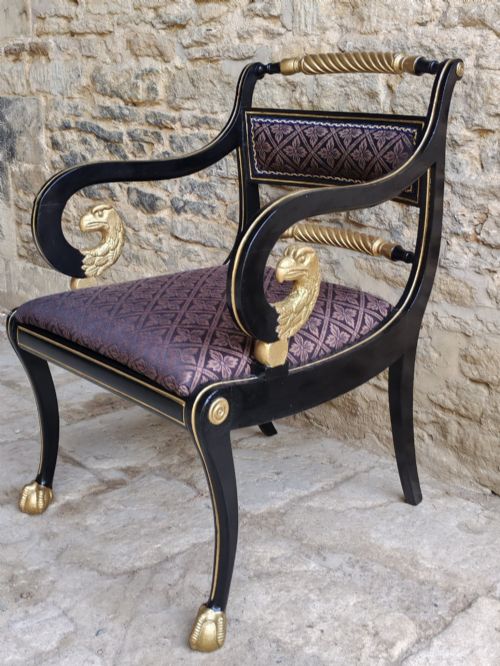
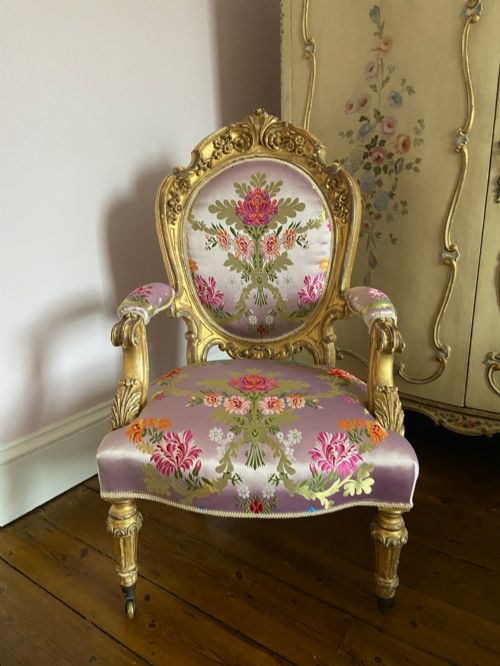
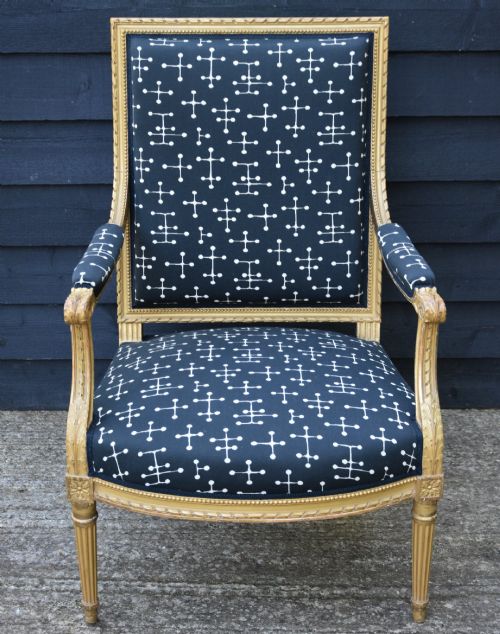
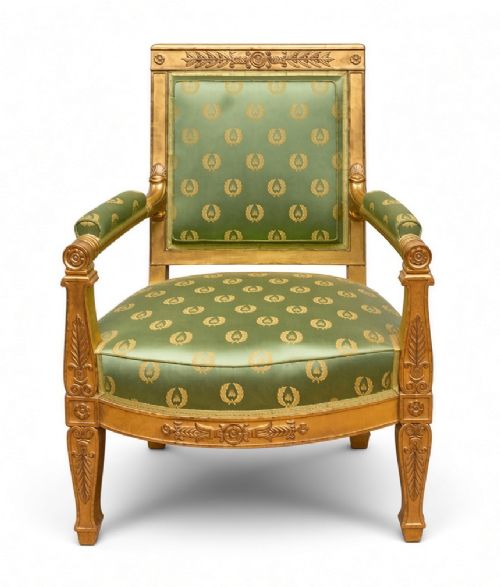
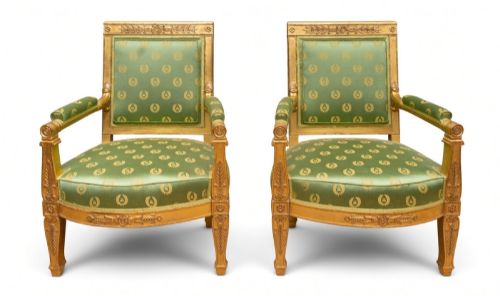
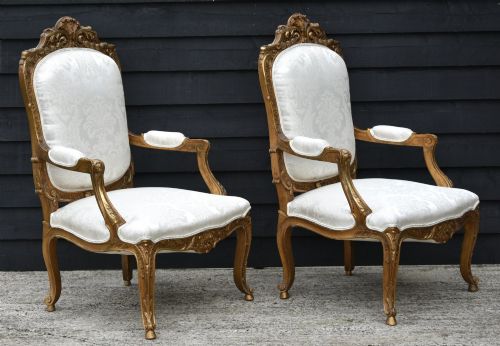
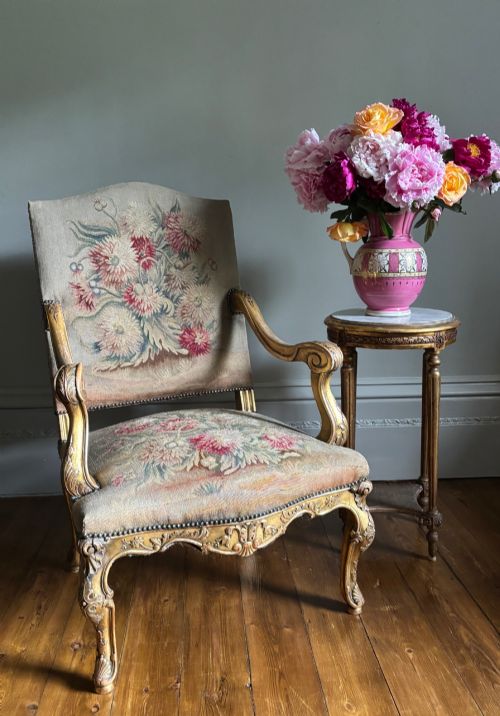
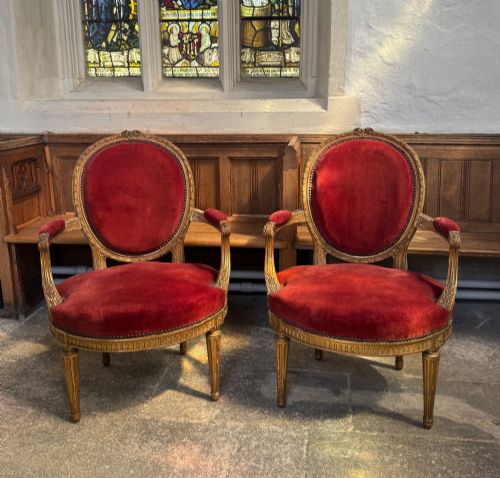
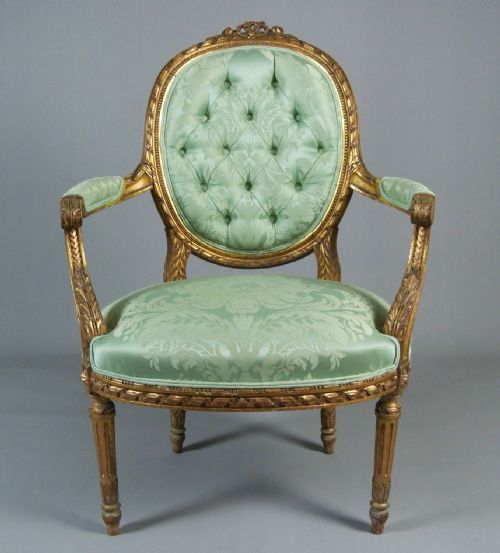
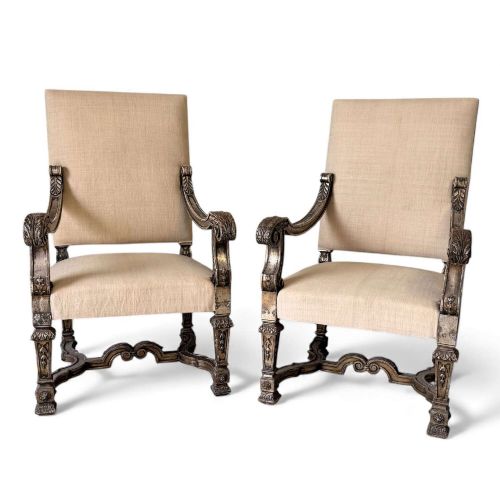
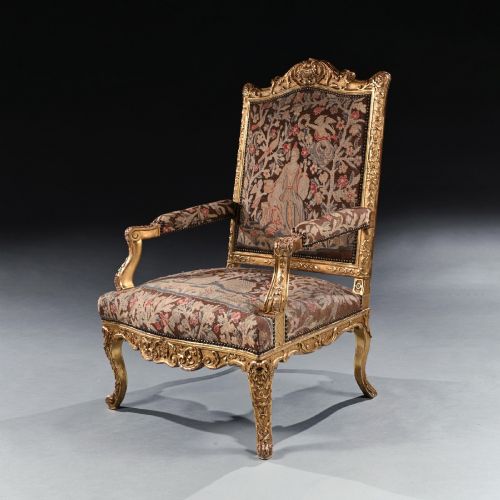
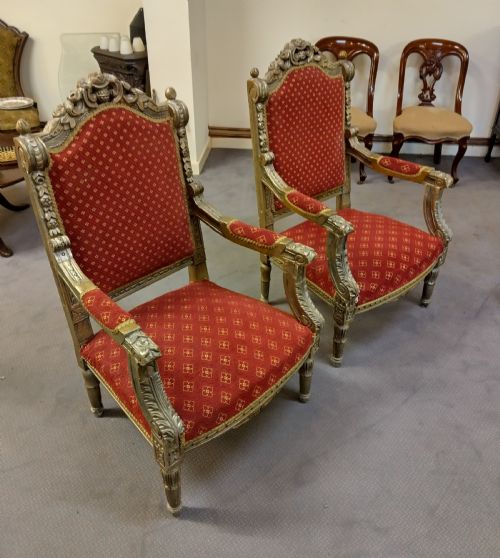
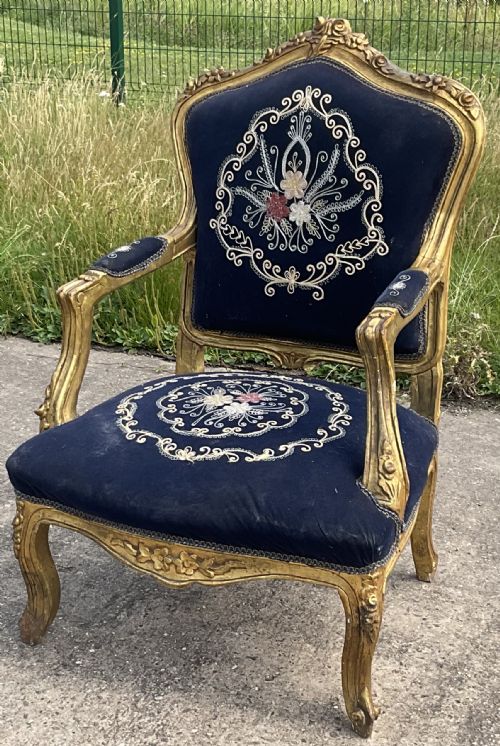
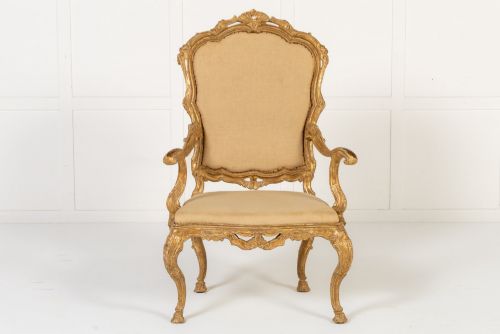
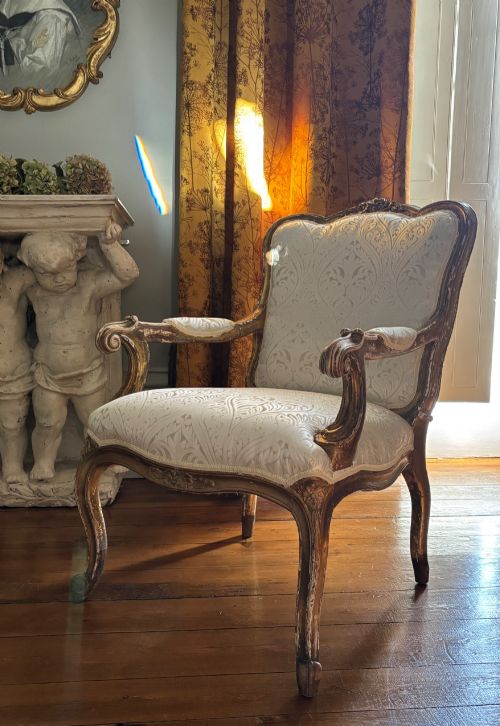
These gold giltwood armchairs bring gilded French and English seating into a room with carved frames and upholstered seats.
Gold Giltwood Armchairs
Gold giltwood armchairs span the eighteenth to the twentieth centuries, drawing on French Chateau, Louis XVI, and Rococo Revival styles. Buyers encounter pieces ranging from single library and salon chairs to large pairs and matched sets intended for formal drawing rooms.
The selection includes open armchairs, bergères, fauteuils, and throne chairs dating across the nineteenth century and earlier. Many examples display the influence of French design alongside English Regency and Victorian interpretations.
Materials and construction
Makers carved frames primarily from beech, walnut, and timber before applying a gold gilt finish over the wood. Detail work relies on hand-carved ornamentation across the arms, rails, and crests.
Upholstery incorporates fabric, silk, velvet, and silk damask, often fastened around padded seats, backs, and armrests.
One suite provides forty-two matching chairs, ensuring nobody in the grand dining room sits on an unmatched seat.
Assessing quality
The depth and crispness of the wood carving distinguish superior frames, where details remain sharp beneath the gilding rather than appearing softened. The proportion of the arms and the sweep of the legs dictate the balance of the silhouette.
Original or period-appropriate gilding displays an authentic patina over the base materials. The choice and execution of the textile upholstery, whether silk or velvet, contribute to the overall integrity of the piece.
Thomas Chippendale·Jacob Desmalter·Holland and Sons·Blaise Maucuy
The Gold Giltwood Armchairs Glossary
- Giltwood
- Wood coated with gold leaf or a gold-coloured finish. This surface layer gives the carved frame its characteristic metallic sheen.
- Fauteuil
- An open-arm armchair originating in France, typically featuring an exposed wooden frame. The arms usually have upholstered pads for comfort.
- Bergère
- An enclosed armchair with upholstered sides set into the wooden frame. These chairs often include a loose cushion on the seat.
- Rococo Revival
- A nineteenth-century design movement mimicking the ornate, asymmetrical scrolls and natural motifs of the eighteenth century. Frames from this period display complex carved floral and C-scroll elements.
Gold Giltwood Armchairs: Frequently Asked Questions
How do I identify a Louis XVI style armchair?
Louis XVI style pieces depart from curved Rococo shapes by introducing neoclassical straight lines and geometric symmetry. Look for fluted tapered legs and carved oval or square backs.
Frames in this style often incorporate classical motifs such as acanthus leaves, bead reels, and ribbons carved directly into the giltwood.
Were these chairs meant for dining or lounging?
Many examples function as salon or library chairs designed for sitting upright during conversation or reading. Larger scale throne chairs and sets of matching seats were built for formal reception spaces.
Dining chair variants also appear, scaled specifically for placement around a dining table while retaining the same gilded finish.
How do I care for giltwood frames?
Giltwood requires gentle maintenance to protect the delicate gold leaf surface from abrasion and moisture. Dust the carved wooden areas regularly with a soft, dry brush.
Keep the chairs away from direct sunlight and heat sources to prevent the wood underneath from drying and the finish from flaking.