





Long Wool Floor Runner
When you search for a long wool floor runner, you step into a world of antique Persian and tribal carpets designed for hallways and galleries.
Long Wool Floor Runner
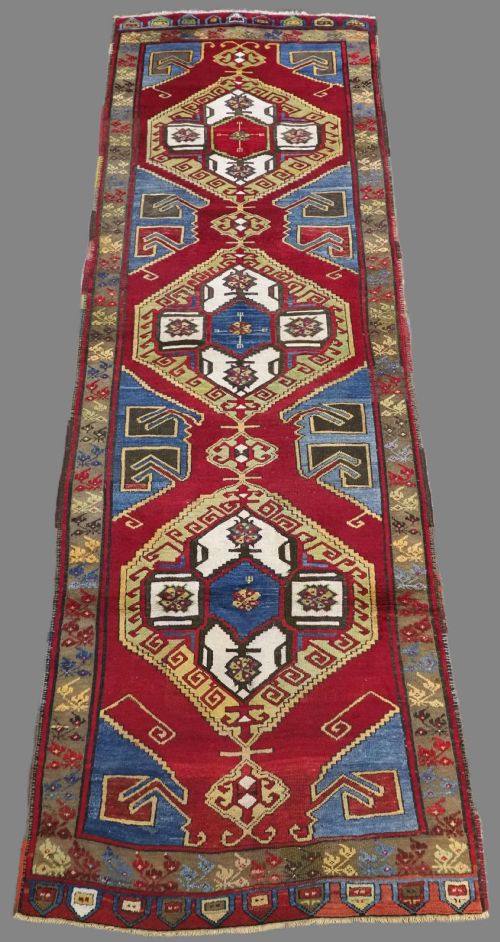
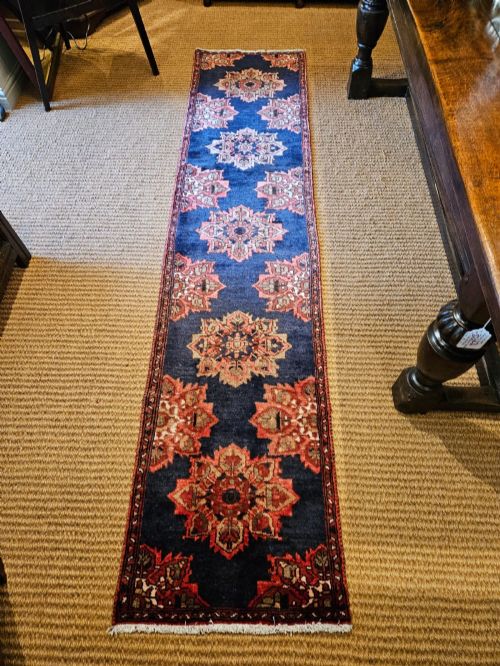
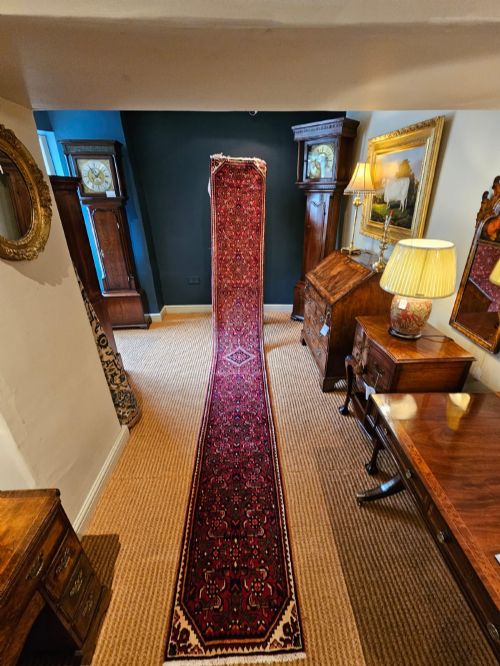
A long wool floor runner is typically a narrow, elongated antique carpet meant for corridors, halls, and long rooms. These pieces originate largely from Persian tribal traditions, Caucasian weaving centres, and Turkish workshops, dating from the mid-nineteenth century into the early twentieth century.
The versions you meet most often on this page span styles such as Heriz, Bidjar, Kurdish, and Ushak. They measure significantly longer than they are wide, serving practical paths while bringing rich, traditional patterns to long spaces.
How They Were Made
These runners rely on natural wool and hand-spun wool fibres, sometimes paired with cotton foundations. Weavers tied dense piles by hand, creating resilient surfaces designed to withstand heavy corridor traffic over generations.
Dyers utilised natural and plant-based dyes to achieve deep navy blues, reds, and mellow background tones. The manual spinning and knotting techniques result in varied pile depths and distinct textural character across each piece.
Listings span production dates from the 1850s to the 1930s, featuring wool, cotton, and hand-spun wool across Persian, Caucasian, and Anatolian traditions.
What Varies in Quality
The distinction between tiers of runners rests upon the tightness of the knotting and the crispness of the design execution. Tighter foundations, such as those found in Bidjar or Heriz examples, hold their structural integrity firmly through decades of use.
Material quality shows in the choice of hand-spun wool and the stability of the dye work. Superior pieces display harmonious colour saturation and balanced geometric or floral proportions that reflect skilled regional weaving.
The Long Wool Floor Runner Glossary
- Kelleh
- A large rug format, longer than it is wide but broader than a standard corridor runner. It often serves grand floor spaces rather than narrow halls.
- Soumak
- A flat-weaving technique that wraps weft threads around the warp rather than knotting them, producing a durable, tapestry-like structure.
- Palas
- A flat-woven carpet or kilim type originating from tribal traditions. It lacks a raised pile and offers a crisp, geometric surface.
- Warp
- The vertical threads stretched on the loom that form the structural skeleton of the rug. Visible fringe ends usually emerge from these yarns.
Long Wool Floor Runner: Frequently Asked Questions
Where do these long runners fit best at home?
These runners suit long hallways, narrow corridors, and galleries where length defines the floor plan. Their proportions guide movement through a house while adding warmth to wooden floorboards.
Position them away from direct moisture, using a quality underlay to keep the wool stable on slick surfaces.
How do I care for antique wool runners?
Gentle, regular suction vacuuming without a rotating brush roll protects the hand-spun wool pile. Professional cleaning suited for antique textiles keeps the natural fibres resilient.
Rotate the runner occasionally to ensure even wear across the length from foot traffic.
What defines a tribal runner design?
Tribal designs feature geometric motifs, stylized animals, and repeated medallions woven from memory rather than rigid blueprints. These patterns carry the distinct regional traditions of Kurdish, Caucasian, or Afshar makers.
The asymmetry in tribal work reveals the individual hand of the weaver.
How do I identify a Heriz runner?
Heriz runners display bold geometric medallions, angular corner spandrels, and robust geometric vines. Their heavy wool foundation gives them a sturdy, resilient handle.
The palette typically centres on deep terracotta, navy, and ivory tones.