


Vintage Qashqai Wool Rug
When you search for a vintage qashqai wool rug, you are exploring tribal floor coverings woven by nomadic confederacies in south-west Persia.
Vintage Qashqai Wool Rug
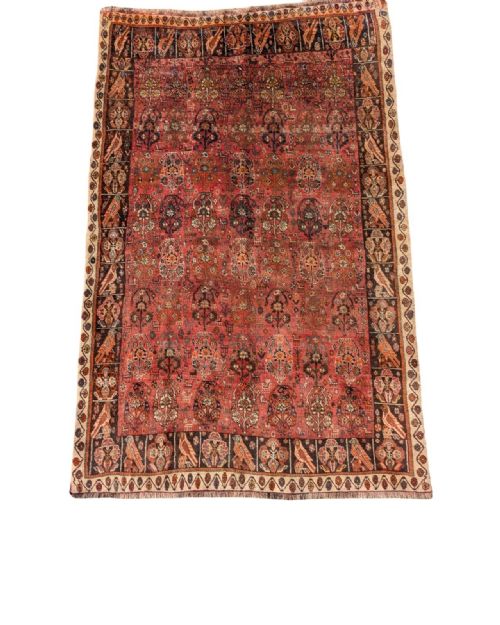
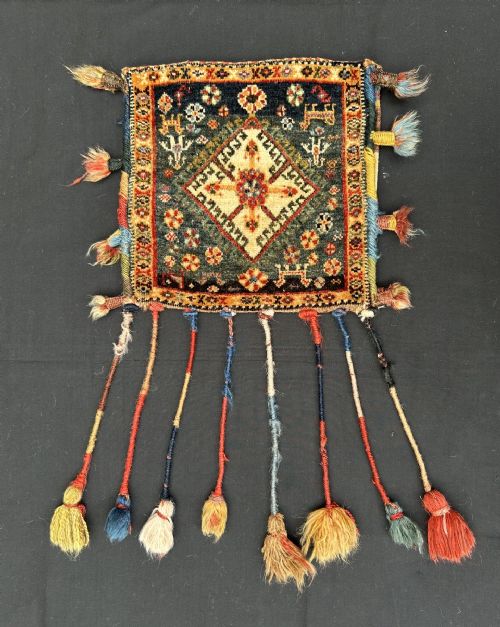
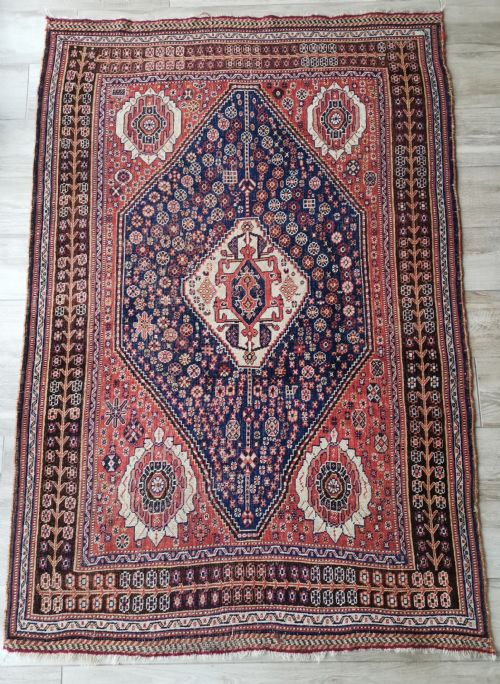
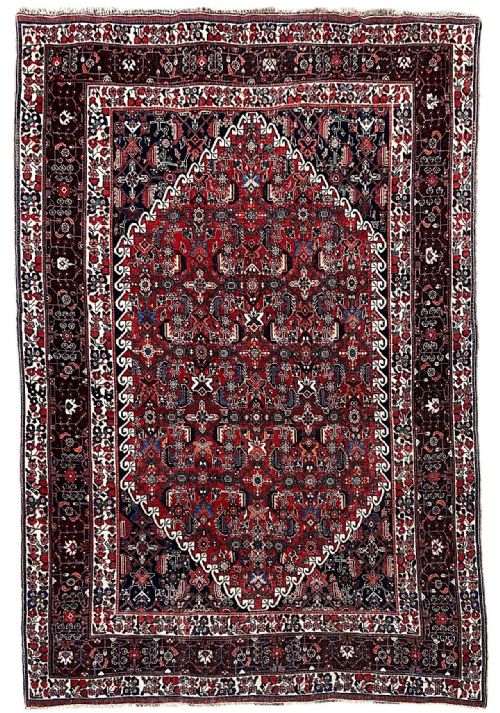
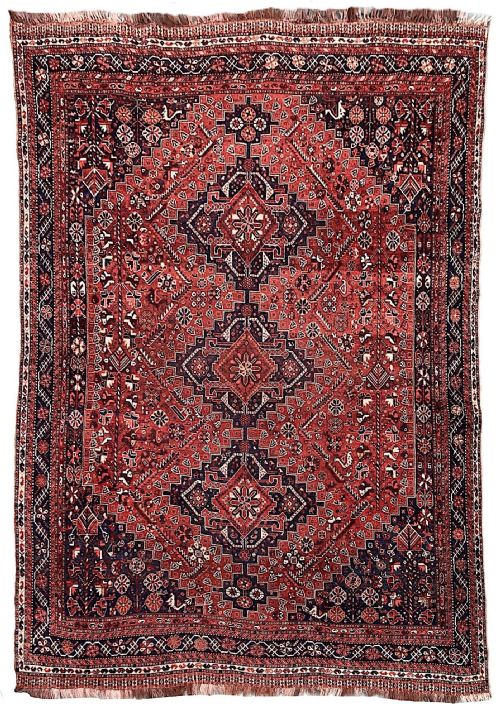
A vintage qashqai wool rug represents the nomadic textile heritage of the Fars province in south-west Persia. These pieces range from full-piled carpets and area rugs to flatwoven kilims, saddle bags, and baby cradles.
The versions most commonly met on this page span the late nineteenth century through to the early decades of the twentieth century. They encompass specific sub-tribal groups such as the Bolvardi, Kashkuli, and Darrehshuri, alongside related Luri and Khamseh tribal weaving traditions.
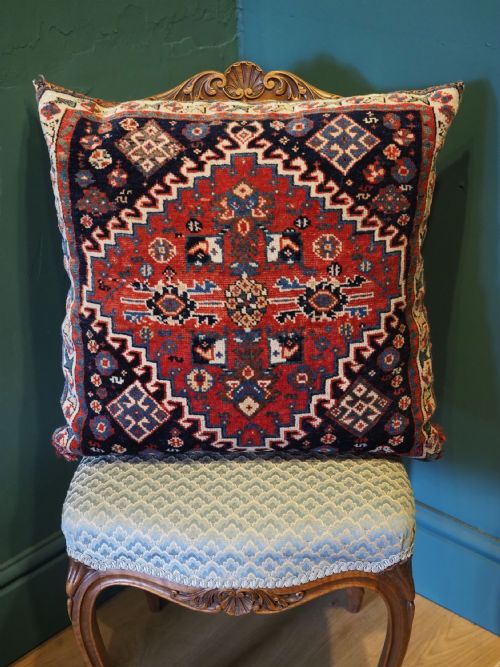
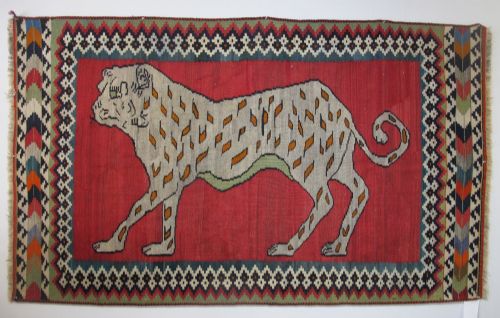
Makers utilised traditional formats including geometric medallions, tree of life motifs, and animal depictions like lions. Beyond standard floor rugs, the selection includes smaller utility items such as vanity bags and cushions.
How they were made
Weavers constructed these textiles using hand-spun wool for the pile and structure, frequently paired with cotton foundations. Natural dyes provided the characteristic palette found across tribal rugs and flatweaves.
Nomadic workshops employed traditional handweaving techniques, producing both pile carpets and flatwoven kilims. Artisans incorporated supplementary materials such as leather and wood in functional items like saddle bags and cradles.
Listings feature items dated from the nineteenth century up to the 1930s, constructed from wool, cotton, and natural dyes.
What varies in quality
Quality in these textiles depends heavily on the fineness of the weave and the handling of the wool. Hand-spun wool displaying deep saturation from natural dyes elevates the visual depth of a piece.
The complexity and execution of tribal motifs, such as intricate medallions or pictorial elements like lions, distinguish standard village weaving from finer nomadic examples.
The Vintage Qashqai Wool Rug Glossary
- Kilim
- A flatwoven textile produced without a pile. These pieces rely on interlocking warp and weft threads to create sharp geometric patterns.
- Gabbeh
- A type of tribal rug characterised by a thicker, longer pile and sparse, open field designs. They often display minimalist abstract layouts created by nomadic weavers.
- Kelleh
- A long, rectangular format of carpet traditionally suited to specific room proportions. These formats offer elongated fields for repeating medallion or tree of life designs.
- Tayefeh
- A sub-tribe or clan division within the broader Qashqa'i confederacy. Identifying these groupings helps localise the specific aesthetic of a woven piece.
- Warp
- The stationary vertical threads stretched across the loom upon which the rug is built. The visibility and tension of these foundation threads vary by region.
Vintage Qashqai Wool Rug: Frequently Asked Questions
What is a tribal kilim?
A tribal kilim is a flatwoven textile created without a pile by tightly interweaving warp and weft threads.
Nomads utilised these lightweight pieces as floor coverings, blankets, and storage containers.
How do I care for wool rugs?
Maintain these wool textiles through regular gentle vacuuming without a rotating brush bar to protect the pile.
Professional cleaning tailored to natural fibres and natural dyes preserves the integrity of antique pieces.
What are saddle bag cushions?
Saddle bag cushions are functional nomadic transport containers adapted into small decorative home textiles.
Original utility bags woven for animal transport are frequently repurposed into compact cushions and wall hangings.