

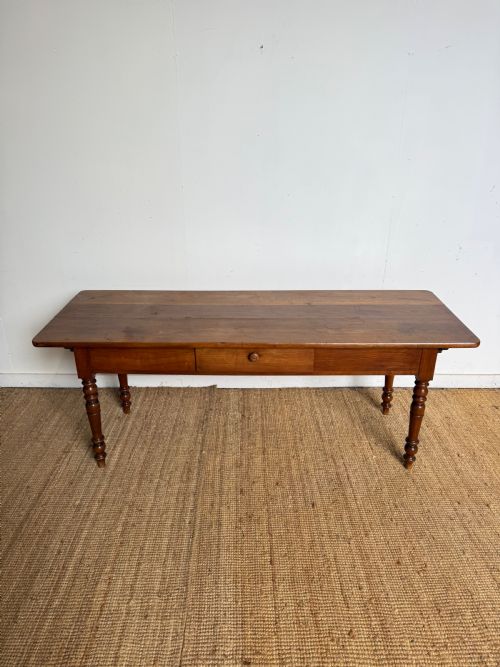


Long Wooden Console
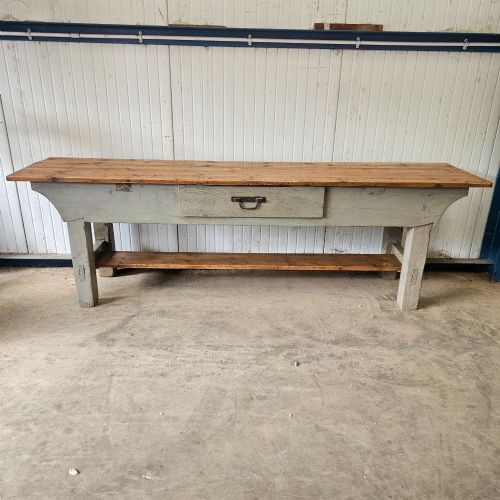
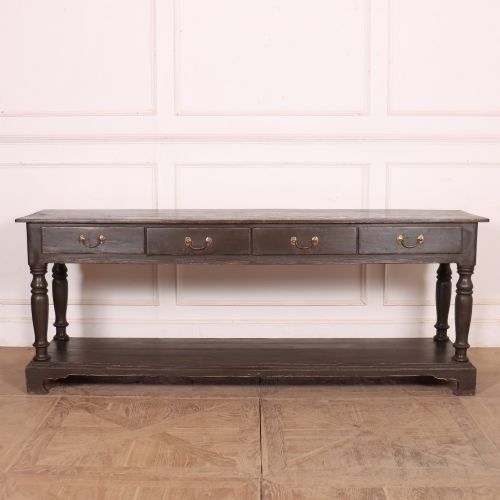
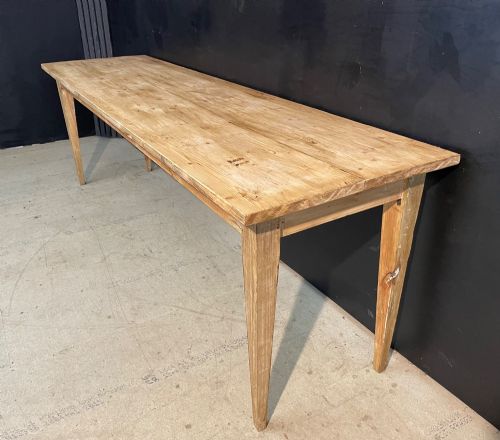
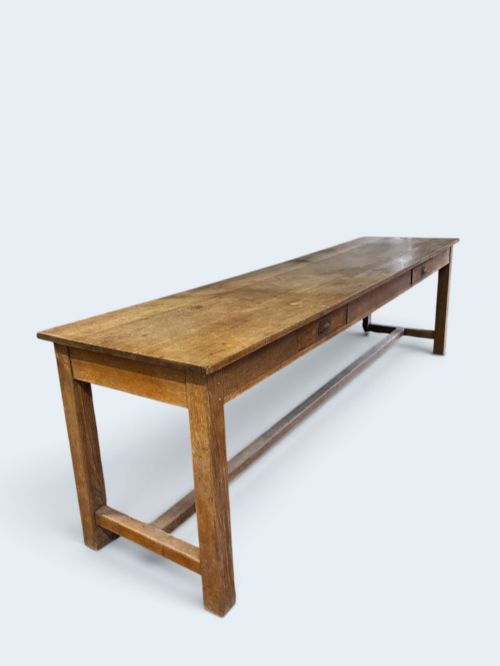
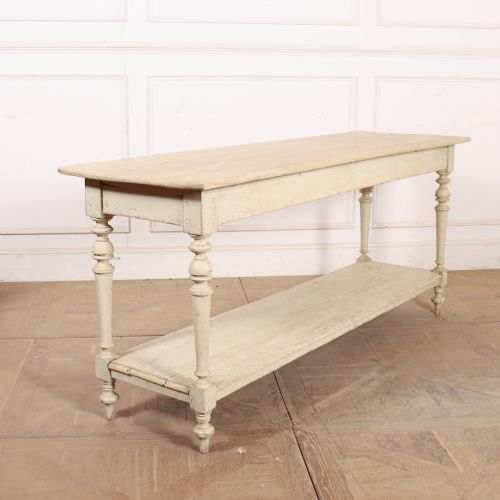
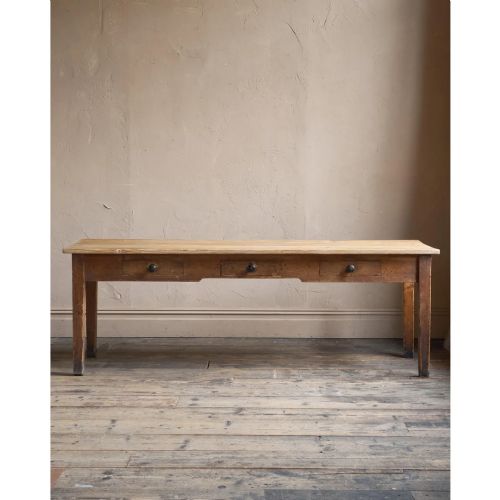
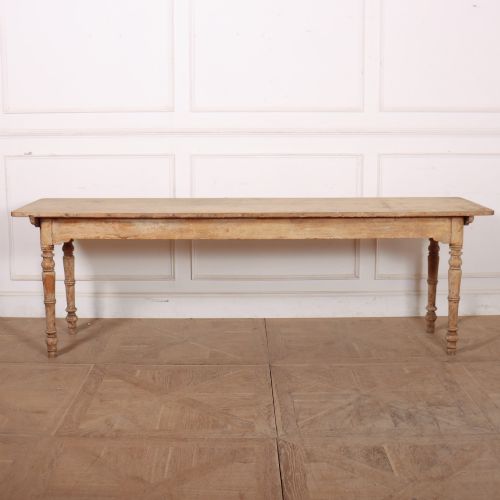
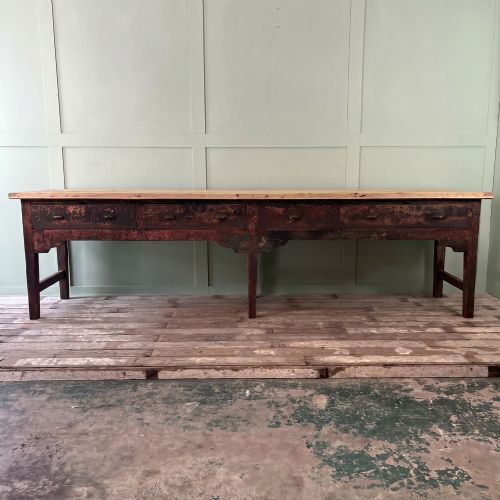
A long wooden console anchors a room with utility and presence, stretching gracefully along a hallway or serving surface.
How these tables were constructed
Craftsmen relied primarily on solid timbers such as pine, oak, cherrywood, walnut and poplar, often pairing them with brass or iron hardware for structural reinforcement and drawer pulls. Construction methods prioritised durability, utilising thick planks for tops and sturdy joinery to withstand demanding preparation and serving tasks.
Surfaces exhibit a mix of natural scrubbed finishes, historic paint layers and bleached treatments that reveal the grain of the wood. Potboards, lower shelves and deep drawers were integrated directly into the framing to balance weight and utility across extended lengths.
What separates examples
The distinction between standard utility items and exceptional examples lies in the integrity of the original timber and the subtlety of surface wear. Tables retaining untouched historic paint or deeply scrubbed patinas command greater appreciation than those stripped bare or heavily restored.
Proportion and scale dictate the success of the piece, particularly given the considerable length required for a proper console or serving table. Refined joinery, original hardware and authentic period construction without modern intervention distinguish the finest instances of the form.
Listings feature pine, oak, walnut and cherrywood across 18th century to 20th century periods, including Georgian and Edwardian examples.
The Long Wooden Console Glossary
- Console table
- A long, narrow table designed to stand against a wall, frequently used in hallways or living areas. These pieces often originate from serving tables or drapers tables adapted for domestic display.
- Drapers table
- A long, deep table traditionally utilised in textile shops for measuring cloth, characterised by generous length and lower shelving. Their substantial proportions make them ideal modern serving surfaces.
- Potboard
- An open lower shelf fitted beneath a serving table or dresser base, originally intended to hold pots and heavy kitchen utensils. This architectural feature adds structural stability and visual weight.
- Trestle table
- A table configuration where the top is supported by two or more upright frames connected by a horizontal beam. This design allows for maximum legroom along the length of extended surfaces.
- Scullery table
- A heavy, utilitarian work table originating from the scullery rooms of large country houses. They were built from robust timbers like pine or oak to endure constant washing and food preparation.
Long Wooden Console: Frequently Asked Questions
Where should I place a long wooden console?
These pieces fit naturally along wide hallways, behind large sofas, or acting as sideboards in dining spaces. Their narrow footprint allows them to occupy circulation areas without blocking movement.
Ensure you measure both the length of your wall and the depth of the walkway before selecting a table, as these surfaces often stretch significantly.
How do I care for historic wooden surfaces?
Maintain the timber by dusting regularly with a dry cloth and avoiding harsh chemical cleaning products that strip historic patinas. Natural waxes help protect scrubbed pine and oak from drying out over time.
Keep tables away from direct heat sources and sudden humidity changes to prevent the old wood from warping or splitting.
Can these tables be used for daily dining?
Many examples, particularly drapers tables, farm tables and serving tables, were built for heavy domestic labour and easily accommodate daily use. Their generous proportions provide ample space for dining or food preparation.
Use protective mats under hot dishes or liquids to preserve historic painted or scrubbed timber finishes from accidental marking.
What is the difference between a console and a serving table?
Serving tables traditionally stood in dining rooms or service areas to hold dishes during meals, while console tables often functioned as architectural display surfaces in halls. Over time, these categories overlap significantly in country house furniture.
Both forms share the long, narrow profile that defines this search category, though serving tables frequently include drawers or potboards.