



Wooden School Table
A wooden school table brings honest utility and enduring craftsmanship into a modern interior.
Wooden School Table
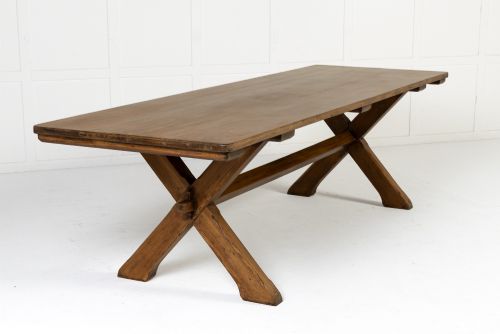
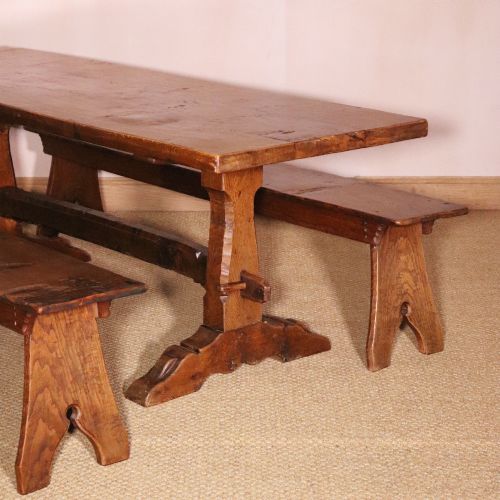
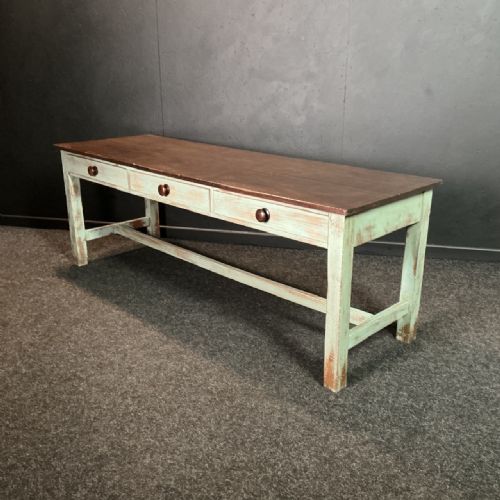
A wooden school table serves as a sturdy workspace with deep institutional roots, often originating from historic foundations like Charterhouse School or Arnold School Blackpool. These pieces combine utilitarian design with robust construction suited for generations of daily use in classrooms and libraries.
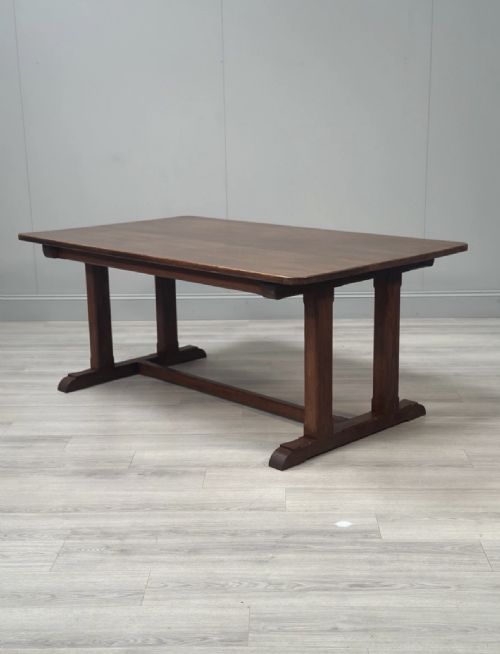
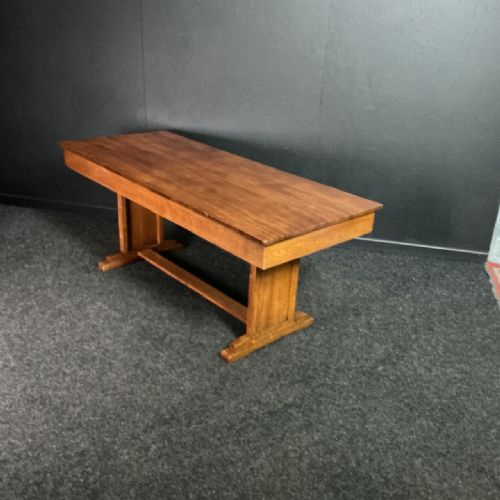
Buyers seeking a wooden school table will encounter pine refectory designs and teachers' writing tables dating from the late nineteenth century through to the mid-twentieth century. These surfaces carry the patination of heavy use, from ink stains to carved initials, telling a distinct story of their past educational environment.
How they were made
Makers utilised durable timbers such as pine and oak to build these functional tables, ensuring they could withstand the rigours of school life. Joinery was straightforward and strong, relying on mortise and tenon joints to keep frames rigid under constant pressure.
Metal brackets and brass fittings occasionally reinforced corners and drawers, adding industrial resilience to the wooden structures. Surfaces were typically finished with simple oils or hard-wearing varnishes that allowed the grain of the wood to show while protecting against daily wear.
Wooden School Table Retail Price Guide 2026
Typical asking prices for wooden school table among the pieces listed under this phrase on Sellingantiques today, from the lower quarter to the upper quarter. They describe what is for sale here now, not the wider market.
Listings feature oak and pine as primary materials, spanning the late nineteenth century to the 1940s.
What varies in quality
The distinction between standard utility pieces and finer examples lies in the selection of timber and the nuance of the carpentry. Tables associated with specific named institutions or attributed to notable educational workshops often exhibit superior proportions and more thoughtful joinery details.
Condition and originality dictate the standing of a piece, particularly the preservation of the original timber top without excessive modern sanding. Examples that retain their authentic surface patination and structural integrity without heavy replacement parts command greater interest.
Jack Grimble
The Wooden School Table Glossary
- Refectory table
- A long, narrow dining or work table traditionally used for communal gatherings. In an educational context, this form provided ample surface area for students or staff.
- Pine
- A softwood commonly used for utilitarian school furniture due to its availability and resilience. It acquires a rich, mellow tone and distinct character through decades of handling.
- Provenance
- The documented history of ownership and origin of an object. For institutional furniture, provenance often links a table directly to a specific school or college.
Wooden School Table: Frequently Asked Questions
How do I clean a wooden school table?
Wipe the surface gently with a slightly damp cloth to remove dust and daily grime, avoiding harsh chemical cleaners that might strip the historic finish. Nourish the wood periodically with a traditional beeswax to maintain its natural lustre and protect the grain.
Keep the table away from direct heat sources and strong sunlight to prevent the timber from drying out or warping over time. Embracing minor marks and scuffs preserves the authentic character accumulated during its working life.
Can I use a school table for dining?
These tables make exceptional dining surfaces because their original purpose required generous proportions and sturdy construction. The legroom and surface area accommodate daily meals and gatherings with ease.
Pairing a sturdy pine or oak table with mismatched chairs creates a relaxed, collected interior look. The robust build ensures it handles family life without concern.
How do I date a school table?
Examine the construction methods, tool marks beneath the top, and the type of fixings used in the frame. Machine-sawn timber often points towards the later nineteenth or twentieth century, while hand-planed boards suggest earlier craftsmanship.
Associated institutional markings, maker stamps, or historical provenance provide reliable clues to the exact era of manufacture. Style influences like Arts and Crafts or plain utilitarian designs also help narrow down the decade.
Are school tables suitable for a modern office?
The generous surface area and stable construction make these tables ideal for writing desks or collaborative workspaces. Their straightforward aesthetic complements contemporary minimalist interiors by adding warmth and history.
Consider the height and knee clearance to ensure comfortable daily seating for computer work. Adding a desk lamp and proper chair transforms the historic surface into a functional modern workstation.