



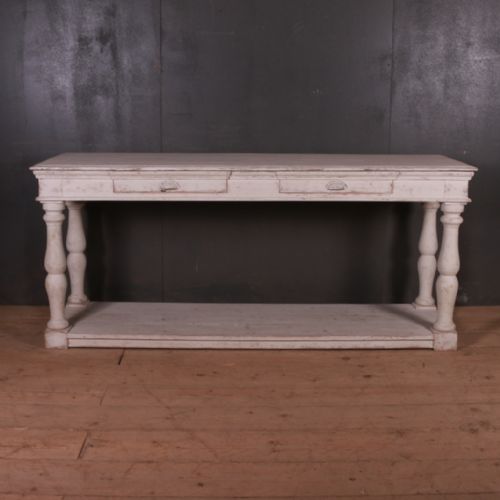


Long Painted Wooden Console
A long painted wooden console brings scale and character to a hallway or living space, offering generous surface area and enduring utility.
Long Painted Wooden Console
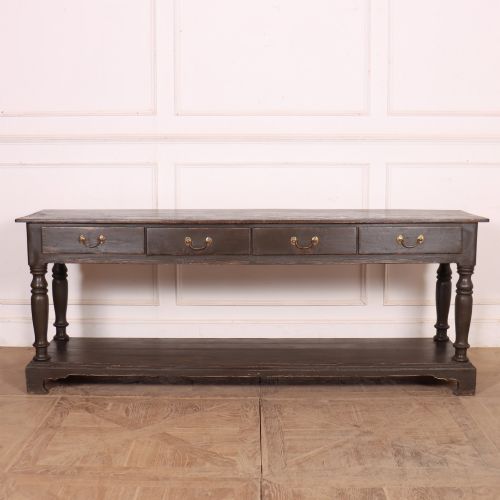
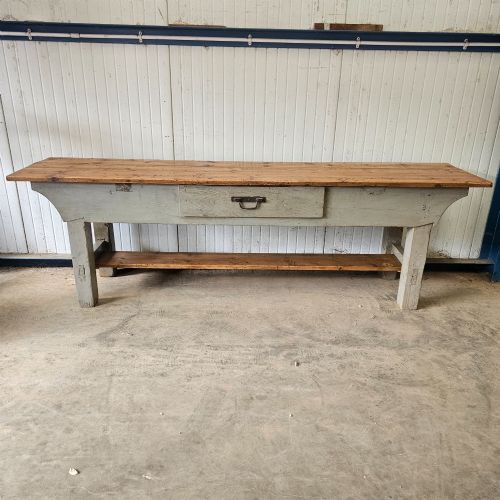
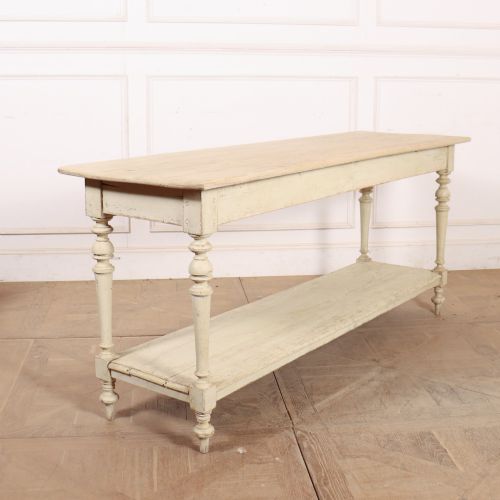
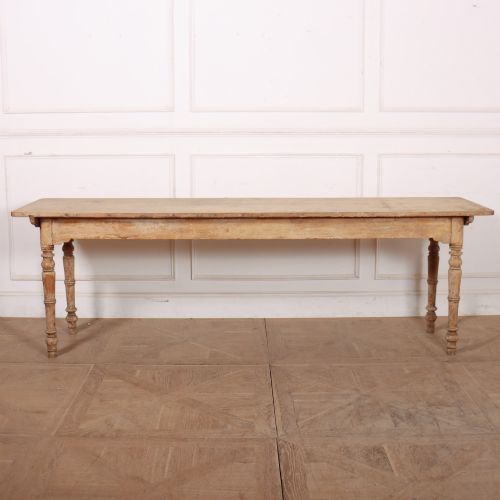
A long painted wooden console is a substantial furnishing designed for practical storage and display against a wall. The pieces listed under this search phrase span the nineteenth century, encompassing various regional country styles such as French, English, Italian, and Scandinavian.
Buyers will most frequently encounter nineteenth-century pine and softwood examples finished with painted surfaces. Forms range from drapers tables and potboard serving tables to preparation tables and dresser bases, often featuring drawers or lower shelves.
Materials and construction
These tables are constructed primarily from timber such as pine, oak, and general softwood, assembled using traditional joinery appropriate for heavy domestic use. Metal or iron components occasionally appear in structural braces or hardware.
Surfaces are finished with layers of paint that have aged over decades of use, creating distinct patinas. The combination of solid wood framing and painted finishes defines the physical character of each piece.
Long Painted Wooden Console Retail Price Guide 2026
Typical asking prices for long painted wooden console among the pieces listed under this phrase on Sellingantiques today, from the lower quarter to the upper quarter. They describe what is for sale here now, not the wider market.
The listings show nineteenth-century pieces exclusively in pine, oak, and softwood, finished with paint and occasional iron hardware.
Assessing quality
Quality in these consoles is determined by the integrity of the original construction and the character of the painted surface. Pieces retaining their early or original paint layers command greater interest than those with unsympathetic modern repainting.
Proportion and utility also separate examples, with well-balanced tables featuring functional drawers, potboards, or undershelves demonstrating superior craftsmanship. The handling of the timber joints and the retention of authentic wear add to the overall merit of a piece.
The Long Painted Wooden Console Glossary
- Potboard
- A lower open shelf on a serving table or dresser base designed for storing pots and heavy kitchenware.
- Drapers table
- A long, narrow table historically used in cloth merchants shops for measuring and displaying textiles.
- Softwood
- Timber from coniferous trees, such as pine, which was widely used for painted provincial furniture.
- Dresser base
- The lower section of a kitchen dresser featuring drawers and cupboards, often utilised independently as a sideboard.
- Patina
- The surface texture and coloration developed by wood and paint through age and handling.
Long Painted Wooden Console: Frequently Asked Questions
What rooms suit a long painted wooden console?
These long tables suit hallways, living rooms, and dining spaces where substantial surface area is required without heavy visual bulk. Their generous length provides ample room for lamps, books, and decorative objects.
The shallow depth typical of console tables ensures they do not obstruct walkways in narrower circulation spaces while still offering useful storage drawers or lower shelves.
How were these tables used originally?
Many examples began life as functional work furniture in shops, kitchens, or country houses, serving as preparation surfaces or serving tables. Drapers tables managed textiles, while potboard servers held heavy kitchen ceramics.
Over time, their sturdy construction and decorative painted finishes transitioned them from utility items to prominent architectural furnishings in domestic interiors.
How do I care for a painted wooden surface?
Preserving historic painted surfaces requires gentle dusting with a dry, soft cloth rather than harsh chemical cleaning agents. Avoiding excessive moisture prevents the underlying wood from swelling and protects the integrity of the paint layers.
Placing the table away from direct heat sources and strong sunlight also helps maintain the stability of both the timber and the historic finish.
How are different regional styles distinguished?
Regional styles appear through distinct proportions, moulding details, and the character of the painted finish. French and Italian examples often feature softer lines and specific provincial palettes, while English and Scandinavian pieces display more restrained joinery.
Examining the construction methods and timber choices alongside the stylistic traits helps identify the likely origin of each nineteenth-century table.