


Long Footstool Bench
These long footstool bench options offer extended seating and support, blending period woodwork with traditional upholstery for domestic comfort.
Long Footstool Bench
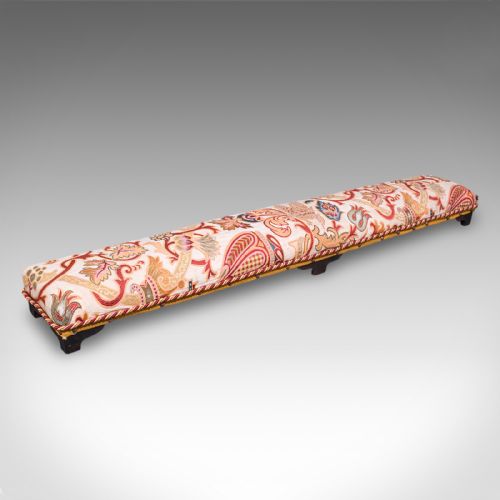
A long footstool bench serves multiple domestic purposes across periods from the Georgian era to the twentieth century, functioning as fireside rests, window seats, and piano duet stools. These pieces combine extended wooden frames with upholstered or cane seating surfaces designed to accommodate more than one person or provide full-length leg support.
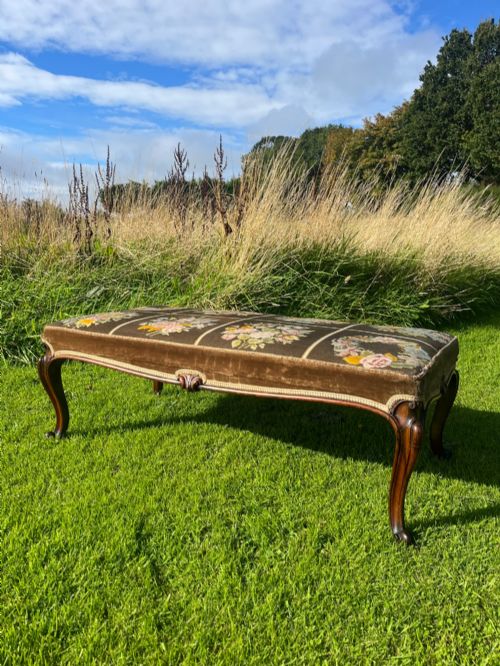
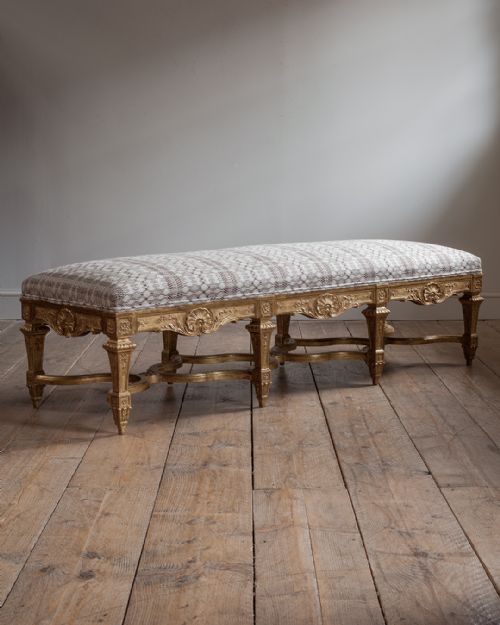
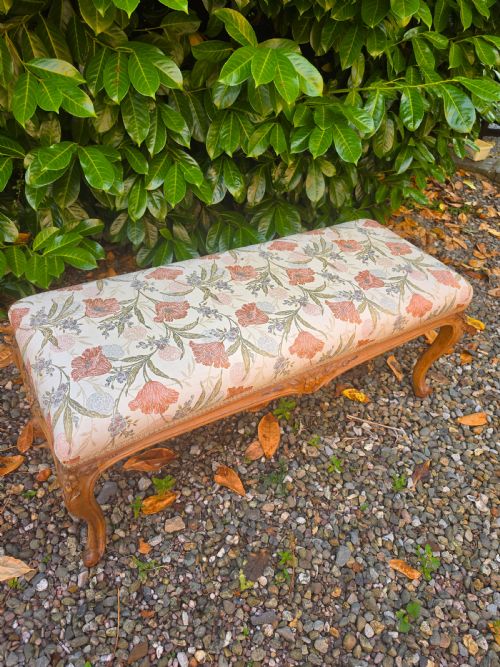
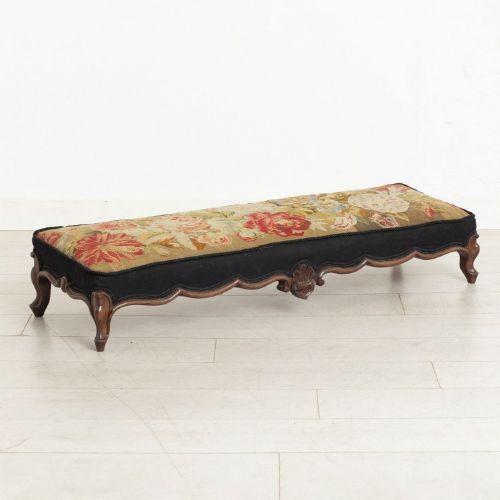
You will most commonly encounter Victorian and Edwardian examples executed in mahogany or walnut, often featuring cabriole legs or turned supports. Styles range from restrained Georgian proportions and Arts and Crafts simplicity to elaborate Louis XIV and Rococo revivals with giltwood or carved detailing.
The form adapts to various domestic settings, appearing as fender stools designed to sit before a hearth, low hall seats, and dedicated dressing benches. The upholstery varies from original textiles and leather with brass studs to later wool, velvet, and patterned fabrics.
Construction and materials
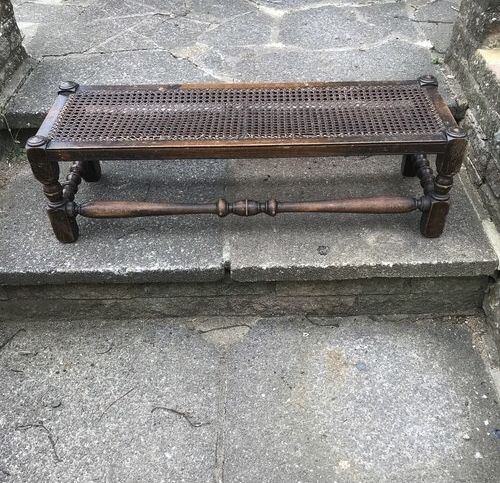
Makers constructed the primary frames of a long footstool bench using dense hardwoods such as mahogany, walnut, oak, and rosewood, ensuring structural stability across extended spans. Carved elements, gilded finishes, and turned legs required skilled carpentry, whilst alternative models utilised woven cane for lighter seating panels.
Upholstered surfaces relied on traditional stuffing materials covered in textiles including wool, leather, tweed, and printed velvet, frequently secured with brass studs. Selected pieces incorporated hinged seats for internal storage or featured buttoned leather detailing executed by specialist craftsmen.
Listings feature mahogany, walnut, oak, and rosewood frames paired with leather, cane, wool, and velvet upholstery spanning the Georgian to twentieth-century periods.
Assessing quality in construction and design
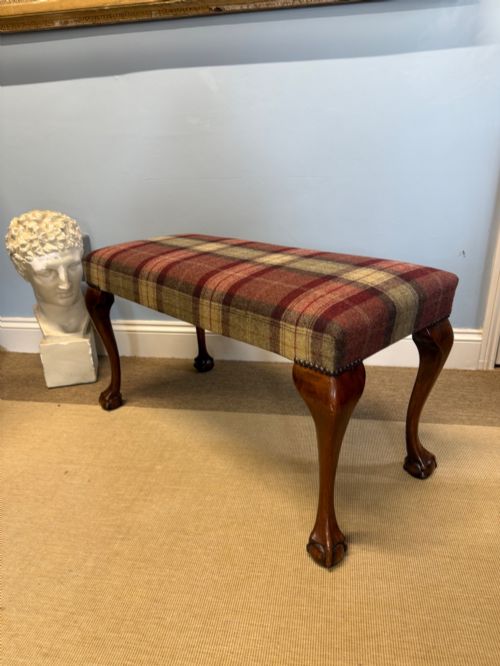
Quality in a long footstool bench rests upon the timber selection and the precision of the joinery, where tight joints and well-proportioned frames distinguish finer workshop output. Carved details such as cabriole legs with ball and claw feet demonstrate greater artisan skill than plain or mechanically shaped alternatives.
The integrity of the upholstery work and the retention of original surface patination on the timber frame significantly influence the character of the piece. Substantial hardwood frames that remain rigid across their length reflect superior foundational engineering compared to lighter or structurally compromised examples.
Morris And Co
The Long Footstool Bench Glossary
- Cabriole leg
- A furniture leg that curves outward at the knee and tapers inward toward the ankle, often ending in a pad or claw foot. This form derives from classical motifs and appears frequently on eighteenth and nineteenth-century seating.
- Fender stool
- A long, low stool designed specifically to sit directly in front of a domestic fireplace fender. These pieces kept feet elevated away from cold stone floors.
- Window seat
- A long stool or bench built with suitable proportions to sit within the architectural recess of a window bay. They frequently featured upholstered tops for extended seating.
- Duet stool
- An extended piano stool manufactured to seat two musicians side by side. Many examples include a hinged seat top revealing internal storage for sheet music.
- Giltwood
- Timber that has been coated with a thin layer of gold leaf or gilt powder. This finish is typical of revival styles and decorative French seating.
Long Footstool Bench: Frequently Asked Questions
How do I use a long footstool bench today?
These versatile pieces function effectively at the foot of a bed, beneath a window, or beside a fireplace as extended seating. Their length also suits placement in hallways or living rooms as low occasional benches.
Ensure the height matches your intended domestic use, whether pairing with existing seating for guests or utilising a hinged version for discreet storage.
What is the difference between a fender stool and a window seat?
Fender stools are traditionally constructed with low profiles specifically to sit near hearths, keeping feet warm and elevated. Window seats are generally proportioned to fit within architectural window recesses for daytime sitting.
Both utilise long wooden frames, but their historical placement determined their specific height and decorative emphasis.
How can I date a wooden footstool bench?
Dating relies on observing timber choices, stylistic markers such as cabriole legs or turned supports, and construction methods. Georgian and Victorian pieces exhibit different carving sharpness and wood maturity compared to Edwardian or later twentieth-century iterations.
Examining the underside for tool marks and historical fixings also provides clear indicators of manufacturing age.
Are original upholstery fabrics common on these benches?
While some pieces retain period textiles like leather, wool, or specialised velvet, many examples have undergone reupholstery to suit modern interiors. Original coverings often show age-related wear that reflects their functional history.
When original fabric survives, it offers insight into the period aesthetic, though replacement upholstery is standard practice for older seating.