

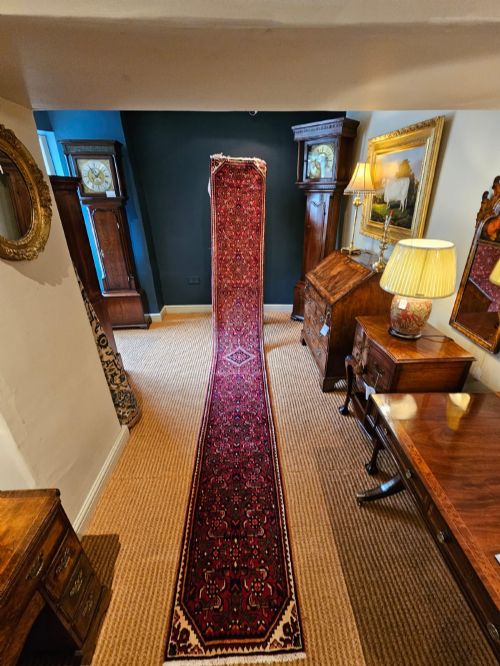
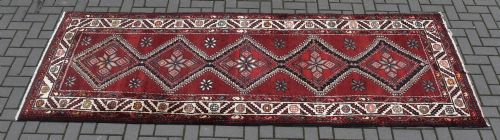


Long Floor Carpet
A long floor carpet provides an extended decorative pathway of woven wool, bringing historical character to narrow hallways and expansive rooms alike.
Long Floor Carpet
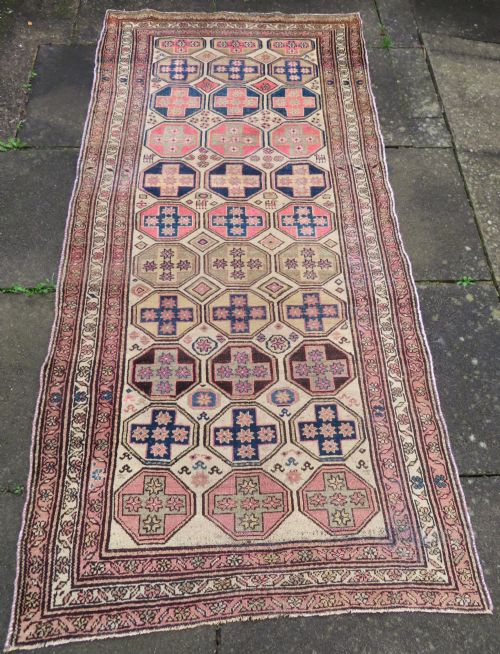
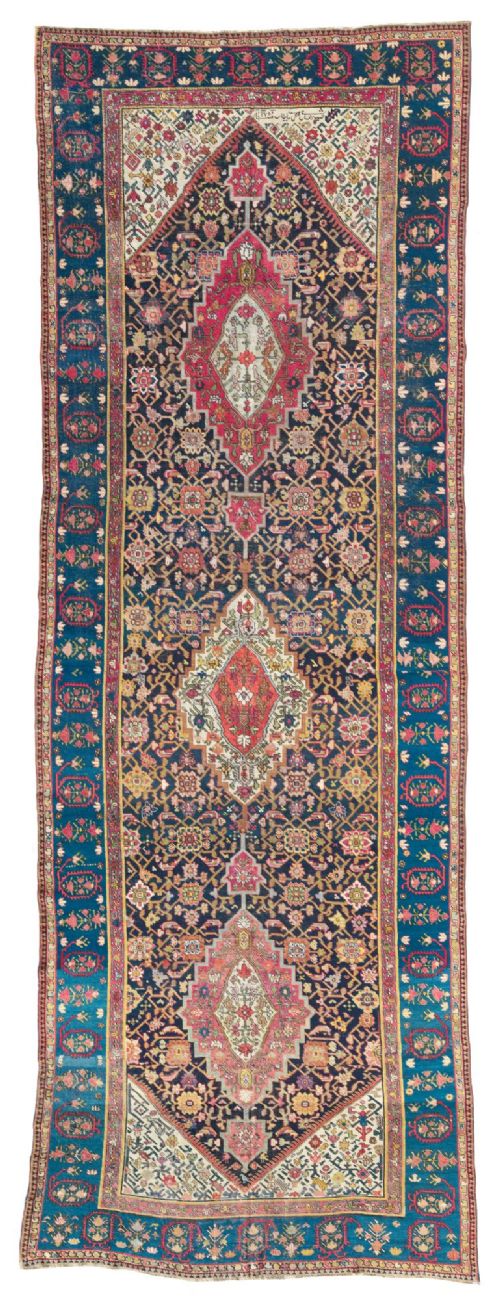
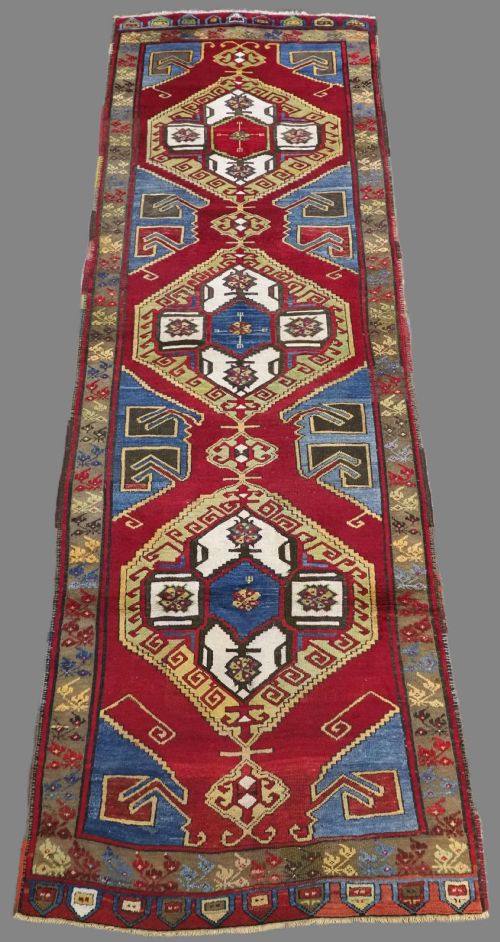
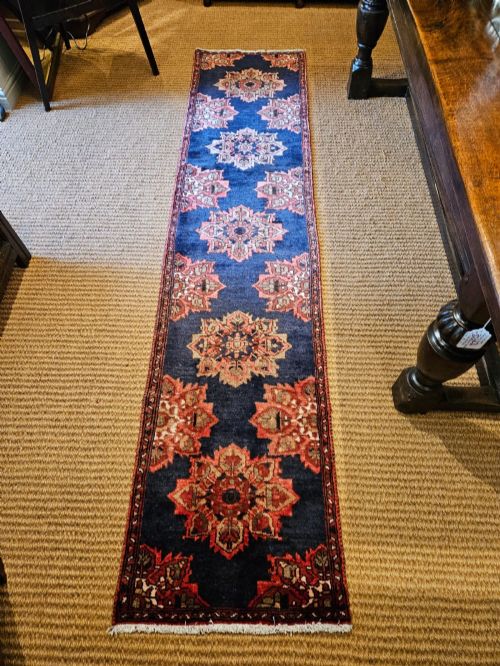
A long floor carpet spans significant hallway runners and gallery carpets originating from Persian, Caucasian, Turkish, Kurdish, and Moroccan traditions. These textiles date from the mid-nineteenth century through the early twentieth century, encompassing tribal and village workshops.
How they were made
Weavers utilised natural wool, cotton foundations, and hand-spun wool fibres, knotted densely by hand to withstand generations of foot traffic. These materials interact to create heavy, durable floor textiles that lie flat along long expanses.
Dyes derived from natural botanical and mineral sources generated the saturated navy blues, reds, and mellow tones visible across the pieces. The resulting pile ages with a characteristic softening of the palette.
Listings span periods from the eighteen-fifties to the nineteen-thirties, using wool, cotton, and hand-spun wool across Persian, Caucasian, and Anatolian traditions.
What varies in quality
Quality rests on the density of the knotting and the precision of the tribal design geometry executed across the elongated field. Finer wool preparation and tighter foundations produce a resilient carpet that maintains structural integrity over long spans.
The sophistication of the natural dye palette and the clarity of the motifs, such as floral lattices or shrub designs, distinguish standard village productions from master workshop outputs.
The Long Floor Carpet Glossary
- Kelleh
- A large format carpet of extended rectangular proportions, traditionally longer than standard room carpets but broader than a narrow runner.
- Runner
- A long, narrow carpet designed specifically for hallways, corridors, and galleries.
- Soumak
- A flat-weave technique utilising a wrapping stitch that creates a textured surface without a cut pile.
- Bidjar
- A Persian weaving centre known for heavy, dense construction and robust wool foundations often called the iron rugs of Persia.
- Heriz
- A Persian style characterised by bold geometric medallions, large-scale corners, and sturdy village craftsmanship.
Long Floor Carpet: Frequently Asked Questions
Where should a long floor carpet be placed?
These pieces suit high-traffic corridors, wide hallways, and long galleries where narrow proportions anchor the open space.
Positioning them away from direct moisture protects the historical wool fibres while allowing the extended design to guide movement through the interior.
How do I care for an antique wool carpet?
Regular gentle vacuuming without a rotating brush lift preserves the hand-spun wool pile and prevents dirt accumulation within the foundation.
Professional specialist cleaning maintains the natural lanolin content and protects the integrity of the antique dyes.
What is the difference between a runner and a kelleh?
Runners feature significantly narrow proportions intended strictly for corridors and passage spaces.
Kellehs provide a wider format while maintaining an elongated shape, designed to anchor larger rooms rather than mere walkways.
How can I identify tribal origins in these carpets?
Tribal pieces display characteristic geometric motifs, asymmetric layouts, and spontaneous colour shifts distinct from formal workshop symmetry.
Nomadic groups like the Kurds, Qashqai, and Yomut integrated regional symbols and local weaving structures into their long carpets.