
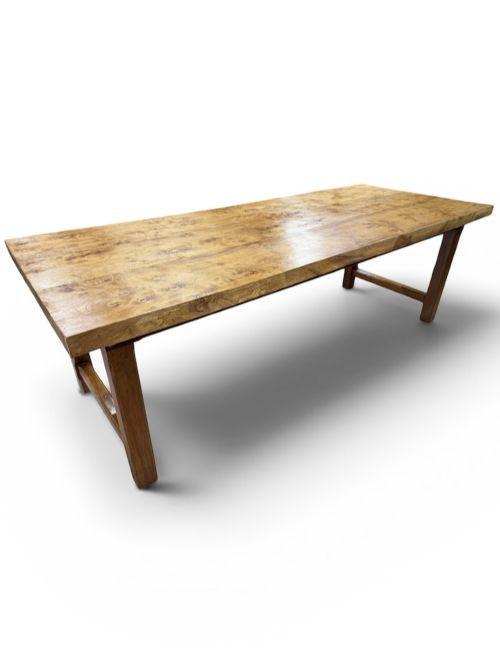
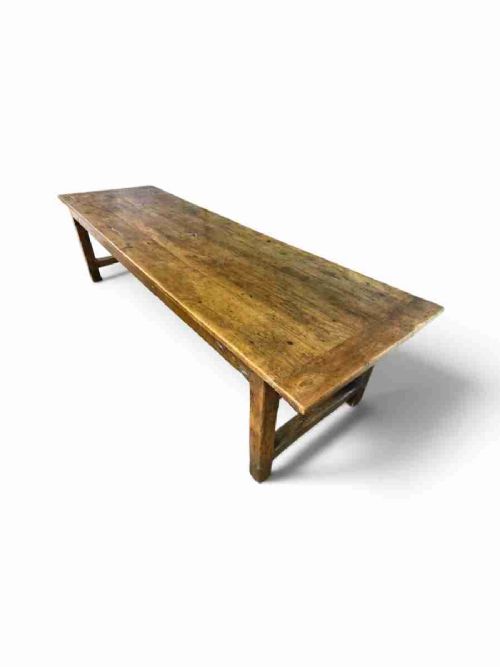
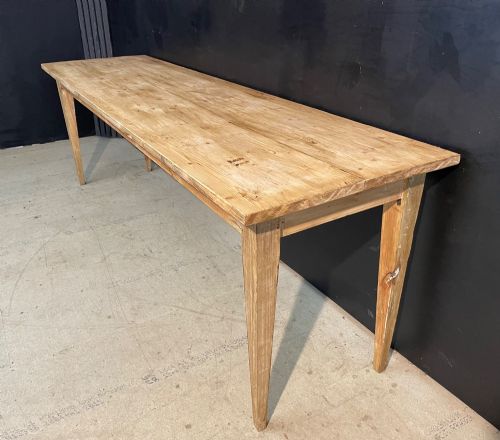
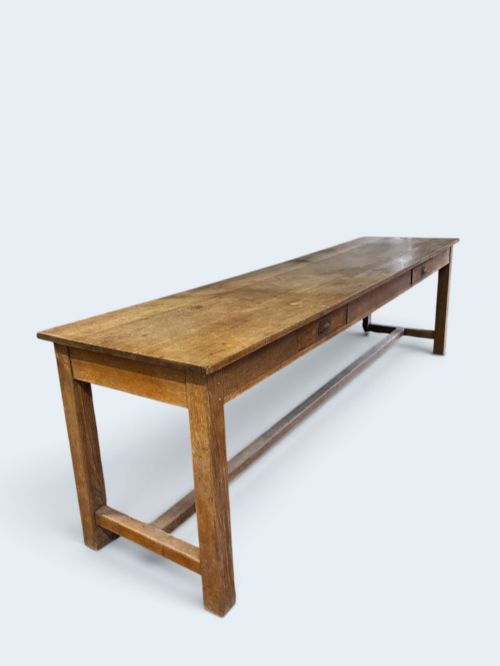

Long Farmhouse Table
A long farmhouse table anchors the daily life of a kitchen or dining hall, offering substantial timber surfaces built for gathering.
Long Farmhouse Table
A long farmhouse table serves as the primary gathering surface in domestic and communal spaces, built to accommodate large numbers of people for meals and daily work. When exploring this selection, buyers frequently encounter substantial timbers shaped in 18th-century, 19th-century, and early 20th-century workshops across England and France.
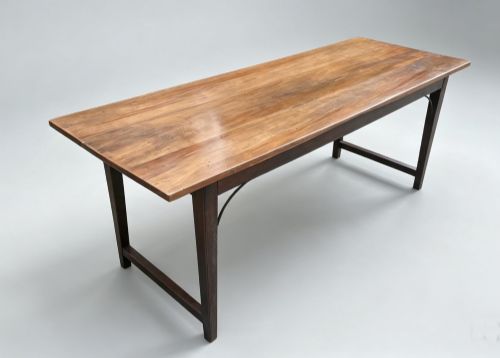
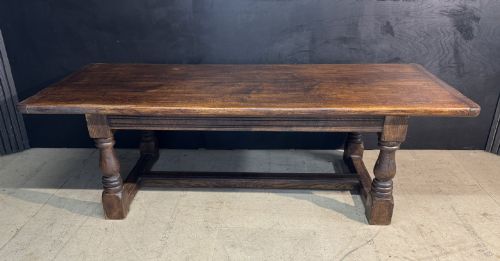
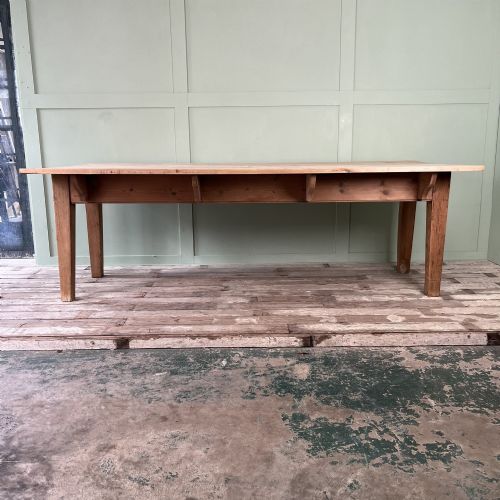
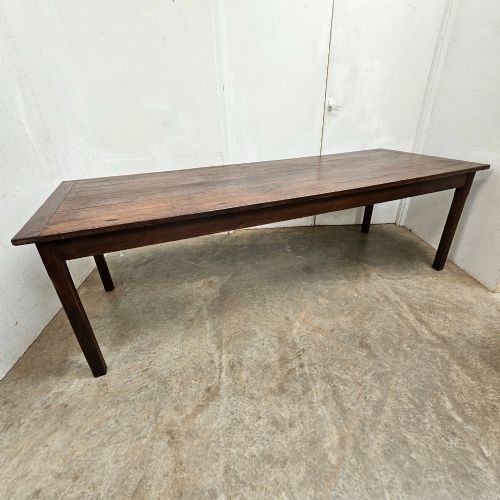
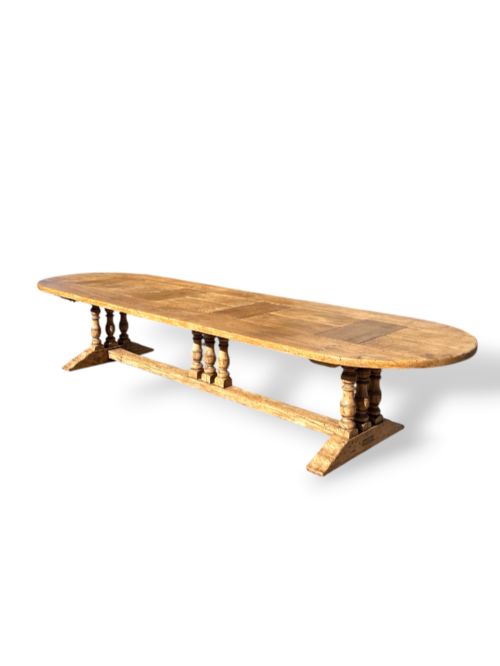
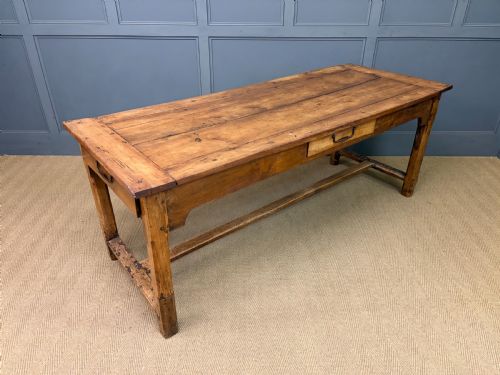
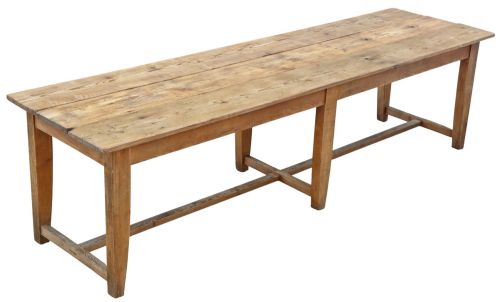
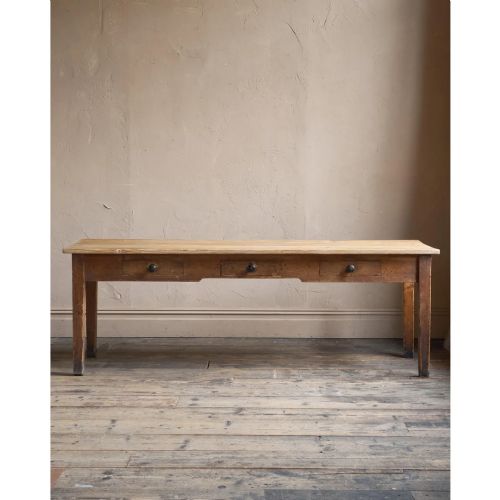
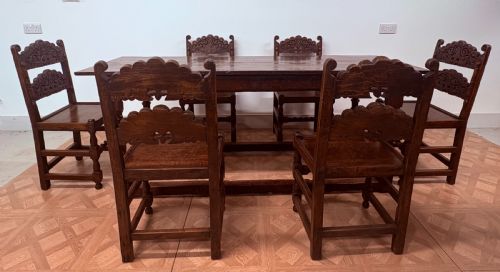
The category encompasses rectangular dining pieces, narrow console tables, prep tables, and serving boards designed with considerable length, often measuring several metres. Common forms include classic refectory tables, two-tier harvest tables, and potboard designs fitted with drawers for domestic storage.
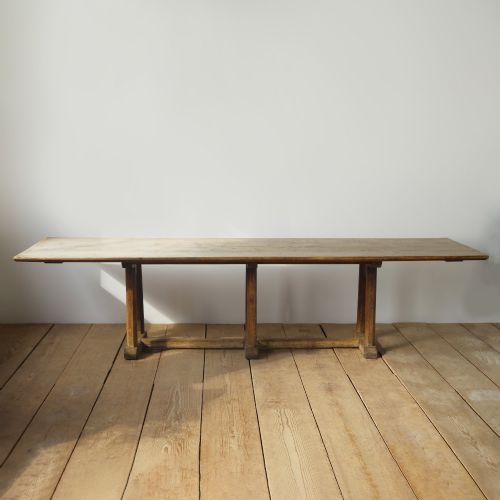
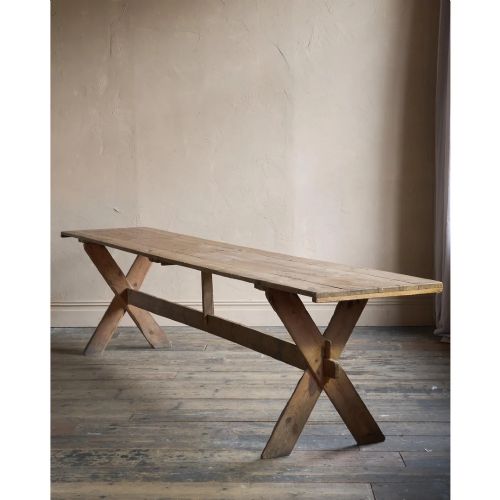
Originating primarily from rural workshops, these utilitarian objects display regional variations in timber selection and leg configuration, ranging from sturdy trestle supports to turned legs. They survive as working antiques that suit contemporary kitchens, dining rooms, and open-plan living areas.
Materials and Construction
Carpenters constructed these tables using dense native hardwoods and softwoods selected for durability, principally oak, pine, fruitwood, elm, cherrywood, and chestnut. Planks were joined to create thick tops capable of enduring heavy daily use, supported by sturdy mortise and tenon frames.
Many examples feature iron hardware or pegged joints that secure the apron and legs without modern adhesives. Surfaces were left natural, waxed, or finished with traditional paint layers that have worn down over decades of use.
Several tables arrive with built-in drawers deep enough to hide centuries of stray cutlery and breadcrumbs.
Evaluating Quality and Character
Quality rests in the integrity of the timber framing, the thickness of the plank top, and the retention of original surface patination. Tables constructed from single-board tops or well-figured oak and fruitwood exhibit superior structural ambition.
Proportion and scale dictate the visual weight of the piece, where depth and length align harmoniously with the original underframe. Evidence of authentic period use, such as integrated drawers, sliding breadboards, and worn pot shelves, distinguishes standard utilitarian pieces from exceptional examples.
The Long Farmhouse Table Glossary
- Refectory table
- A long narrow dining table originally designed for monastic dining halls and later adapted for domestic use.
- Potboard
- A lower slatted shelf fitted between the legs of a serving table to hold pots and heavy kitchen utensils.
- Breadboard ends
- Transverse pieces of timber fixed to the ends of a tabletop to prevent the main planks from warping.
- Plank top
- A surface constructed from two or more parallel boards joined along their edges rather than a single sheet of wood.
- Trestle table
- A board supported by two or more upright frames connected by a horizontal stretcher beam.
Long Farmhouse Table: Frequently Asked Questions
How do I choose the right length?
Consider the dimensions of your room while allowing adequate clearance around all sides for chairs or benches to pull out comfortably. Long farmhouse tables span various lengths, so measuring your available floor space ensures the proportions match your seating requirements.
Keep in mind that longer examples often exceed two or three metres, making access routes through doorways and stairwells an important factor during delivery.
What is a refectory table?
A refectory table is an elongated dining table characterised by its narrow proportions and a strong supporting stretcher running between the legs. Originally utilised in large communal dining spaces, these pieces evolved into domestic staples.
They provide ample legroom along the entire length, making them practical for seating large groups without obstruction from bulky corner legs.
How do I care for antique timber surfaces?
Maintain the wood by applying natural wax periodically to nourish the grain and protect against moisture. Avoid placing hot items directly onto the antique surface and use coasters or mats for drinks.
Gentle cleaning with a soft, dry cloth preserves the historical patination accumulated over centuries of domestic use.
Can I use benches instead of chairs?
Pairing these tables with long wooden benches reflects traditional seating arrangements and allows multiple diners to sit along one side. Benches also slide neatly beneath the tabletop when not in use, saving floor space in smaller rooms.
Look for period benches matching the timber and era of the table to maintain a cohesive appearance.