



London Silver Pocket Watch
A London silver pocket watch carries the weight of precision history in the palm of your hand, offering enduring mechanical charm.
London Silver Pocket Watch
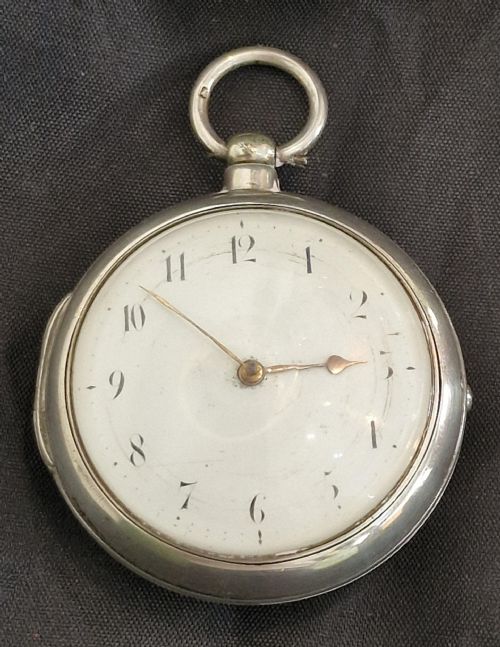
A London silver pocket watch represents a portable timepiece housed in a silver case and connected to makers or retailers operating in the capital. These items span multiple eras, encompassing Georgian, Victorian, and Edwardian periods alongside mid-twentieth-century examples.
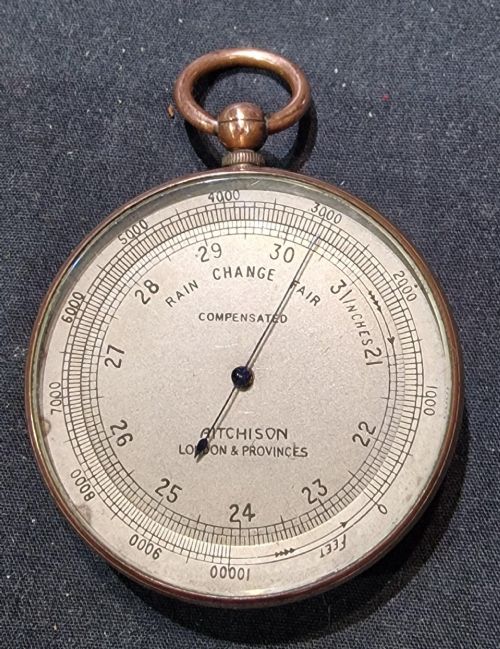
The form frequently appears as a pair cased watch, a full hunter, or a half hunter, occasionally extending to specialised items like pocket barometers or military issue cockpit watches. Buyers most commonly meet Victorian and early twentieth-century silver pocket watches on this page.
Makers and retailers stamped their names and movements across dials and inner dust covers, tying provincial utility and grand London craftsmanship together in a single portable object.
Materials and Construction
Silversmiths formed outer and inner protective housings from sterling silver, sometimes pairing them with brass or steel internal components to construct durable gear trains and escapements. Glass protected delicate enamel dials, while brass and gilded metals formed fusee chains and plates.
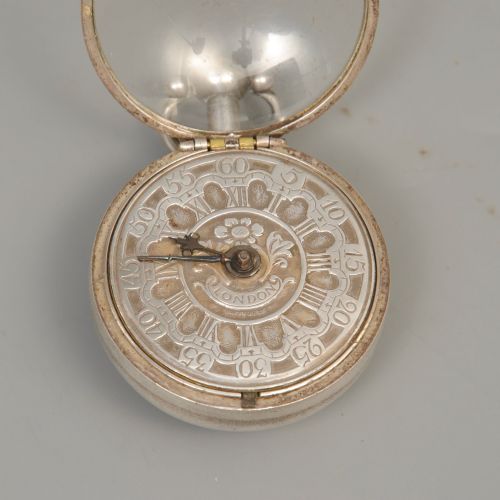
Early eighteenth-century pieces utilised intricate pair cased designs where an inner watch rested inside a second protective outer case, often detailed with repousse decoration. Later Victorian and Edwardian examples streamlined this approach into single silver hunter or open face cases.
Listings feature silver, sterling silver, glass, enamel, brass, steel, and nickel across Victorian, Georgian, Edwardian, and 1940s periods.
Distinctions in Quality
Complexity of movement separates standard production pieces from high grade London horology, particularly visible in early fusee mechanisms and fine verge escapements. The presence of specialised dials, such as champleve or multi-piece enamel faces, elevates a piece further.
The reputation of the maker or retailer inscribed on the dial or movement plate dictates the desirability of the watch. Intricate hand-engraved cases and original pair case sets demonstrate superior craftsmanship compared to later standardised machine-finished silver housings.
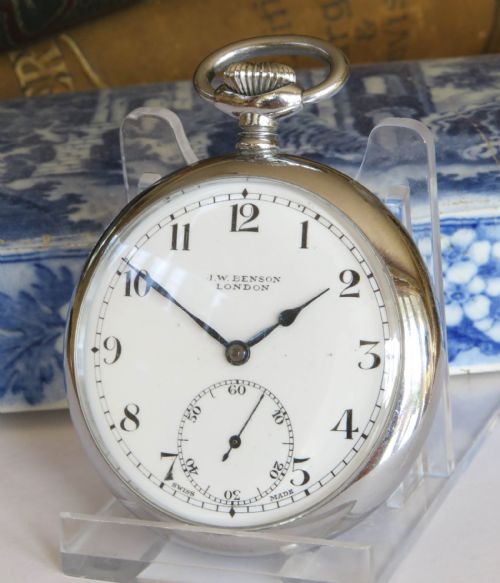
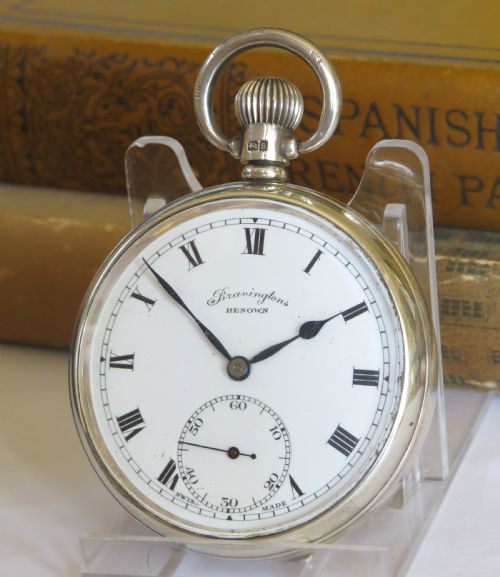
Bravingtons Renown·J W Benson·Charles Frodsham·Rotherhams·Dent of London·Elliott Brothers·Hebdomas Watch Co
The London Silver Pocket Watch Glossary
- Pair cased
- An arrangement featuring two separate silver cases, an inner one holding the movement and an outer one for added protection. This method dominated early eighteenth-century pocket watch production.
- Fusee
- A conical pulley used in mechanical watches to maintain even driving force as the mainspring unwinds. This mechanism ensures consistent timekeeping across the power reserve.
- Verge escapement
- An early type of mechanical escapement utilising a crown wheel and a vertical rod with pallets. It governs the speed of the gear train with distinctive physical motion.
- Full hunter
- A pocket watch design featuring a spring-loaded metal cover that protects the glass dial from scratches and impact. The cover opens via a small button on the pendant.
- Champleve
- A technique where enamel is fused into recesses carved into a metal dial plate. This creates intricate, multi-coloured patterns that contrast sharply with the surrounding metal.
London Silver Pocket Watch: Frequently Asked Questions
What is a fusee pocket watch?
A fusee pocket watch uses a conical drum to equalize the declining power of the mainspring as it runs down. This complex gearing system maintains steady tension on the escapement for accurate timekeeping.
Such movements indicate older manufacturing methods, appearing frequently in eighteenth- and nineteenth-century London pieces before standard barrel mainsprings took over.
How do open face and hunter watches differ?
An open face pocket watch displays the glass dial directly without any protective metal cover over the front. This style allows instant reading of the time.
A hunter watch encloses the dial behind a spring-hinged metal lid that must be popped open to view the hands. This heavier housing offered greater protection against daily wear.
What does pair cased mean?
Pair cased watches feature two distinct fitted silver cases where the inner watch housing slips snugly inside a slightly larger outer shell. The setup provided extra defence against dust and physical damage.
This double-enclosure style is characteristic of Georgian and earlier pocket watches found in the archive.
How do I wind an antique pocket watch?
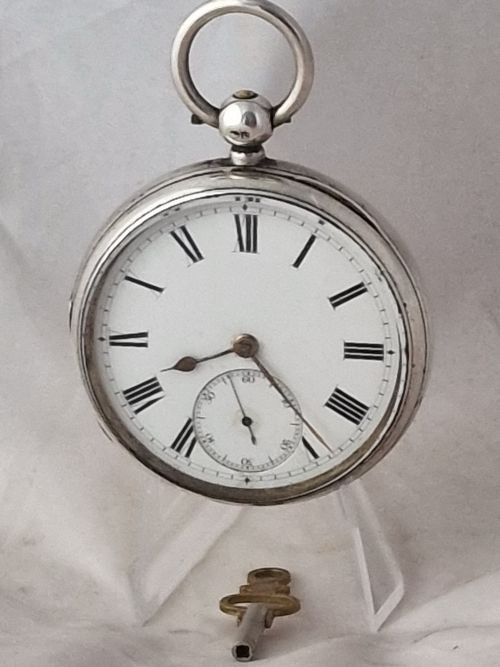
Antique pocket watches often require a small dedicated key inserted into a square arbor on the back plate or dial face to tension the spring. Stem-winding mechanisms appeared later in the nineteenth century.
Gentle handling and careful rotation prevent over-winding and protect delicate historical gear trains from undue stress.