
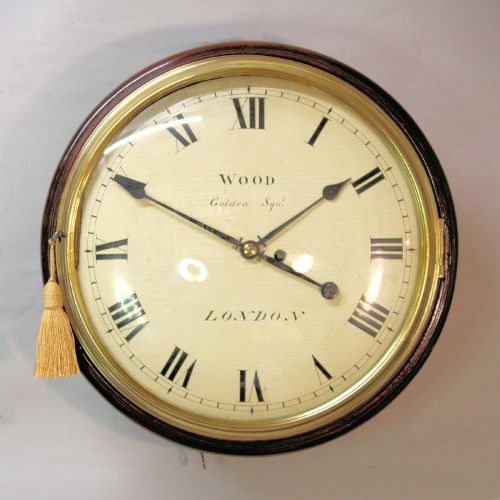

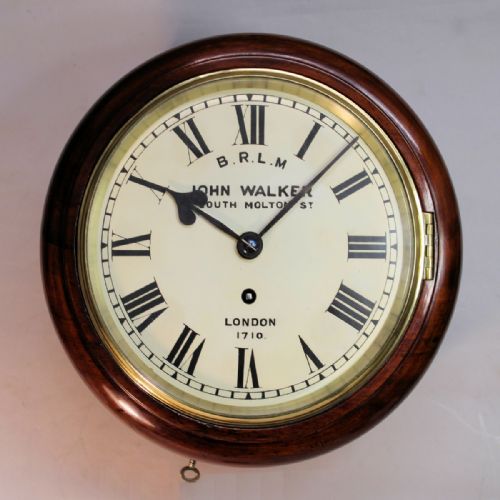


London Fusee Wall Clock
A london fusee wall clock brings precision mechanical timekeeping and architectural presence into a room.
London Fusee Wall Clock
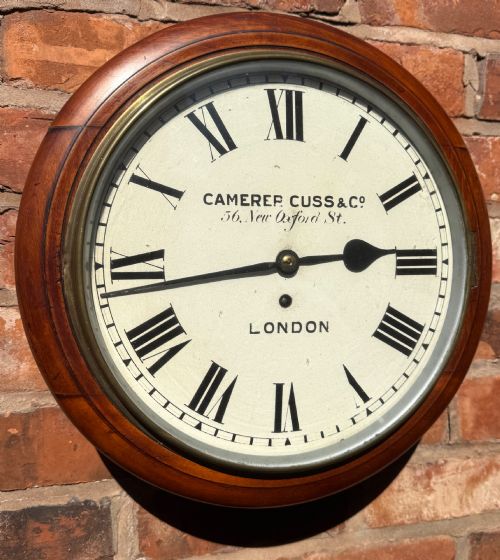
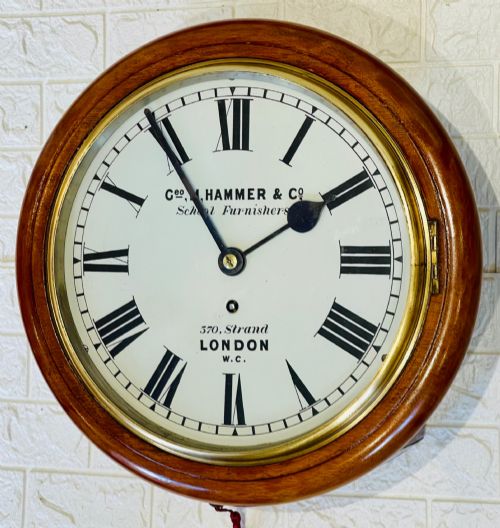
A london fusee wall clock is a timepiece designed for reliable public or domestic utility, characterised by its circular or drop-dial face mounted on a timber case. These pieces originate primarily from the nineteenth century, alongside examples spanning the eighteenth and early twentieth centuries.
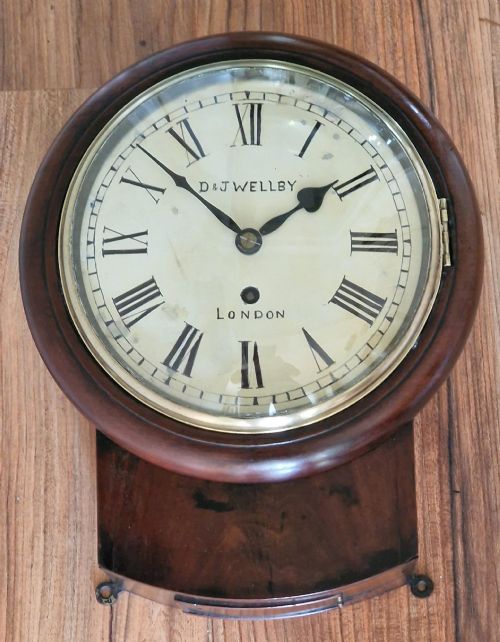
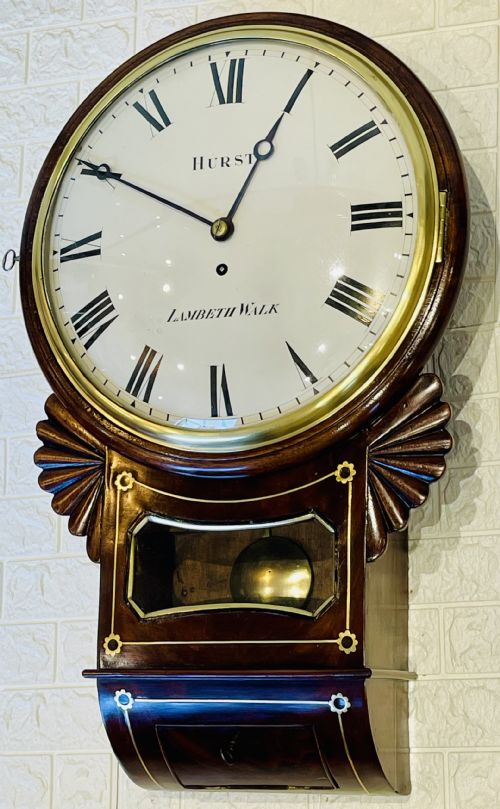
The most common formats met on this page include standard circular wall clocks and drop-dial variants, occasionally featuring wooden or convex dials. Makers across Georgian, Regency, Victorian, and Edwardian periods produced these clocks for domestic interiors, railway offices, and maritime use.
How They Were Made
The housing for a london fusee wall clock relies heavily on solid mahogany or rosewood cases, sometimes inlaid or ebonised, enclosing brass and steel internal movements. Enamel, painted iron, or carved wood form the dial faces, protected by glazed bezels.
Power is delivered through a chain or cord fusee movement, which regulates the mainspring's pull to maintain consistent force as the clock unwinds.
Several clocks bear the names of railway companies, suggesting they once kept station masters strictly on schedule.
What Varies in Quality
The distinction between tiers of a london fusee wall clock lies in the crispness of the case timber selection, the finesse of the dial lettering, and the complexity of the movement. Examples featuring twin fusee mechanisms for striking or specialised railway and marine provenance sit distinctly apart from simpler single-fusee timepieces.
Furthermore, the proportion of the drop-dial case and the preservation of original wooden bezels or convex wooden dials influence the overall integrity of the piece.
Camerer Cuss & Co·John Walker·Dent of London·James Murray·Francis Perigal
The London Fusee Wall Clock Glossary
- Fusee
- A conical pulley used in a clock movement to equalize the torque of the mainspring as it runs down. This mechanism ensures uniform force is delivered to the gear train throughout the eight-day cycle.
- Drop Dial
- A clock case featuring an extended lower trunk beneath the circular dial, designed to house a longer pendulum or simply to alter the visual proportions. These are frequently associated with Regency and Victorian public spaces.
- Convex Dial
- A dial face that curves outward toward the viewer, often fashioned from wood or painted iron. This shape reduces glare from interior lighting.
- Bezel
- The brass or wooden ring that holds the glass door protecting the clock face. It typically hinges open to allow for hand-setting and winding.
- Timepiece
- A clock that records time without including a striking mechanism or chiming train. These depend solely on the fusee movement to drive the hands.
London Fusee Wall Clock: Frequently Asked Questions
How do I wind a fusee wall clock?
Use the designated winding key on the dial face to turn the arbor clockwise until resistance is felt. Care must be taken not to overwind the chain or spring mechanism.
Most traditional movements require attention once every eight days to maintain continuous operation.
Where should I hang a heavy wall clock?
Mount the clock directly into a structural wall stud or use heavy-duty fixings suited to the weight of solid mahogany and brass. Secure placement prevents vibrations from interfering with the pendulum's beat.
Keep the piece away from direct sunlight and damp environments to protect the timber case and painted dial.
Why does the clock tick unevenly?
An irregular beat usually indicates that the case is hanging slightly out of plumb on the wall. Adjust the bottom brackets or backing until the tick sounds steady and regular.
If levelling does not resolve the issue, the pendulum suspension spring may require professional adjustment.
How do I identify the period of a dial clock?
Examine the timber species, bezel design, and dial materials against known historical styles such as Regency convex faces or late Victorian ebonised cases. Signatures and maker plaques painted on the dial offer further clues.
Construction details inside the mahogany housing often confirm whether the piece belongs to the eighteenth, nineteenth, or early twentieth century.