




English Drop Trunk Clock
An English drop trunk clock brings reliable timekeeping and strong architectural presence to a wall, combining cabinetmaking skill with precise mechanical movement.
English Drop Trunk Clock
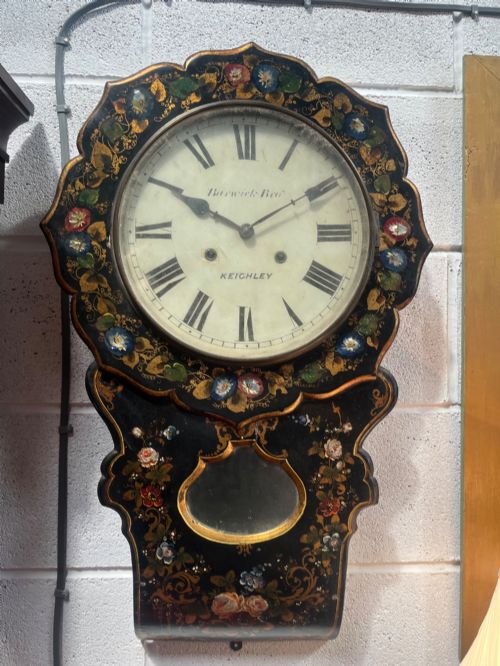
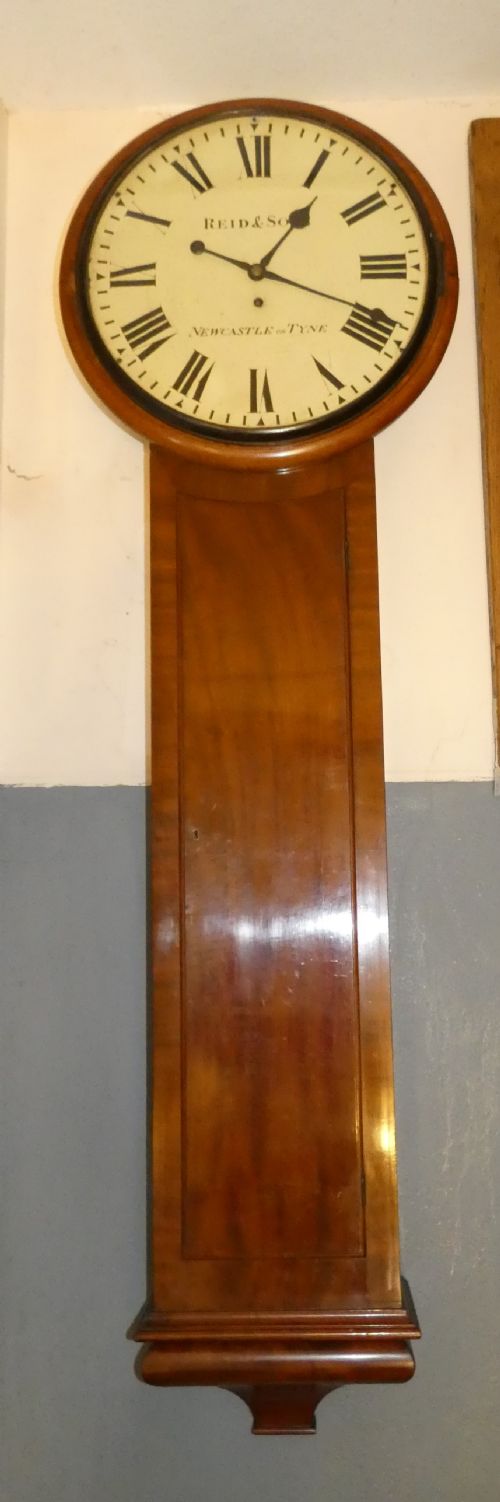
Most examples found here utilise mahogany or rosewood cases, often paired with painted metal, enamel, or wooden dials. The lower trunk sometimes incorporates inlay, carving, or mother-of-pearl highlights, giving visual weight to the lower section beneath the dial.
Materials and Construction
Cabinetmakers selected dense hardwoods such as mahogany and rosewood to construct sturdy housings that protected the delicate movements inside. These timbers were frequently polished to a deep lustre, highlighting natural grain patterns while providing structural stability.
Clockmakers fitted brass movements into these timber frames, relying on fusee mechanisms or weight-driven systems to maintain steady tension on the gear train. Dials were painted, enamelled, or fashioned from wood, then marked with clear numerals and paired with carefully shaped hands.
Listings feature mahogany and rosewood drop trunk clocks spanning the Georgian, Regency, and Victorian eras.
Markers of Quality
The sophistication of the movement largely determines the standing of a piece, particularly the presence of twin fusee systems or bell-striking capabilities. Maker signatures inscribed on the dial or movement backplate also elevate a clock, connecting the object to known workshops in London or regional centres.
Cabinet execution distinguishes finer specimens from standard utility pieces, seen in crisp carving, harmonious wood selection, and precise inlay work. The condition of the dial and the original mounting hardware further indicate how carefully the clock has been maintained over generations.
Halliday & Rich·John Walker·R. Roberts·John Thwaites·J.W. Enock·James Bell
The English Drop Trunk Clock Glossary
- Drop dial
- A clock face mounted to a compact wooden box that extends downward into a trunk. This configuration became standard for British wall clocks in the nineteenth century.
- Fusee
- A conical pulley connected to the mainspring by a cord or chain, designed to equalise the declining force of the spring as it unwinds. This mechanism improves the timekeeping accuracy of the clock.
- Twin fusee
- A movement utilising two separate fusee assemblies, one to drive the timekeeping train and another to power the strike train. Such movements are typically found in clocks that sound the hours or quarters on a bell.
- Chisel bottom
- A lower trunk design ending in a sharp, tapered point rather than a curved or box base. This architectural feature appears on specific regional and early nineteenth-century English wall clocks.
English Drop Trunk Clock: Frequently Asked Questions
Where should I hang an English drop trunk clock?
These clocks require a solid wall capable of supporting their considerable weight, ideally at eye level where the dial can be read easily. Pick a spot away from damp areas and direct heat sources to protect the wooden case and mechanical parts.
Ensure the wall is sufficiently stable so that vibrations from daily traffic do not interfere with the pendulum swing. Proper placement allows the clock to keep accurate time while functioning as a prominent decorative feature in a room.
How do I wind the clock?
Opening the glazed bezel or side door provides access to the dial and winding arbors. Use the appropriate winding key to turn the mechanism gently until resistance indicates the spring is fully tensioned.
Take care not to overwind the movement, as this can strain the mainspring or fusee chain. Regular, careful winding maintains consistent tension and keeps the pendulum beating evenly.
How do I date a drop trunk clock?
Examining the cabinet timber, dial materials, and internal movement construction helps narrow down the period of manufacture. Regency and early Georgian examples often feature wooden dials or simpler mahogany housings, while later Victorian versions frequently incorporate rosewood, inlay, and mother-of-pearl.
Signatures painted on the dial or engraved on the backplate often point to a specific maker and working decade. Comparing these stylistic details with known records provides a reliable guide to the clock's age.
What maintenance do these clocks need?
Periodic cleaning and oiling by a qualified horologist ensure the brass gears and pivots continue to operate smoothly without excessive wear. Keeping the pendulum properly regulated prevents the clock from gaining or losing time over consecutive days.
Avoid applying household polishes directly to the movement or dial face, as improper substances can damage painted surfaces and delicate metals. Routine professional servicing preserves both the mechanical integrity and the exterior finish.