

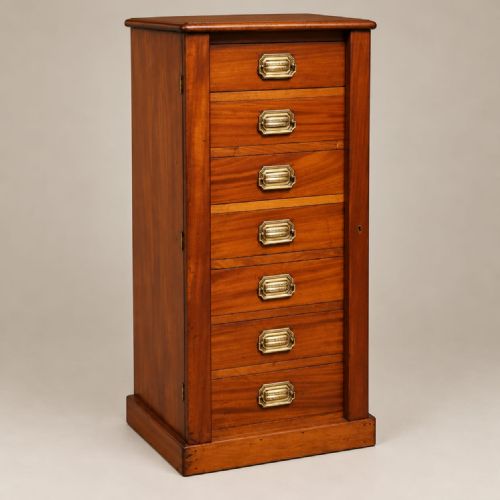
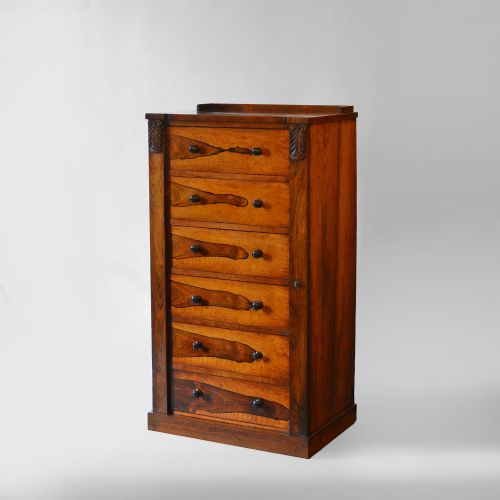
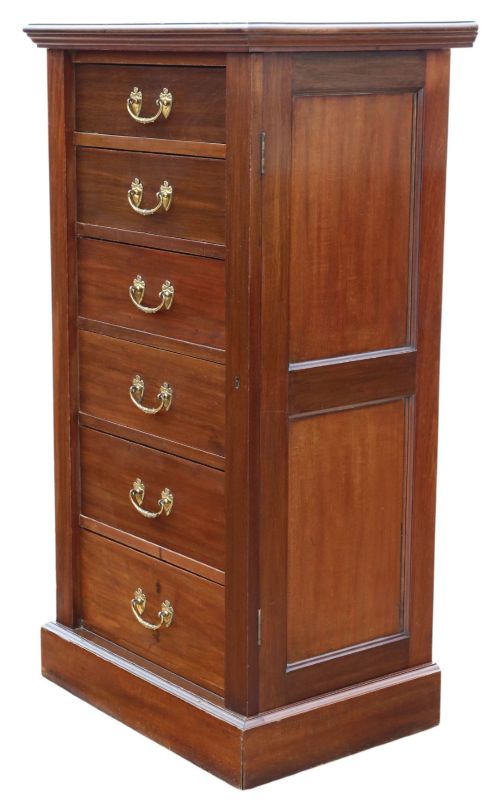
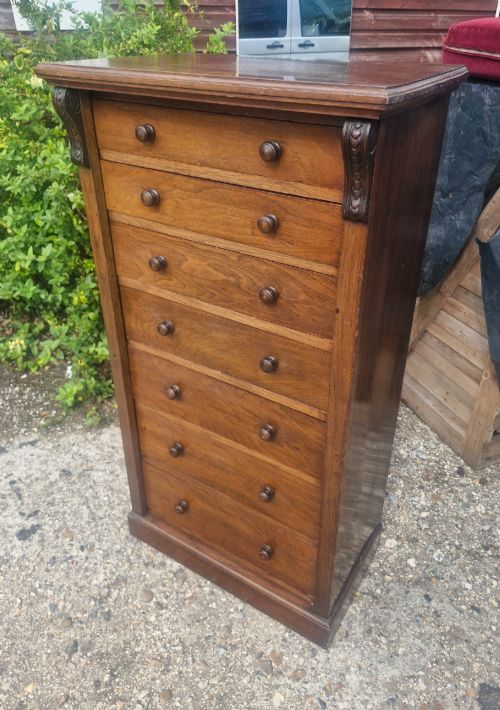
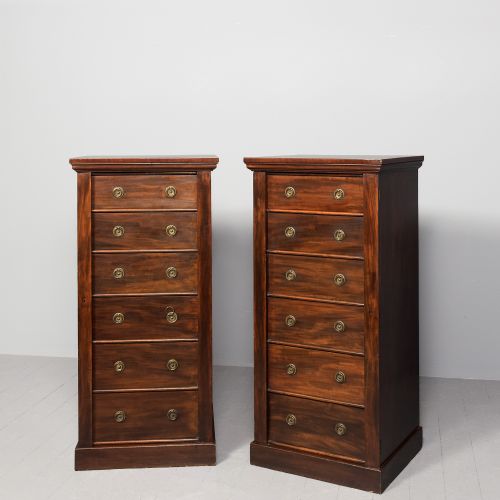


Locking Bar Chest Drawers
Locking bar chest drawers are tall, narrow case pieces secured by a hinged side pilaster, offering collectors a compact footprint paired with ingenious security.
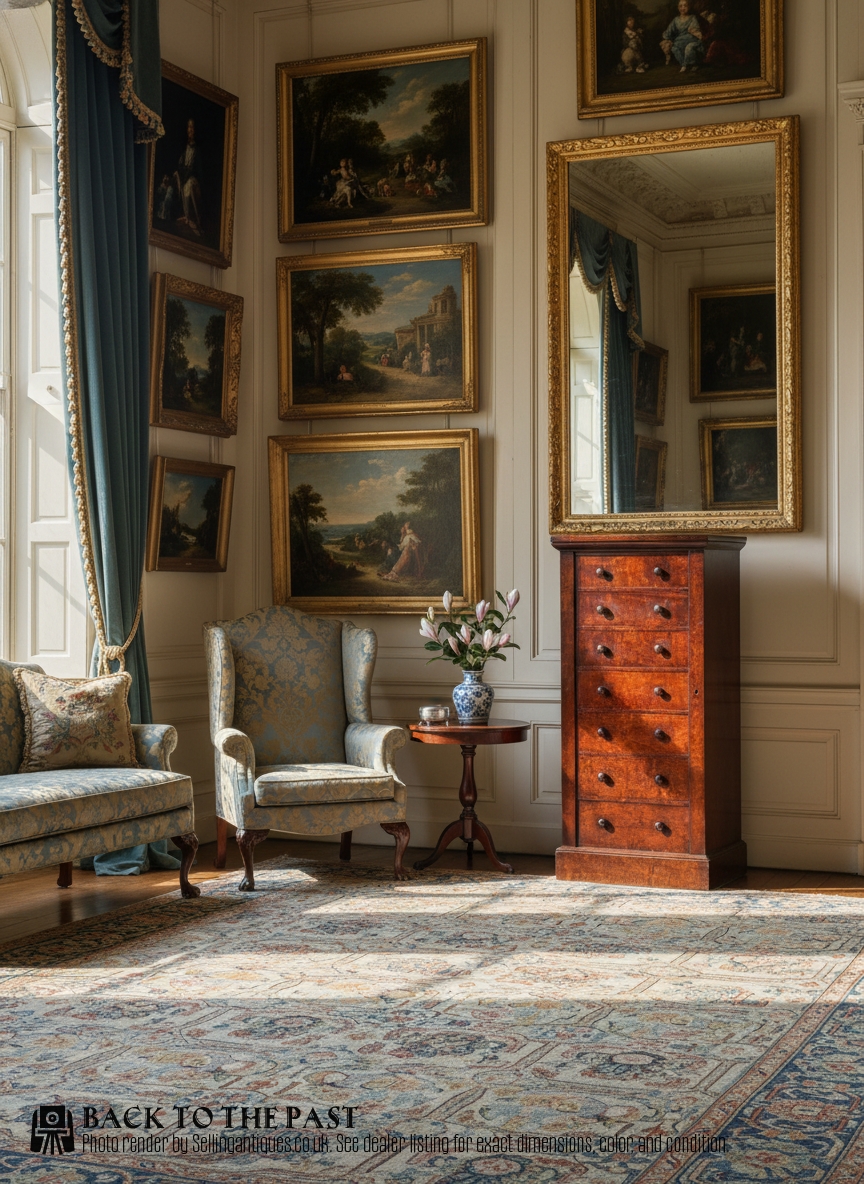
Locking Bar Chest Drawers
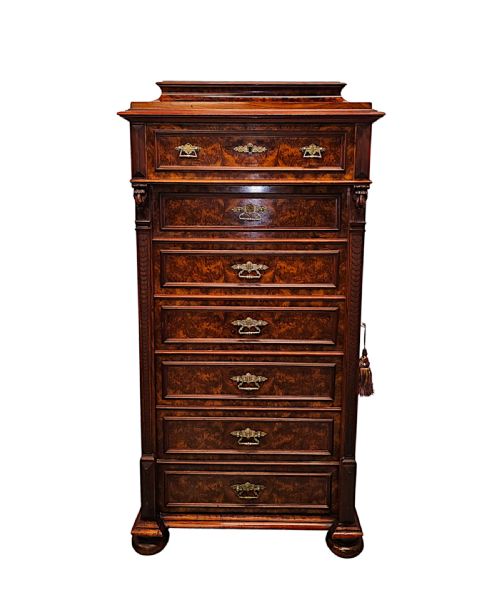
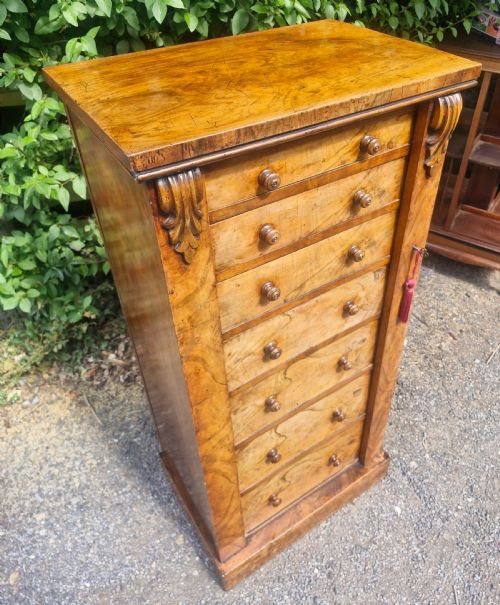
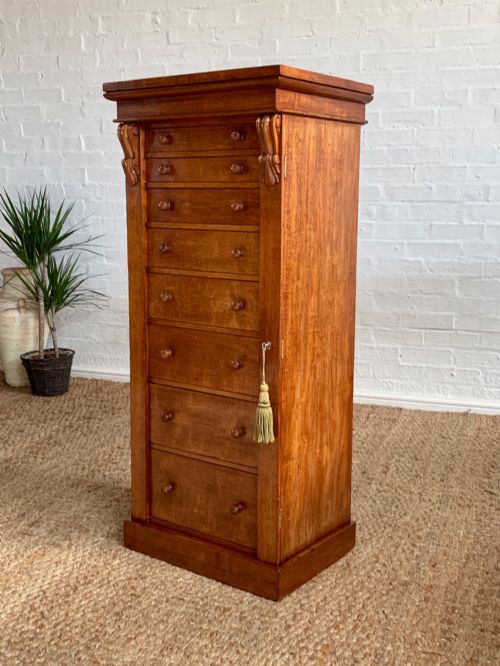
When you search for locking bar chest drawers, you are looking at Wellington style chests and tall cabinets equipped with a hinged locking bar that fastens over the drawer edges. These pieces originated during the Regency and Victorian periods, designed to keep contents secure with a single lockable stile.
The version you are most likely to meet on this page is the Victorian mahogany Wellington chest, usually featuring six or seven graduated drawers. Mahogany and walnut dominate the listings, alongside occasional pitch pine, maple, and miniature examples.
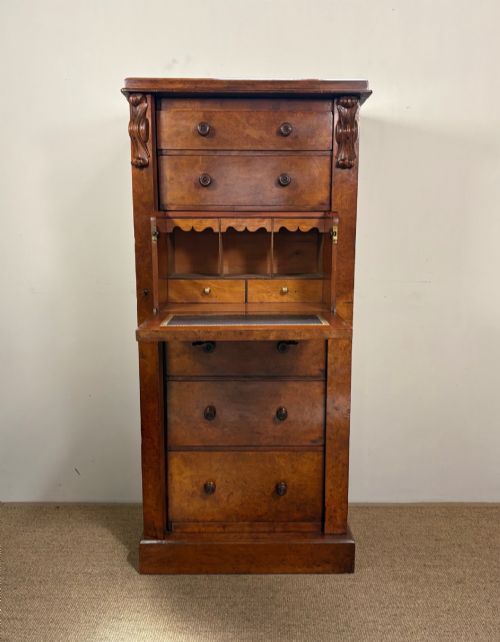
Makers produced these tall, narrow chests in various guises, including secretaire variants where one drawer drops to form a writing surface. They combine deep vertical storage with minimal floor space utilisation, making them practical for smaller rooms.
How they were made
Cabinetmakers constructed these carcases primarily from dense timbers like mahogany and walnut, frequently selecting figured veneers or burr walnut for the drawer fronts and pilasters. Secondary woods provided sturdy framing for the vertically stacked drawers.
The defining mechanism relies on a hinged wooden locking bar or stile on one side, secured by a lock that holds all drawers shut simultaneously. Turned wooden knobs or brass pulls finish the individual drawer fronts, while marquetry and satinbirch accents appear on more elaborate pieces.
Locking Bar Chest Drawers Retail Price Guide 2026
Typical asking prices for locking bar chest drawers among the pieces listed under this phrase on Sellingantiques today, from the lower quarter to the upper quarter. They describe what is for sale here now, not the wider market.
Form variations on this page range from standard six-drawer chests and tall cabinets to miniature models and secretaire variants.
What varies in quality
Quality rests primarily on timber selection and the precision of the locking mechanism. Superior examples utilise rich figured mahogany, burr walnut, or exotic veneers like rosewood, paired with tightly matched grain across the drawer fronts.
The engineering of the locking bar and its hinge dictates the standard of the piece. Fine examples feature smooth, flush-fitting bars that operate effortlessly with their original working locks and keys, showing meticulous cabinetwork throughout the carcase.
The Locking Bar Chest Drawers Glossary
- Wellington chest
- A tall, narrow chest of drawers secured by a hinged locking bar on one side that fastens over the drawer edges and locks with a single key. It typically contains six or seven drawers.
- Secretaire
- A desk disguised as a chest of drawers where one drawer drops down on hinges to reveal a writing surface and small pigeonholes. This hybrid form appears frequently in Regency and Victorian cabinetwork.
- Locking bar
- A vertical wooden stile hinged to the side of a tall chest that swings across the drawer fronts to secure them when locked. It represents the defining mechanical feature of these pieces.
- Pitch pine
- A durable, resinous softwood sourced from North America, utilised for larger utilitarian or regional case furniture during the nineteenth century. It provides a distinct grain pattern compared to hardwoods.
- Marquetry
- The art of applying decorative veneer pieces in geometric or pictorial patterns onto a carcase. It adds ornamentation to the drawer fronts of select walnut examples.
Locking Bar Chest Drawers: Frequently Asked Questions
What is a locking bar chest?
A locking bar chest is a tall, narrow set of drawers featuring a hinged wooden stile on one side. When closed and locked with a key, this bar prevents any of the drawers from opening.
Originally built during the Regency and Victorian eras, these pieces maximise vertical storage while occupying minimal floor space in a room.
How do you open a Wellington chest?
To open the drawers, you first unlock and swing the vertical locking bar to the side. Once this side pilaster is moved, individual drawers can be pulled open freely.
When closing the chest, ensure all drawers are pushed fully home before swinging the bar back into place and engaging the lock.
What is a secretaire Wellington chest?
A secretaire Wellington chest includes a fitted writing drawer among its stacked vertical drawers. The front of this specific drawer folds downward on hinges to create a writing surface.
Inside, you will typically find small compartments and pigeonholes for stationery, hidden behind the secure locking bar mechanism.
Which woods were used for these chests?
Makers predominantly built these chests using dense hardwoods such as mahogany and walnut. Many examples showcase figured mahogany, burr walnut, or exotic veneers across the drawer fronts.
Alternative materials appearing in the evidence include pitch pine, satinbirch, maple, and rosewood, offering varied tones and grain textures.
How do I date a Victorian Wellington chest?
Dating relies on timber choice, construction methods, and hardware styling typical of the nineteenth century. Victorian examples often feature solid mahogany carcases, turned wooden knobs, and pegged drawer construction.
Pieces bearing Regency characteristics or specific marquetry inlay point towards earlier or more decorative periods within the nineteenth-century timeline.