

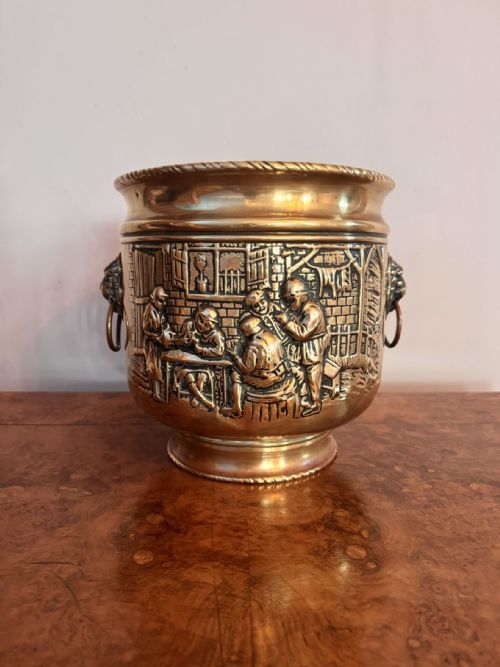
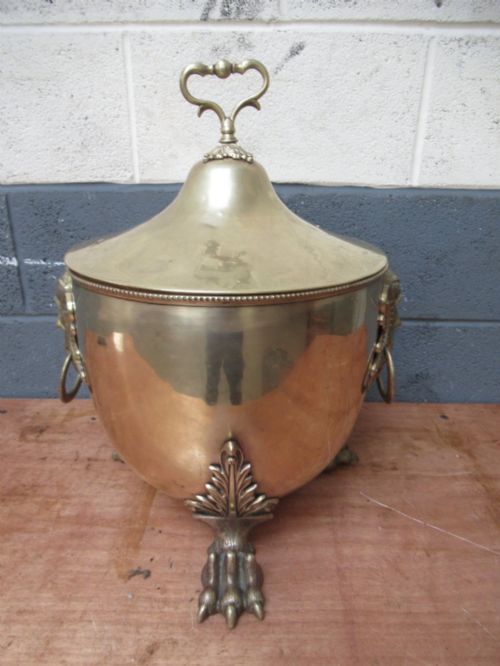
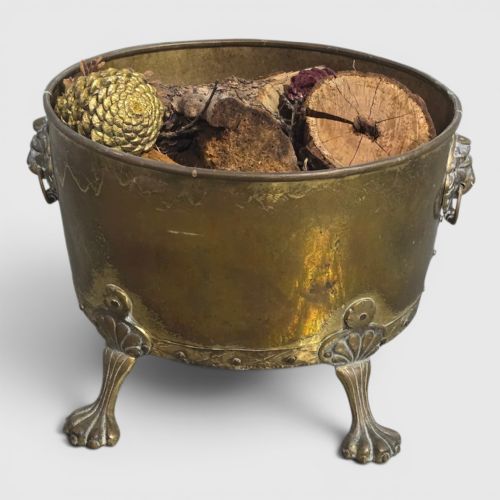


Lion Head Brass Bin
A lion head brass bin brings heavy metal character to a hearth, combining sturdy storage for fuel with bold sculptural handles.
Lion Head Brass Bin
When you search for a lion head brass bin, you are looking at substantial hearthside vessels designed to hold coal, logs, or peat. The examples on this page span the Victorian, Regency, and Edwardian eras, with occasional pieces from the Aesthetic period.
Most items you will encounter take the form of log bins, coal buckets, or jardinières. They function equally well beside a working fireplace as they do repurposed as large planters for the home.
Origins range across English, French, and Dutch domestic manufacturing. The unifying feature remains the heavy cast brass handles modelled as lion heads, frequently paired with drop rings.
How they were made
Makers utilised heavy-gauge brass and copper sheets, often hammered or hand-embossed to create textured body panels. Rivets and soldered seams secure the cylindrical or bucket-shaped forms.
Cast brass lion head mounts are securely bolted or riveted to the sides of the vessels. Contrasting bands of copper, iron, or ebonised wood frequently reinforce the top and base rims.
Lion Head Brass Bin Retail Price Guide 2026
Typical asking prices for lion head brass bin among the pieces listed under this phrase on Sellingantiques today, from the lower quarter to the upper quarter. They describe what is for sale here now, not the wider market.
Some nineteenth-century metalworkers gave their brass lions remarkably fierce expressions to guard the logs.
What varies in quality
The choice of secondary materials marks the difference between standard utility items and high-end country house pieces. Strong structural integrity in the base and tight, clean riveting separate the better examples.
Petrus Ramus
The Lion Head Brass Bin Glossary
- Jardinière
- An ornamental pot or receptacle for plants. These large vessels often double as fuel bins.
- Dinanderie
- The traditional Belgian art of brass and copper object manufacture. This term applies to heavy medieval-style or revival metalware.
- Scuttle
- A metal bucket or coal hod designed for carrying fuel to a fire. Many feature a tipped lip or open top for easy shovelling.
- Aesthetic Movement
- A late nineteenth-century design style emphasising visual beauty over narrative. Pieces from this period often display refined surface decoration.
Lion Head Brass Bin: Frequently Asked Questions
What were lion head brass bins used for?
These vessels served primarily as practical containers for household fuel, holding coal, logs, or peat near the hearth.
Today they function just as well storing firewood or holding large indoor plants and foliage.
How do I clean a brass log bin?
Gentle dusting with a soft dry cloth preserves the aged patina and dark oxidation that collectors value.
Avoid harsh chemical metal polishes unless you specifically prefer a bright, high-shine finish.
Are these bins waterproof?
Many vintage metal vessels contain riveted or soldered seams that may weep moisture over time.
Using a plastic liner inside protects the antique base from damp soil if you use the bin as a planter.
How can I tell the period?
Victorian and nineteenth-century examples often feature heavy hand-hammered body construction and thick cast brass mounts.
Regency pieces tend toward neoclassical proportions, while Edwardian items show lighter gauge materials and machine finishing.