

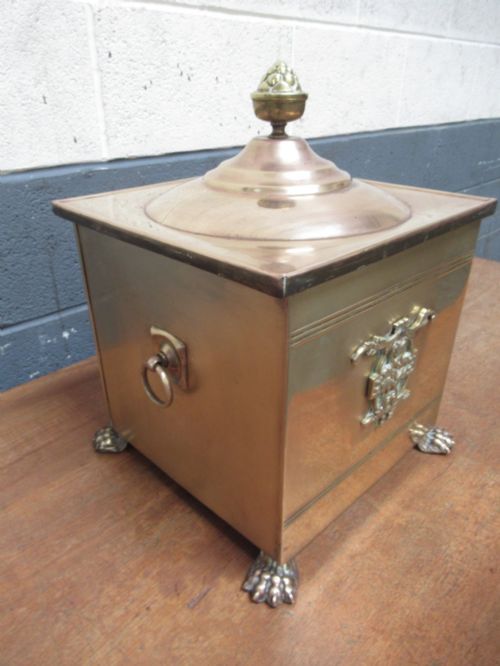

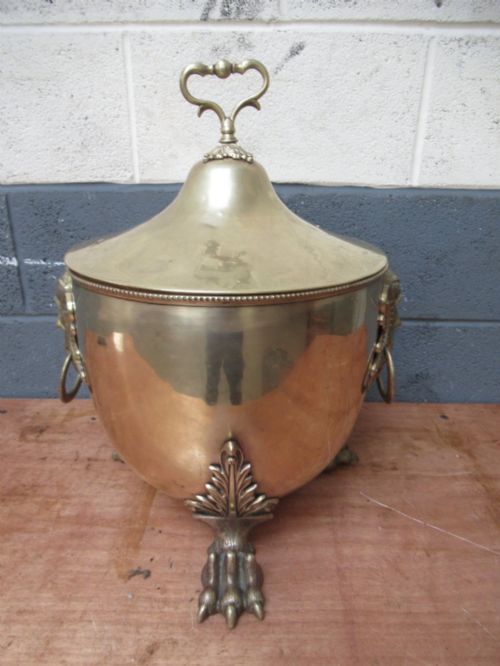
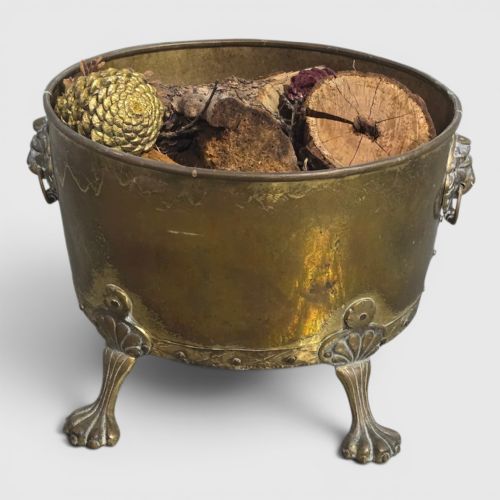


Claw Foot Brass Bin
These claw foot brass bin examples are sturdy fireside receptacles designed for fuel, bringing warmth and metallic sheen to a hearth.
Claw Foot Brass Bin
When you search for a claw foot brass bin, you are looking at fireside accessories and log bins that combine metal vessels with decorative supports. These items served a practical domestic purpose in holding coal, logs or kindling near a fireplace, whilst also adding a reflective element to a room.
You are most likely to meet Victorian and Edwardian examples on this page, spanning periods from the nineteenth century into the early twentieth century. Forms range from lidded bins and scuttles to open planters and cauldrons, alongside related hearthware and occasional work tables.
How they were made
These pieces rely primarily on sheet brass and handbeaten copper, often accented with copper bands, iron liners, or wooden components such as pine, mahogany and ebony. Artisans formed the main bodies through spinning or hammering sheet metal, attaching cast elements for feet and handles.
Techniques varied from plain polished metal surfaces to heavily embossed decoration and handbeaten finishes. Makers occasionally combined contrasting metals, pairing brass bodies with copper rims or bands to create visual depth.
Claw Foot Brass Bin Retail Price Guide 2026
Typical asking prices for claw foot brass bin among the pieces listed under this phrase on Sellingantiques today, from the lower quarter to the upper quarter. They describe what is for sale here now, not the wider market.
Some fireside bins doubled as heavy work tables, proving that Victorians liked their furniture to multitask.
What varies in quality
Quality rests on the weight of the metal used and the crispness of any embossed or handbeaten ornament. Heavier gauges of brass and copper ensure the vessel maintains its structural integrity under the weight of fuel.
The finish of the secondary materials, such as turned wooden handles or dense ebony and mahogany details, distinguishes standard production items from finer country house pieces.
William Soutter & Sons
The Claw Foot Brass Bin Glossary
- Log bin
- A sturdy metal or wooden container designed to hold logs and firewood by a hearth. These vessels often feature carrying handles and raised feet to protect floor surfaces.
- Embossed
- A technique where a pattern is hammered or pressed into the metal from behind to create a raised design. This ornamentation adds texture and catches the firelight.
- Handbeaten
- A surface finish showing the individual marks of a hammer, indicating manual shaping rather than machine stamping. Each hammered indent reflects light differently.
- Aesthetic Movement
- A late nineteenth-century design style focusing on visual beauty over narrative meaning. Objects from this period often display refined craftsmanship and thoughtful ornamentation.
Claw Foot Brass Bin: Frequently Asked Questions
What is a brass log bin used for?
These vessels were originally manufactured to store coal, logs and kindling conveniently close to an open hearth for daily fireside use.
Today, they function equally well as dry storage containers or as large planters for interior foliage and decorative branches.
How do I date a brass bin?
Dating relies on examining the manufacturing techniques, such as handbeaten versus machine-stamped surfaces, and observing the overall style.
Victorian and Edwardian examples often feature specific decorative motifs, cast feet designs, and construction methods characteristic of their decade.
Are these bins made of solid brass?
Many examples utilise solid sheet brass or copper for the main body, frequently combined with other materials.
It is common to find pieces incorporating iron inner vessels, wooden feet made from pine or mahogany, and copper reinforcing bands.
How should I clean a vintage brass bin?
Maintenance typically involves dusting and occasional gentle wiping to preserve the natural patina accumulated over the decades.
Heavy polishing is usually avoided by collectors who prefer the darker, aged appearance characteristic of nineteenth-century fireside metalwork.