

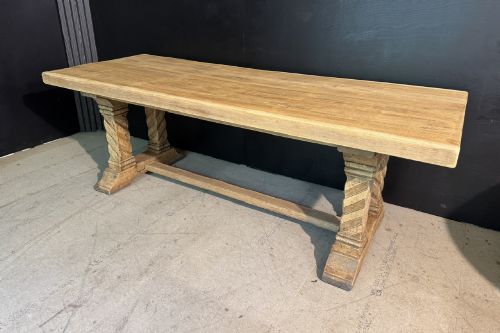


Light Oak Trestle Table
A light oak trestle table brings practical warmth and enduring strength to a dining room, offering a generous surface for daily meals.
Light Oak Trestle Table
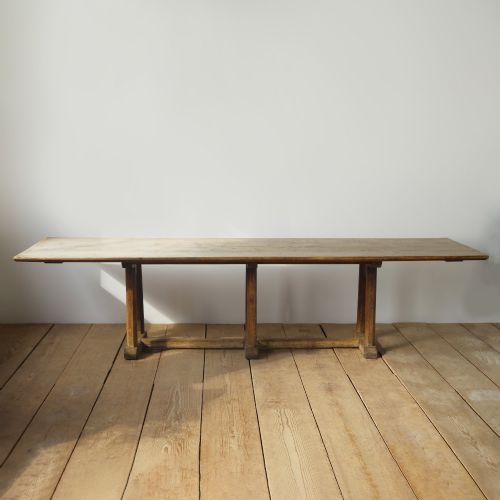
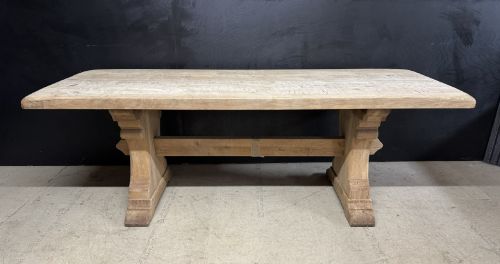
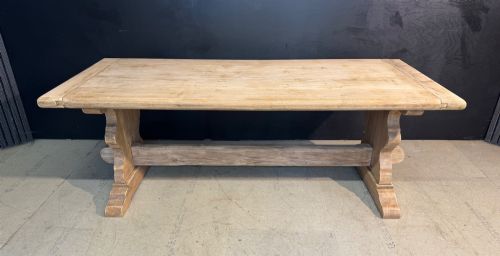
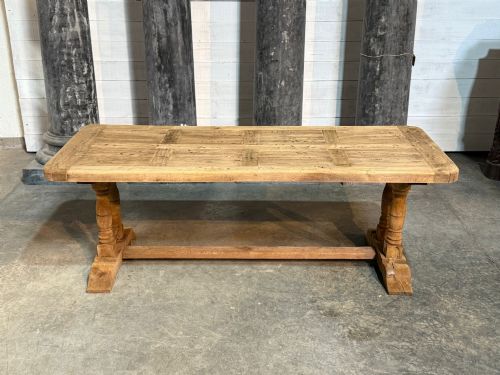
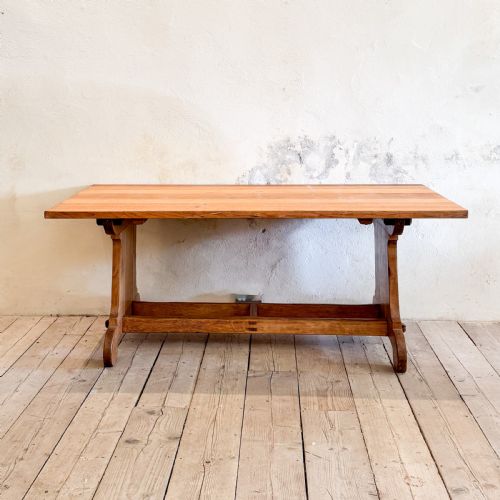
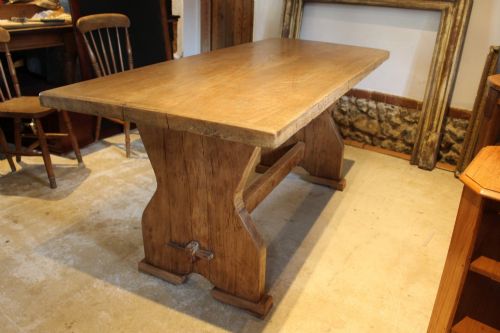
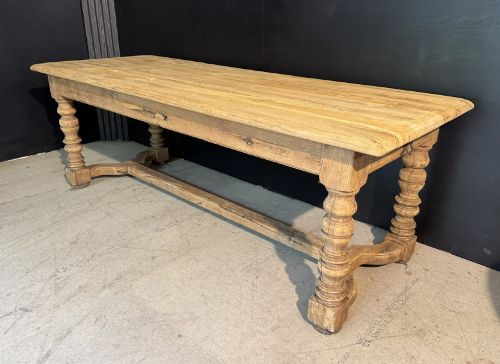
A light oak trestle table provides a sturdy dining or kitchen surface, taking inspiration from traditional refectory and farmhouse forms. These tables appear in styles ranging from Arts and Crafts to French Provincial and Spanish Traditional.
The selection on this page draws heavily from the nineteenth century, the Edwardian era, and the early decades of the twentieth century. Most examples utilise oak, solid oak, or bleached oak timber, often paired with iron elements.
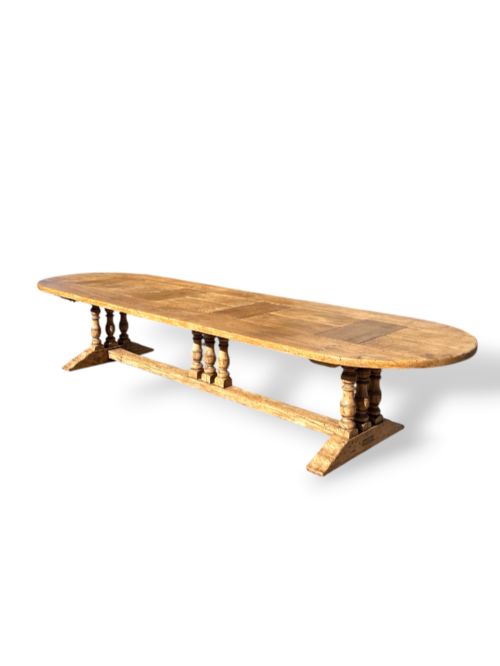
Dining tables and console tables dominate the available forms, spanning formats from compact boards to large refectory tables suited for seating twelve people. Buyers encounter various regional interpretations, including English, French, and Italian designs.
What varies in quality
The selection of timber grade dictates much of the visual character, with dense grain patterns and consistent colouration marking superior examples. Tables fashioned from solid French or English oak hold their structural integrity better over generations of use.
Proportion and execution of the base architecture separate standard pieces from exceptional ones. Well-balanced trestle supports and clean joints demonstrate superior craftsmanship from period makers.
Listings feature oak, solid oak, bleached oak, and scrubbed oak timber across nineteenth-century and early twentieth-century periods.
The Light Oak Trestle Table Glossary
- Trestle table
- A dining or working surface supported by two or more upright frames connected by a horizontal beam. This design maximises legroom along the length of the table.
- Refectory table
- A long narrow dining table traditionally used in monastic dining halls. These forms often feature heavy wooden beams and substantial length.
- Bleached oak
- Timber treated with chemical solutions to lighten its natural yellowish or brown hue. This treatment became popular in various nineteenth and twentieth-century design movements.
- Arts and Crafts
- A design movement valuing traditional craftsmanship, simple forms, and visible construction methods. Pieces from this period emphasise the natural qualities of the wood.
- Scrubbed oak
- Wood surfaces cleaned repeatedly with water and stiff brushes, removing softer grain to create a textured, pale finish. Farmhouse tables frequently display this weathered appearance.
Light Oak Trestle Table: Frequently Asked Questions
How do I clean a bleached oak table?
Wipe the surface gently using a damp cloth with mild soap, avoiding harsh chemical cleaners that can strip the pale finish.
Dry the wood immediately with a soft towel to prevent moisture rings or warping in the timber.
Can these tables seat twelve people?
Larger refectory and farmhouse formats measure several metres in length, specifically designed to accommodate twelve diners comfortably.
Trestle bases are particularly well suited for large seating arrangements because they lack corner legs that restrict legroom.
How do I date an antique oak table?
Examine the construction methods, tool marks beneath the top, and the specific tone of the oak timber to establish the likely period.
Stylistic markers such as Gothic Revival details or Arts and Crafts simplicity also help narrow down the decade of production.
Where were these trestle tables made?
The pieces originate from various European workshops, with strong representation from English, French, and Italian makers.
Regional preferences influenced whether a table took a rustic farmhouse form or a more formal refectory design.