
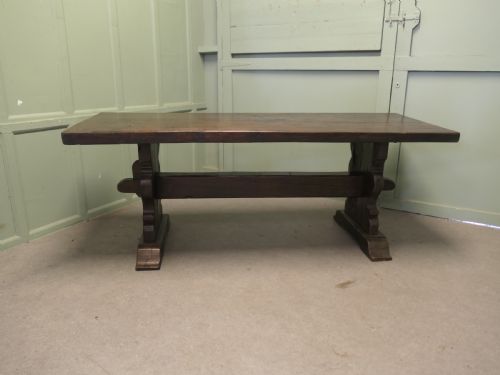
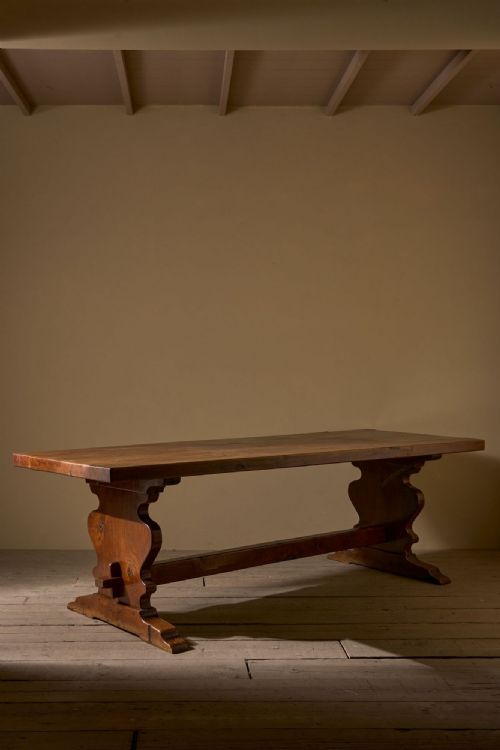


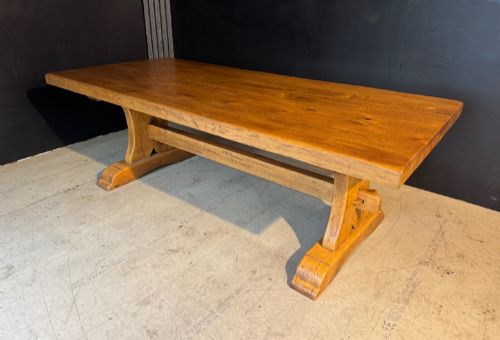


Pegged Oak Trestle Table
These heavy timbers give a pegged oak trestle table its enduring grip on the room, offering a solid surface built to last centuries.
Pegged Oak Trestle Table
A pegged oak trestle table provides a sturdy dining surface rooted in centuries of traditional craftsmanship. When you search for a pegged oak trestle table, you encounter robust refectory forms, farmhouse designs, and monastic dining tables.
The pieces listed on this page span the seventeenth century, the nineteenth century, and nineteen twenty, alongside Victorian examples. Solid timber construction defines these dining tables, bringing substantial weight and historic character to kitchen and dining spaces.
French country and rustic farmhouse styles appear frequently among the listings, often featuring long plank tops supported by trestle bases. These tables serve heavy domestic use while maintaining the distinct architectural presence of older oak furniture.
Materials and construction
Construction relies entirely on solid oak timbers, joined with wooden pegs that secure the framing without modern metal fasteners. This traditional method allows the wood to expand and contract naturally with seasonal humidity changes.
Trestle bases provide structural support beneath thick plank tops, distributing weight evenly across the floor. Carpenters shaped these dining tables using hand tools, leaving subtle surface textures visible across the grain of the oak.
Listings for pegged oak trestle tables include solid oak dining tables from the seventeenth century, the nineteenth century, nineteen twenty, and the Victorian period.
Judging quality in oak tables
Quality rests in the thickness of the oak plank top and the integrity of the pegged joints holding the trestle base together. Tables retaining their original timber surfaces show depth of colour and authentic wear built up over generations.
Proportion and stability separate standard kitchen tables from superior refectory examples. The weight of the solid oak demands precise joinery in the trestle supports to prevent movement during daily use.
The Pegged Oak Trestle Table Glossary
- Refectory table
- A long dining table traditionally used in communal dining halls. These surfaces provide generous length for gathering.
- Trestle base
- A structural support system consisting of upright posts connected by a horizontal stretcher. This design maximises legroom along the length of the table.
- Plank top
- A table surface constructed from multiple parallel boards of solid timber joined edge to edge. This method creates wide surfaces from manageable pieces of wood.
- Pegged joinery
- A method of securing wood joints using carved wooden dowels instead of metal nails or screws. This traditional technique accommodates natural wood movement.
Pegged Oak Trestle Table: Frequently Asked Questions
What is a pegged oak trestle table?
A pegged oak trestle table is a long dining table built from solid oak with wooden pegs securing the joints. These pieces utilise trestle bases rather than standard corner legs.
Such tables appear in seventeenth-century, nineteenth-century, and early twentieth-century forms, serving as primary dining surfaces in country kitchens and large rooms.
How do I care for a solid oak table?
Solid oak requires simple maintenance using dry or slightly damp cloths to clean the surface. Avoid harsh chemical cleaners that strip the natural finish.
Keep these tables away from direct heat sources and sudden temperature shifts to protect the historic timber and pegged joints from splitting.
Are these tables suitable for daily dining?
These robust oak tables handle daily family meals and heavy kitchen use with ease. The dense hardwood resists everyday wear.
Using mats under hot dishes and placemats for liquids protects the antique wood surface while allowing the table to remain the centrepiece of the room.
How do I identify the age of an oak table?
Age is determined by the construction methods, tool marks left on the oak timber, and the style of the trestle base. Seventeenth-century examples show different joinery details compared to nineteenth-century or nineteen-twenty pieces.
Examine the underside of the plank top and the peg placement for signs of traditional hand-working techniques.