
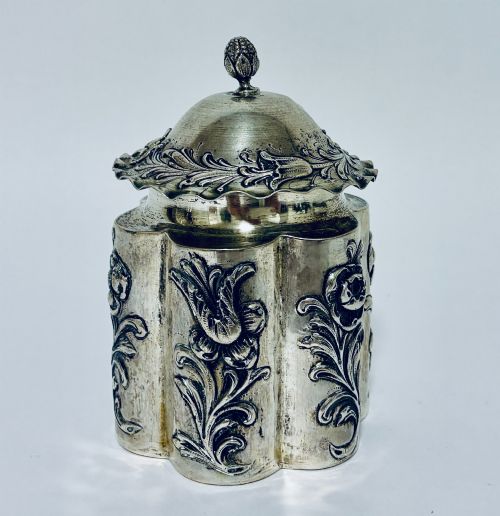


Lidded Tea Caddy Jar
These lidded tea caddy jar pieces are practical vessels designed to store dry leaves securely, prized by collectors for their fine metallic workmanship and painted porcelain bodies.
Lidded Tea Caddy Jar
A search for lidded tea caddy jar brings together a diverse group of storage vessels, ranging from Georgian ceramic canisters to heavy sterling silver containers from the Victorian and Edwardian eras. Buyers encounter items intended originally for dry leaf storage alongside related forms such as ginger jars, biscuit barrels, and decorative boxes.
The pieces appearing on this page span several centuries, with examples originating from English potteries, European workshops, and Ottoman makers. Forms vary from simple oval outlines with pull-off lids to heavily chiselled brass or repousse decorated silver pots.
Porcelain variants often display handpainted patterns, including traditional blue and white designs or rich red tones associated with later periods. Metal alternatives utilise sterling silver, silver plate, or brass, reflecting the changing tastes of collectors across the eighteenth, nineteenth, and twentieth centuries.
Materials and construction methods
Makers shaped these objects using enduring materials like sterling silver, soft-paste porcelain, and brass, often combining metalwork with cut glass or gilt enamel highlights. Techniques ranged from wheel throwing and handpainting in ceramic production to repousse hammering and chiselling in metalwork.
Silver items frequently carry hallmarks indicating their assay office and date of production, while porcelain pieces rely on underglaze blue painting or overglaze enamels. Artisans employed pull-off lids and tightly fitted closures to protect the contents from moisture and air.
At least one industrious Victorian silversmith decided a tea storage jar should double nicely as a secret hiding spot for small trinkets.
Distinguishing quality in these vessels
Quality in these items rests upon the crispness of surface decoration and the structural integrity of the lid and body. Pieces featuring detailed handpainting or deep, well-defined repousse work stand apart from simpler commercial productions.
The weight of the metal and the precision of the closure mechanisms indicate the original maker's investment of time and skill. Intact gilding, clear hallmarks, and well-preserved ceramic glazes all contribute to a higher standard of craftsmanship.
Ernest Druiff & Co
The Lidded Tea Caddy Jar Glossary
- Tea caddy
- A small container designed originally for storing dry tea leaves securely. These vessels often feature fitted lids and internal compartments.
- Ginger jar
- A ceramic vessel with a broad body and a domed lid, originally used to transport spices. Many examples later found domestic use as decorative jars or tea containers.
- Repousse
- A metalworking technique where the artisan hammers the design from the reverse side to form a raised relief on the front. This method creates tactile, highly decorative surfaces on silver and brass boxes.
- Soft-paste porcelain
- A ceramic material composed of clay and glass frit, fired at lower temperatures than hard-paste porcelain. It is characteristic of many eighteenth-century English factory productions.
- Sheffield plate
- A composite material made by fusing a thin sheet of silver to a thicker copper base. It was widely used for tableware and storage boxes before electroplating became common.
Lidded Tea Caddy Jar: Frequently Asked Questions
What were tea caddies used for originally?
These vessels served to store expensive dry tea leaves safely under lock and key in the grand houses of the eighteenth and nineteenth centuries. Because tea was a costly commodity, the containers were built to protect the contents from dampness and theft.
Over time, the form evolved from simple domestic containers into highly decorative household objects made of porcelain, silver, and brass. Many pieces later found alternative uses on dressing tables or mantelpieces as general storage boxes.
How do I care for a silver tea caddy?
Silver vessels require gentle cleaning with a soft cloth to remove dust and prevent tarnish buildup. Avoid harsh chemical dips that can strip away the original finish and soften delicate engraved details.
Store the items in a stable environment away from direct sunlight and excessive humidity. Handling them with clean hands helps preserve the natural patina developed over decades.
How can I tell a Georgian caddy from a Victorian one?
Georgian examples often show simpler, classic proportions with restrained ornamentation, reflecting neoclassical or early revival tastes. Materials from this era frequently include Sheffield plate or early soft-paste porcelain.
Victorian and later pieces tend to feature heavier ornamentation, such as repousse work, or distinct maker's marks regulated by established assay offices. The introduction of bright cut engraving and alternative alloys points directly toward the later nineteenth and early twentieth centuries.
Are these jars still suitable for storing tea?
While historic vessels can physically hold tea leaves, most collectors prefer to display them as decorative objects rather than for daily use. Older metal containers and antique glazes may not meet modern food safety standards.
Exposing antique interiors to moisture and volatile oils can also damage fragile linings, seals, and painted surfaces. Keeping them empty preserves their material integrity for the future.