
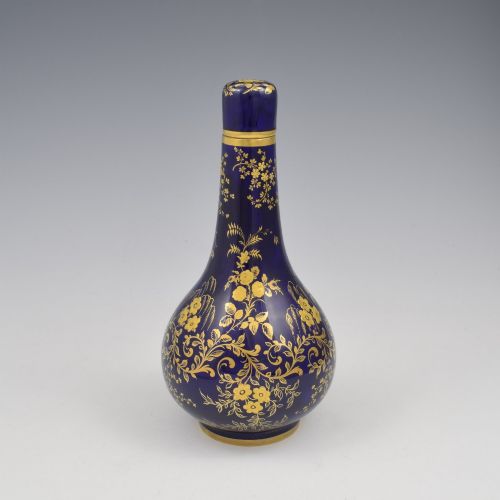
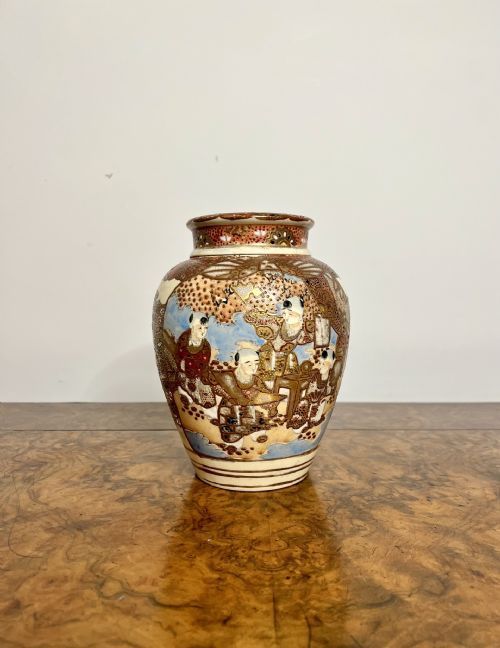


Ornamental Porcelain Jar
An ornamental porcelain jar brings tactile elegance to a room, offering refined form and painted detail from centuries past.
Ornamental Porcelain Jar
An ornamental porcelain jar encompasses covered vessels, ginger jars, tea caddies, urns, and pot pourri containers designed for display. When searching for an ornamental porcelain jar, buyers encounter diverse forms ranging from classical continental urns to Japanese Satsuma ware and English pieces. The selections span the eighteenth century, nineteenth century, Edwardian era, and early twentieth century.
The objects frequently appear with covers or lids, serving as decorative vessels rather than utilitarian storage. Styles such as Chinoiserie, Neoclassical, and Sèvres style influence the decorated surfaces, alongside hand-painted motifs executed by named factories and makers. Pieces take the form of bottle vases, ginger jars, and lidded vases.
Materials and construction
Potters shaped these pieces from fine porcelain and earthenware, applying smooth glazes to seal the ceramic body before surface decoration. Artisans then hand-painted detailed scenes and patterns directly onto the fired surface, utilising enamel colours for rich visual depth.
Gilt enamel and gold leaf accents were frequently added by hand to highlight rims, handles, and panel borders. Lidded designs required precise kiln firing to ensure covers matched the collar of the jar or urn.
Several jars were made to hold dried petals, quietly scenting nineteenth-century parlours long before modern air fresheners existed.
Distinguishing quality
Superior examples display crisp hand-painting by skilled artists, whereas lesser pieces rely on simpler transfer-printed decoration. The precision of the gilding and the weight of the porcelain body also mark the distinction between standard production and finer studio or factory work.
The retention of original matching covers significantly elevates a piece, as many lids suffered damage or loss over decades of domestic use.
Derby Porcelain·Chamberlain Worcester·Royal Vienna·Herend·Royal Worcester
The Ornamental Porcelain Jar Glossary
- Porcelain
- A fine, hard ceramic fired at high temperatures, known for its bright white body and resonant quality when struck.
- Pot Pourri
- A lidded vessel perforated to allow dried scented herbs and flowers to release fragrance into a room.
- Gilt
- A thin layer of gold or gold-coloured material applied to the surface of ceramics for decorative embellishment.
- Chinoiserie
- A European artistic style reflecting Chinese aesthetic motifs, commonly seen on eighteenth and nineteenth-century ceramics.
- Ginger Jar
- A broad-shouldered ceramic vessel originally used for storing spices, later adapted purely for ornamental display.
Ornamental Porcelain Jar: Frequently Asked Questions
What is an ornamental porcelain jar used for?
These vessels were created primarily for interior display on mantelpieces, side tables, and cabinets. They served to showcase wealth, taste, and the skill of ceramic manufacturers.
Some variants, such as pot pourri jars, held scented botanicals to freshen domestic spaces, while others functioned purely as sculptural focal points in a room.
How do I date a porcelain jar?
Dating relies on identifying factory marks, stylistic influences such as Neoclassical or Chinoiserie, and the characteristics of the glaze and gilding. Factory culls and artist signatures often provide specific clues.
Comparing the potting technique and colour palette to documented examples from periods like the eighteenth or nineteenth century helps narrow the timeframe.
Are these jars fragile?
Ceramic and porcelain are inherently brittle materials that require careful handling during cleaning and relocation. Glazed surfaces resist everyday dust but remain vulnerable to sharp impacts.
Lids and covers demand particular care, as they sit loosely upon the vessel body and can easily slide off if the jar is tilted.
What is Satsuma ware?
Satsuma ware is a type of Japanese earthenware featuring a distinctive ivory-coloured, craquelure glaze. Pieces are typically decorated with elaborate polychrome enamels and raised gold leaf.
Originating from the Satsuma province, this style gained substantial popularity in the West during the Meiji period and early twentieth century.