


Oriental Style Ginger Jar
An oriental style ginger jar brings rich colour and traditional pattern into a room, spanning porcelain, cloisonne and stoneware across multiple centuries.
Oriental Style Ginger Jar
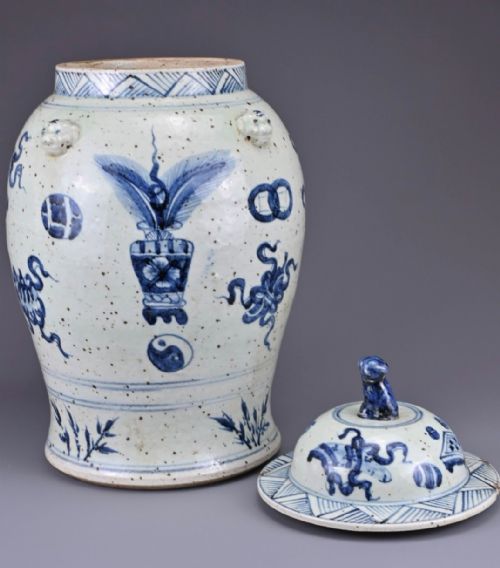
An oriental style ginger jar is a decorative lidded vessel originating in ceramic forms and later adapted into table lamps and decorative urns. You will frequently meet blue and white porcelain jars from the nineteenth century alongside Japanese cloisonne pieces and Imari style lidded vases.
The selection ranges from Chinese export designs and Qing Dynasty interpretations to twentieth century works and European reproductions by makers such as Samson. These objects take the form of traditional ginger jars, tea caddies, kamcheng jars and larger covered vases.
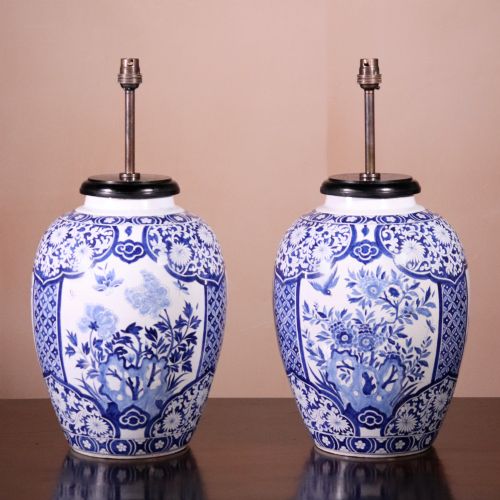
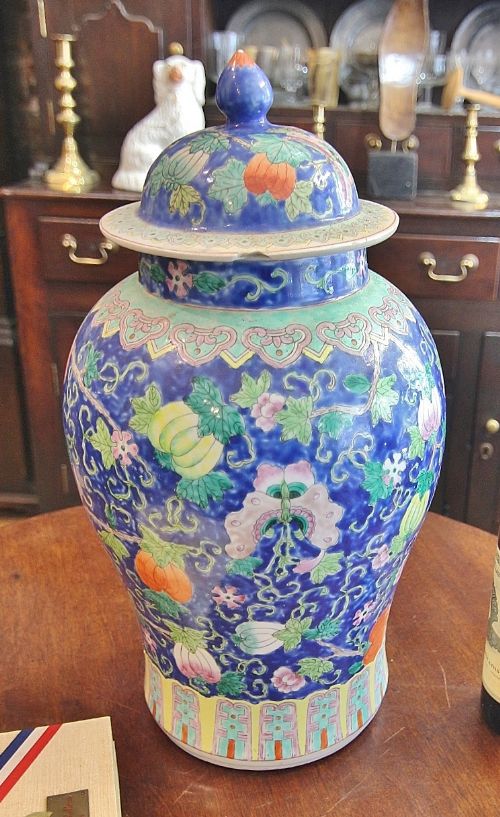
Many examples are mounted with brass or ormolu or converted into lamps while retaining their classic silhouette. The styles represented cover Chinoiserie, Famille Verte, Famille Rose and Japanese Meiji aesthetics.
How they were made
Porcelain forms the foundation of most pieces, decorated with cobalt pigment underglaze or painted with handpainted enamel palettes including Famille Verte and Famille Rose. Artisans also utilised brass, copper and enamel for cloisonne construction where wire cells contain the colour.
Stoneware appears in traditional bodies, while secondary elements incorporate wood and fabric. Surface decoration relies on meticulous brushwork, sometimes complemented by ormolu mounts fitted to the ceramic base or collar.
Some dragons on these jars boast five claws, a detail historically reserved for imperial eyes only.
What varies in quality
The refinement of the painted detail and the precision of the cobalt pigment application dictate the visual impact of a ceramic jar. Pieces with crisp enamel work and well-defined glaze depth display greater artistic control than simpler interpretations.
For cloisonne pieces, the neatness of the metal wirework and the evenness of the enamel fill distinguish finer workmanship. The presence of matching original lids and integrated ormolu mounts further elevates the character of the object.
Herend·Samson·Mason
The Oriental Style Ginger Jar Glossary
- Famille Rose
- A palette of opaque enamels dominated by pink or rose colours, introduced in the Qing Dynasty. This technique allowed for softer tonal gradations in floral and figural scenes.
- Famille Verte
- A green-dominated enamel palette used on Chinese porcelain. It relies on transparent green enamels combined with blue, yellow and iron red.
- Imari
- A style of Japanese export porcelain featuring underglaze blue and overglaze red, gold and black. The aesthetic was widely copied in Europe during later centuries.
- Cloisonne
- An enamelling technique where metal wire is soldered to a base to form compartments filled with paste and fired. The resulting surface shows coloured patterns separated by thin metal lines.
- Kamcheng
- A covered ceramic jar traditionally used in Peranakan households for food storage. These jars typically feature polychrome enamel decoration on a sturdy porcelain body.
- Ormolu
- Gilded bronze used for decorative mounts on ceramics and furniture. It provides a polished metallic accent to the rim or base of a vase.
Oriental Style Ginger Jar: Frequently Asked Questions
What is an oriental style ginger jar?
An oriental style ginger jar is a lidded ceramic or metal vessel originally made for storage and later valued purely for decoration. They are characterised by rounded bodies, high shoulders and fitted covers.
Today these pieces appear as traditional jars, tea caddies, or as converted table lamps. They showcase a range of Asian and European revival aesthetics from the nineteenth and twentieth centuries.
How were ginger jars used originally?
Historically, these vessels stored spices, salt and oil, with ginger being a primary cargo transported in them from East Asia to Europe. Their tight lids helped preserve the contents during long sea voyages.
Over time, European collectors began displaying them purely as ornamental objects. This shift turned utilitarian storage containers into prized items for interiors.
Are these jars antique or later reproductions?
The selection includes nineteenth century pieces, Victorian items, and early twentieth century works alongside European revival pieces from houses like Samson. Each listing specifies the period based on stylistic evidence and manufacture.
Examining the glaze, paste and enamelling helps distinguish nineteenth century originals from later interpretations. European studios frequently paid homage to earlier Kangxi or Qing designs.
How do I style a ginger jar at home?
Ginger jars work well displayed singly on a mantelpiece or grouped as pairs on a side table. Their strong patterns and blue and white or polychrome palettes add focal points to neutral rooms.
Converted lamp versions provide both ambient lighting and decorative presence. They integrate easily into traditional and eclectic interiors alike.