





Lidded Ceramic Temple Jars
Lidded ceramic temple jars bring substantial presence to a room, offering bold patterns and traditional forms from Asian and European kilns.
Lidded Ceramic Temple Jars
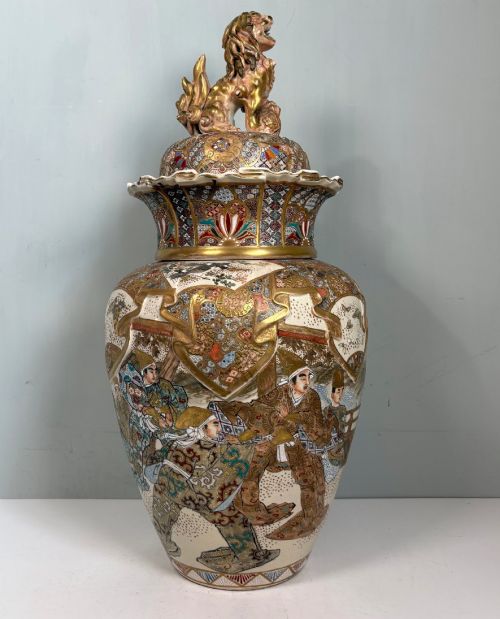
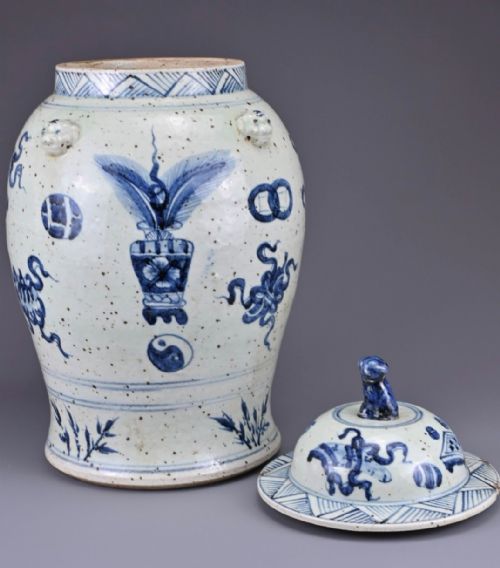
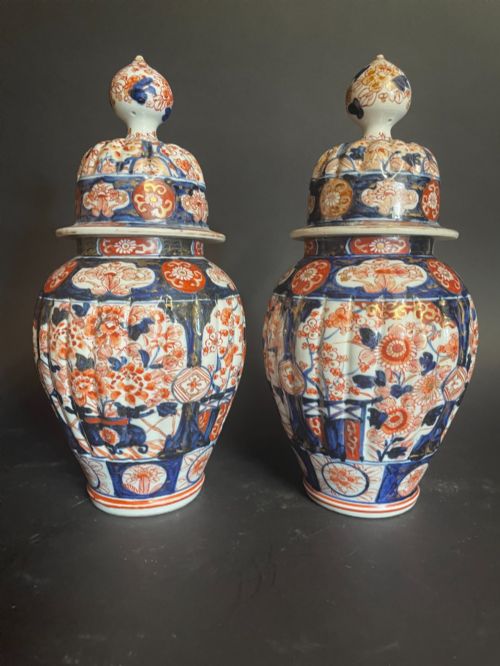
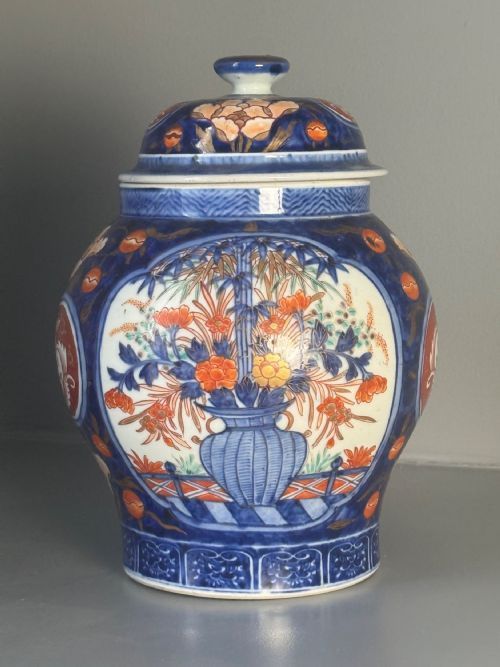
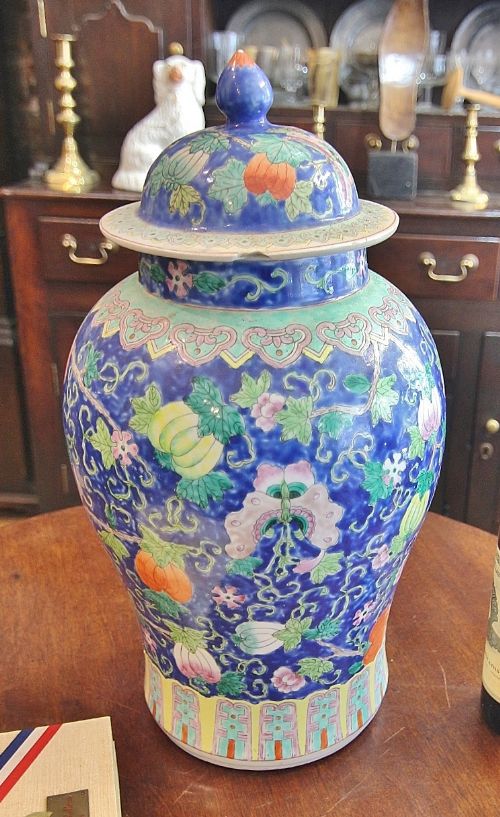
Lidded ceramic temple jars encompass large covered vessels, ginger jars, and baluster vases originating primarily from Japanese and Chinese traditions. When examining lidded ceramic temple jars on this page, buyers will frequently encounter pieces styled in Japanese Imari palettes alongside Chinese blue and white porcelain.
The forms span significant floor-standing proportions down to mantel-sized containers, often grouped in pairs. These pieces arrive from periods ranging across the nineteenth century into the mid-twentieth century, with specific regional aesthetics such as Arita, Satsuma, and Kutani.
Makers utilised traditional vessel shapes designed originally to hold spices, medicines, or ceremonial items. Today, these lidded jars serve as decorative centrepieces in traditional and eclectic interiors alike.
How they were made
Potters shaped porcelain and earthenware bodies on the wheel or pressed them into moulds to create heavy baluster and octagonal forms. Cobalt pigment provided the deep blues underglaze, while overlying enamel additions brought richer tones of iron red and green.
Gilding and gold leaf highlights were frequently applied over the glaze to catch the light on fine details. Kiln firing fixed these colours permanently, yielding durable surfaces that resisted fading over centuries of use.
Some towering lidded vessels stretch past eighty centimetres in height, demanding their own dedicated floor space.
What varies in quality
The precision and density of the hand-painted brushwork separate ordinary vessels from exceptional examples. Crisp cobalt lines and cleanly registered enamel colours indicate skilled studio work rather than rushed production.
The weight of the porcelain and the balanced symmetry of the lid fitting reveal the potter's mastery. Thick, even glaze coverage without excessive pooling or dry patches marks the upper tier of manufacture.
Fukagawa
The Lidded Ceramic Temple Jars Glossary
- Imari
- A style of Japanese porcelain featuring a palette of underglaze blue, iron red, and gilt highlights. This decorative scheme originated in the town of Arita and became widely exported.
- Baluster
- A vase shape with a rounded lower body that tapers toward a narrow neck and flares slightly at the rim. This silhouette provides stability for large lidded jars.
- Doucai
- A Chinese porcelain technique combining underglaze blue outlines with overglaze enamel infill. The method requires multiple kiln firings to achieve the contrasting colours.
- Satsuma
- Earthenware pottery originating from Satsuma province featuring a characteristic ivory-crackled glaze decorated with intricate polychrome designs and gilt. These pieces are often heavily ornamented.
- Garniture
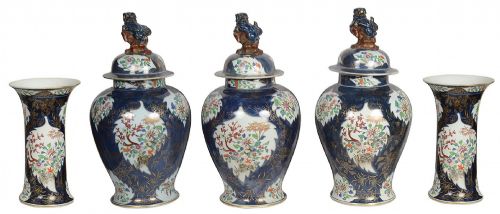
- A set of three or more matching vases and jars designed to be displayed together on a mantelpiece or cabinet top.
Lidded Ceramic Temple Jars: Frequently Asked Questions
How were temple jars originally used?
These large lidded containers served practical storage roles for precious spices, tea, and medicines in Asian households.
Over time, Western collectors repurposed them purely as decorative focal points for mantelpieces and large rooms.
How do I tell Imari from blue and white?
Imari pieces incorporate distinctive iron red and gold leaf highlights alongside traditional underglaze cobalt blue.
Blue and white ceramics rely exclusively on cobalt pigment against a plain white porcelain background without red or gilt additions.
Can I wash my lidded jar?
Dusting with a dry, soft cloth is the safest way to maintain the enamel and gilt surfaces on older ceramics.
Water and harsh cleaning agents can damage delicate overglaze decorations and gold leaf highlights accumulated over the decades.
What is a ginger jar?
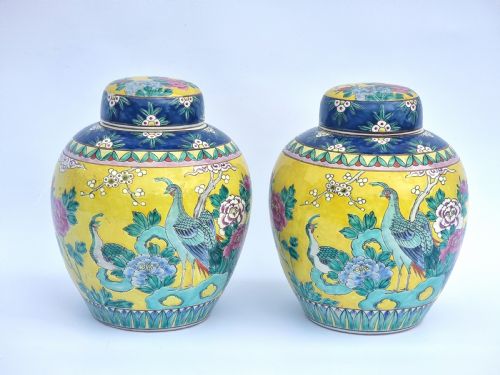
A ginger jar is a vessel with a broad body and a domed lid, originally manufactured to transport spices.
These pieces transitioned into decorative ornaments valued for their balanced proportions and detailed painted motifs.