
Library Display Shelves
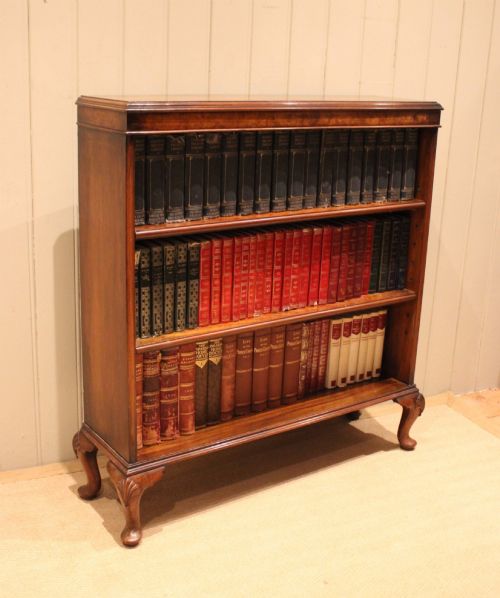
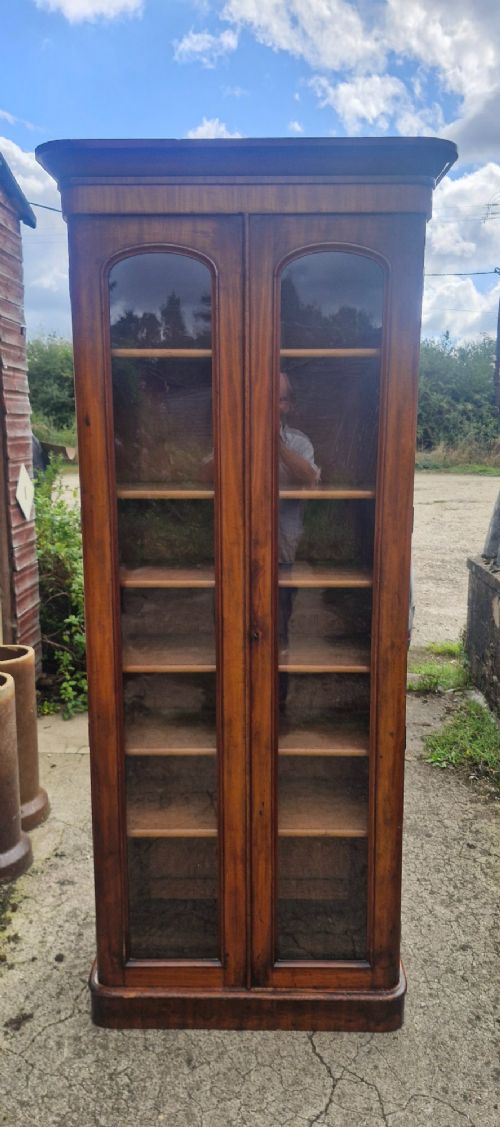
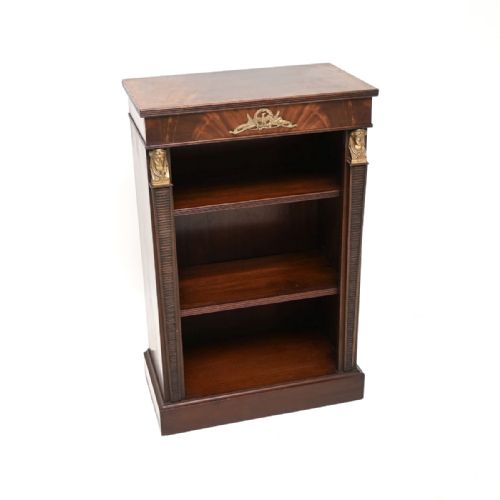
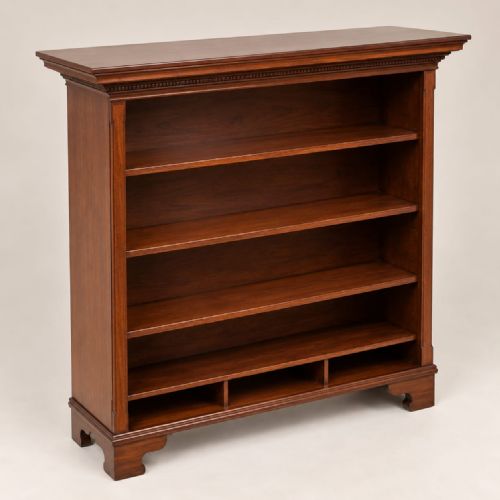
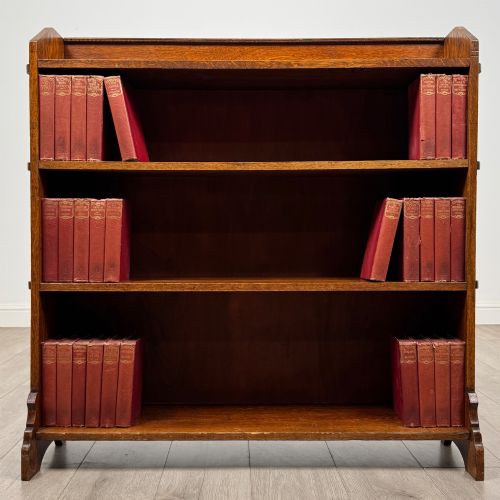
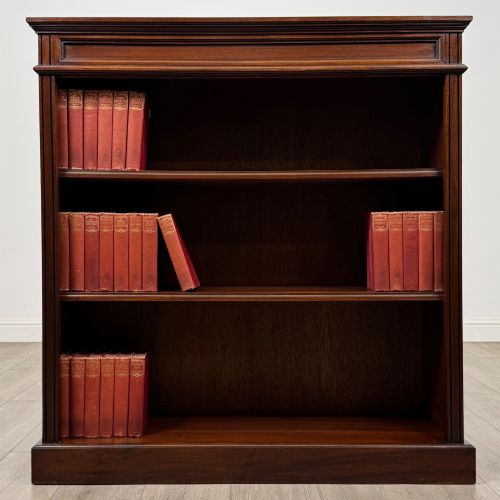
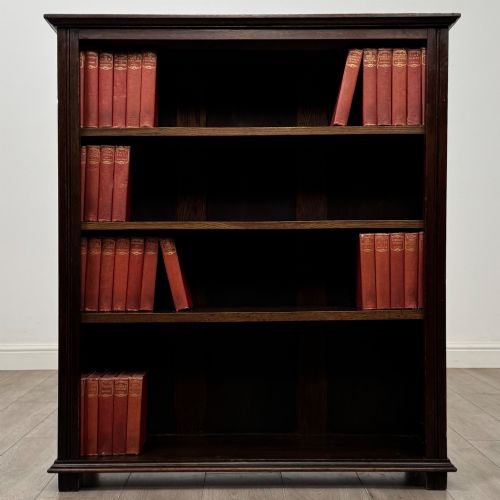
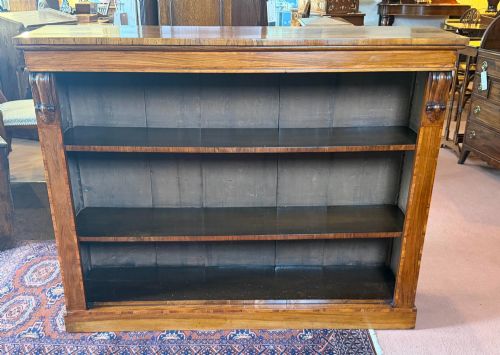
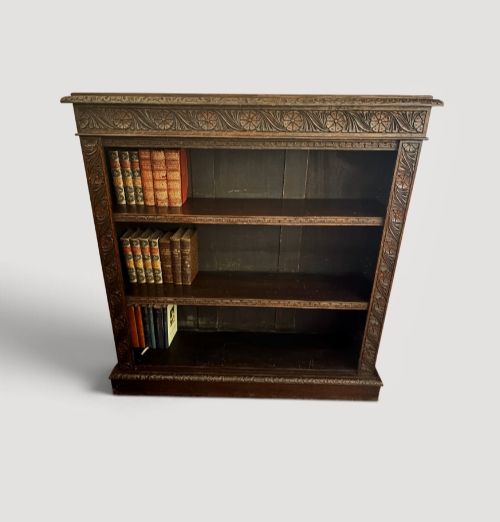
Library display shelves organise volumes with timber construction, ranging from Regency mahogany what-nots to Edwardian oak bookcases.
Library Display Shelves
Library display shelves provide accessible storage for books and display items across domestic spaces. When buyers search for library display shelves, they encounter bookcases, open bookcases, revolving bookcases, and tiered stands.
The pieces on this page span the 18th, 19th, and early 20th centuries. Victorian and Edwardian examples in mahogany and oak appear most frequently alongside Regency and George III designs.
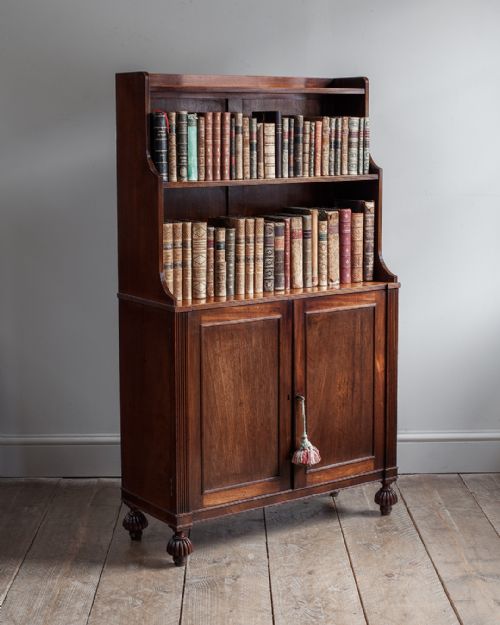
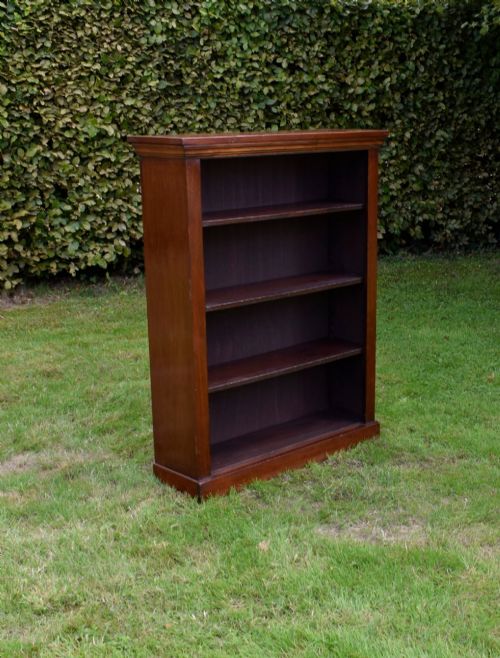
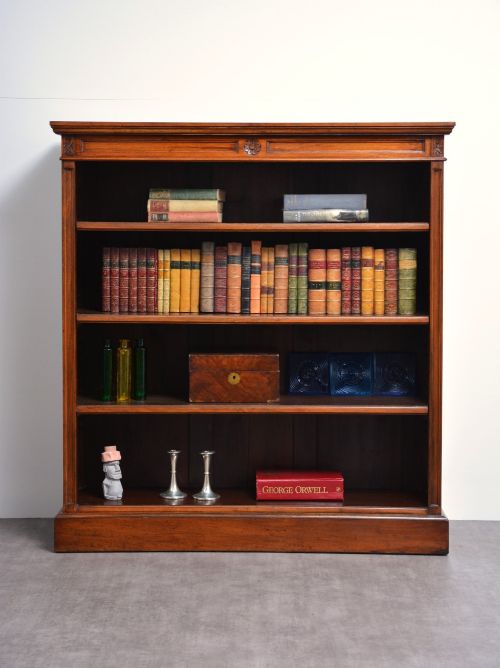
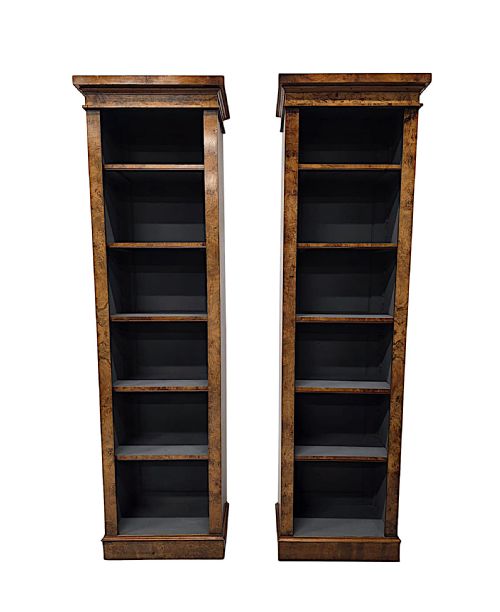
Formations vary from slim open bookcases with adjustable shelves to large breakfront cabinets and tiered what-nots. Many items incorporate practical arrangements designed for functional libraries.
How they were made
Cabinet makers utilised dense hardwoods including mahogany, oak, rosewood, and walnut for structural integrity. Walnut veneer and burr walnut provided decorative grain patterns on prominent surfaces.
Many open bookcases feature adjustable wooden shelves supported by timber or brass fittings. Brass details also appear as mounts, hinges, and castors on specific Regency and Victorian forms.
Listings feature timbers including mahogany, oak, walnut, burr walnut, rosewood, satinwood, and pine.
What varies in quality
Construction methods and timber selection determine the standard of a piece. Solid mahogany, figured burr walnut, and satinwood demonstrate higher material investment than standard pine or basic oak.
Gillows
The Library Display Shelves Glossary
- Open bookcase
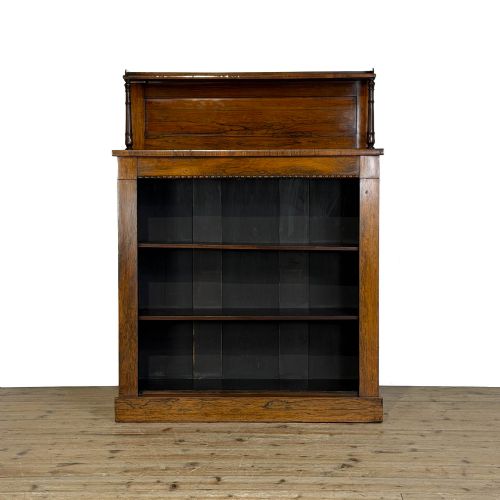
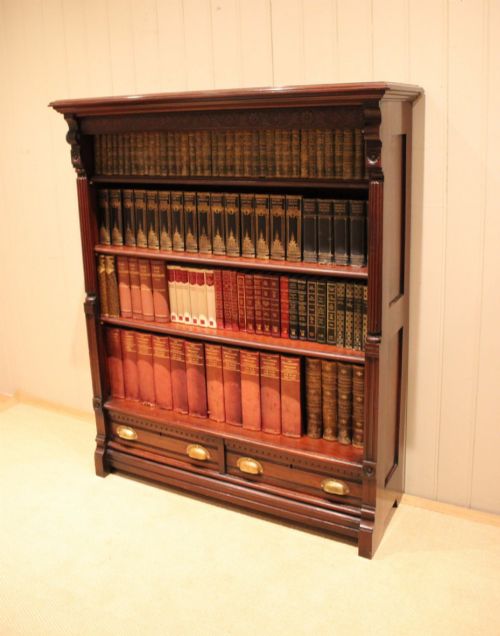
- A shelving unit without doors that exposes book spines directly to the room. These units frequently incorporate adjustable shelves.
- What-not
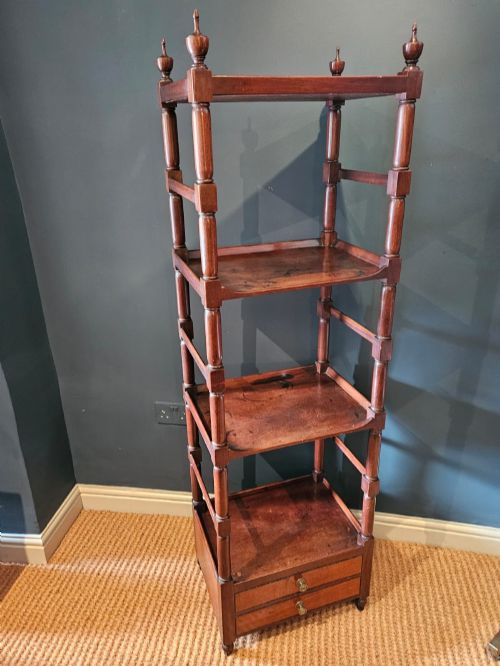
- A multi-tiered stand used for displaying small objects or books. They appear in Regency and Victorian periods with graduated open shelves.
- Revolving bookcase
- A compact shelving unit mounted on a rotating base to allow access from multiple angles. Edwardian examples often feature inlaid mahogany.
- Breakfront
- A cabinet or bookcase whose central section projects forward from the flanking wings. This configuration creates architectural depth in large library rooms.
- Burr walnut
- Timber taken from the warted excrescences of walnut trees, producing intricate swirling grain patterns. Cabinet makers utilised veneers of this wood on high-status furniture.
Library Display Shelves: Frequently Asked Questions
What periods do these shelves date from?
The pieces span the late 18th century through the Edwardian period and the early 20th century. Examples include George III, Regency, William IV, Victorian, and Edwardian eras.
Maker attribution and stylistic details help identify the specific decade of manufacture. Most items reflect the revival styles popular during the 19th and early 20th centuries.
Are the shelves adjustable?
Many of the open bookcases and library cabinets listed include adjustable shelves. This allows books of varying heights to fit within the same bay.
Older pieces often utilise traditional wooden ratchets or brass pins to support the movable shelves. Fixed shelves also occur, particularly on smaller tier stands and specific cabinet forms.
What timbers were used?
Makers constructed these library pieces primarily from hardwoods such as mahogany, oak, walnut, and rosewood. Satinwood and pine also appear in specific pieces.
Figured timbers like burr walnut and walnut veneer provided decorative surfaces on prominent fronts and panels. Brass hardware frequently complemented these dark woods.
How do revolving bookcases work?
Revolving bookcases sit upon a concealed rotating mechanism that allows the entire unit to turn smoothly. This lets readers access books from different sides while occupying a compact footprint.
Edwardian makers produced these freestanding units in timbers such as inlaid mahogany and oak. They functioned beside armchairs or desks in domestic libraries.
Where were they used?
These shelves served in domestic libraries, studies, and drawing rooms to house leather-bound volumes and display objects. Breakfront cabinets stood against primary walls in large country houses.
Smaller pieces like what-nots and revolving bookcases suited tighter spaces or corners. Open formats prioritised immediate access to frequently read texts.