


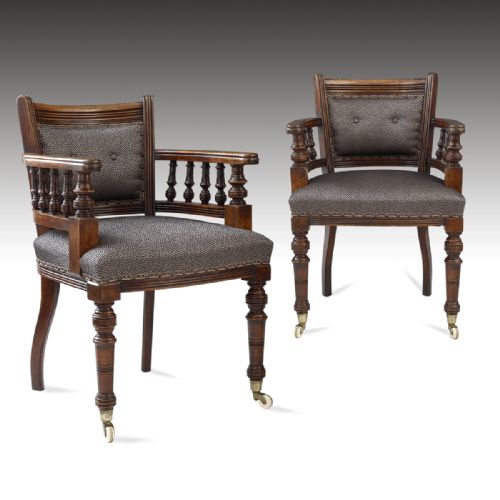
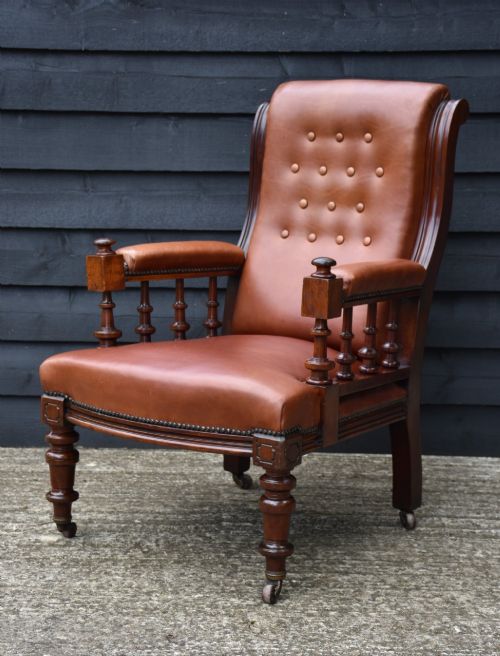
Library Armchair with Desk
A library armchair with desk combines comfortable seating with an integrated writing surface, offering a practical solution for reading and correspondence.
Library Armchair with Desk
A library armchair with desk is designed for study and writing, bringing together supportive seating and a functional surface within one piece of furniture. When exploring options, buyers encounter various forms ranging from large open armchairs to dedicated office chairs.
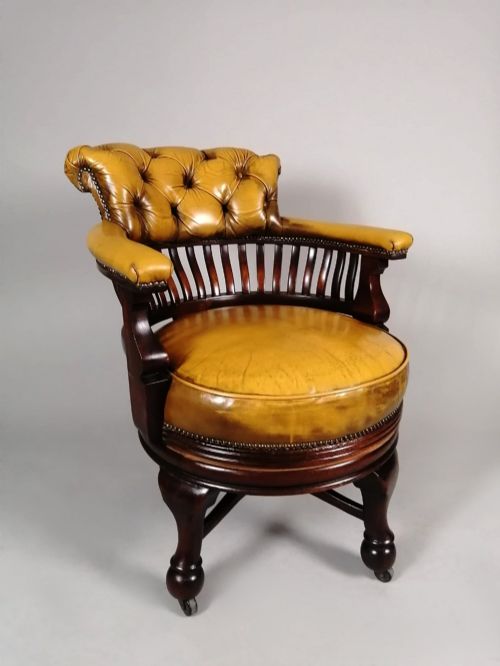
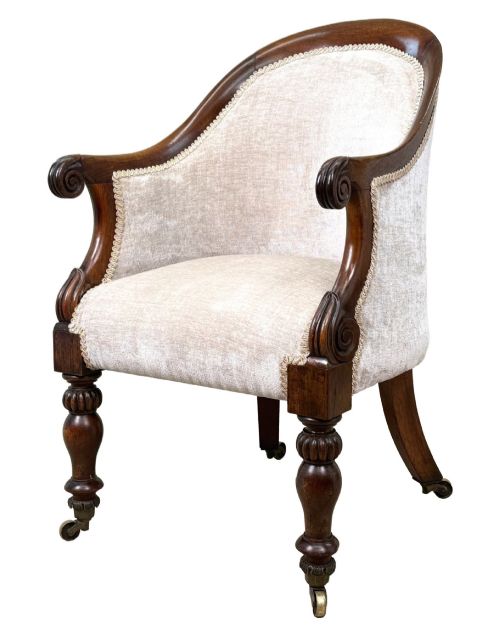
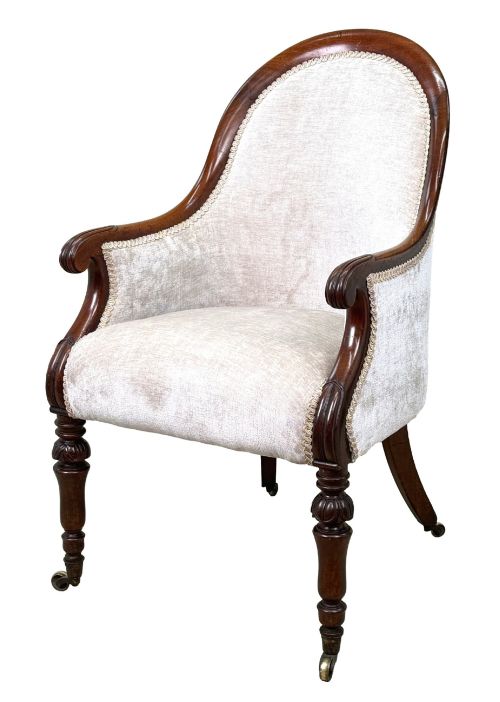
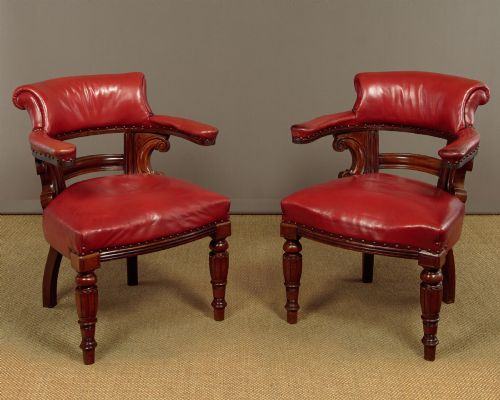
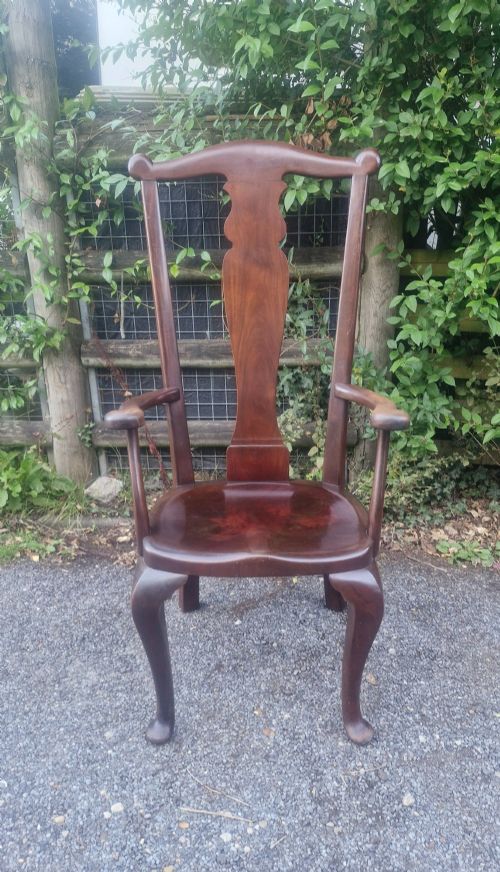
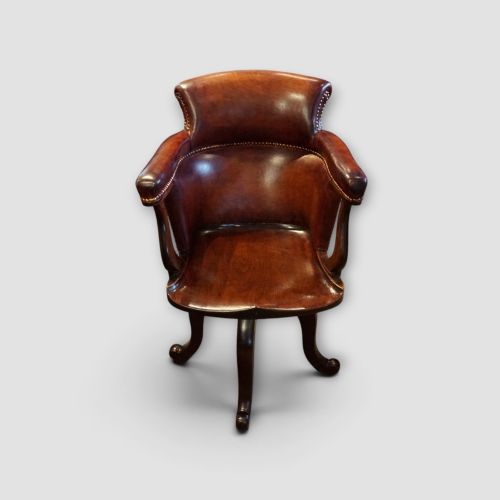
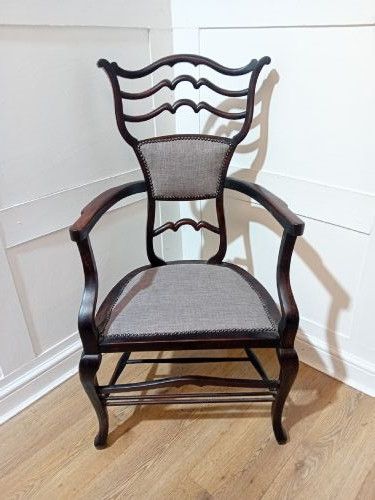
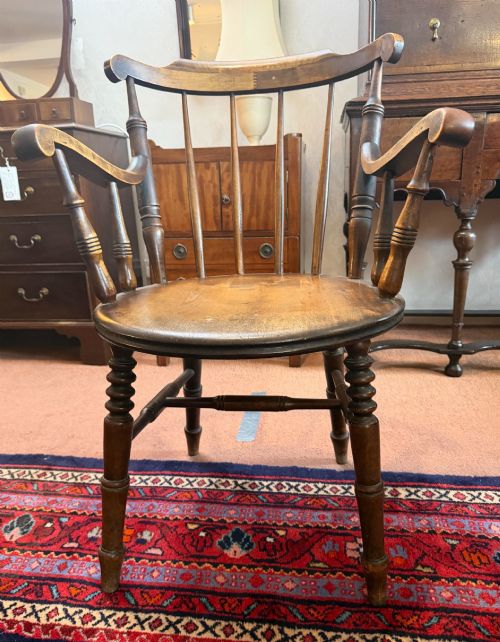
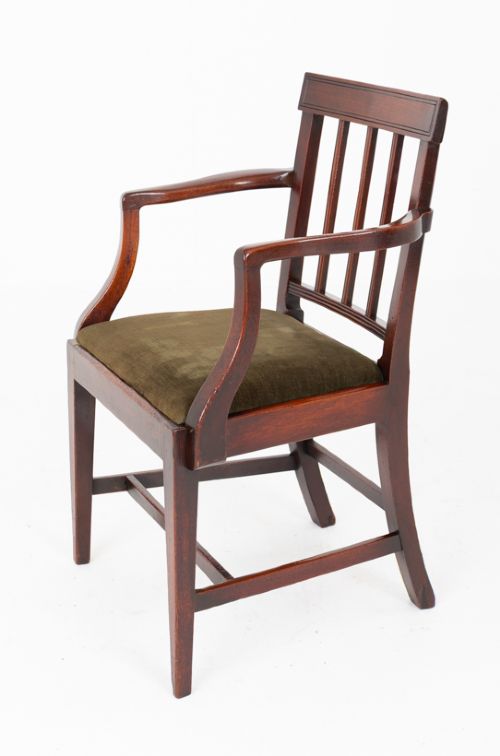
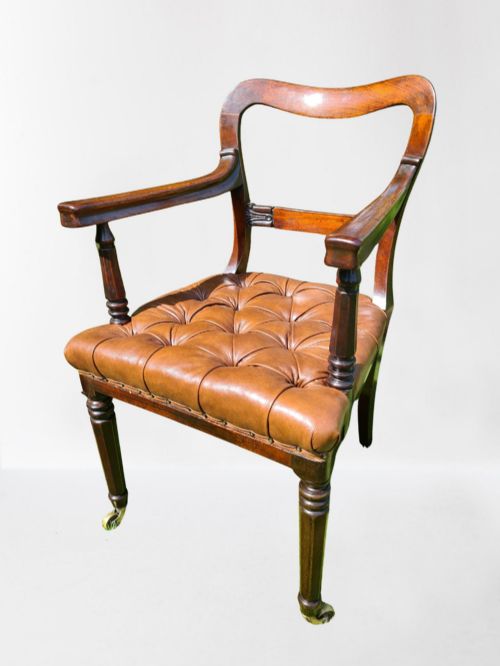
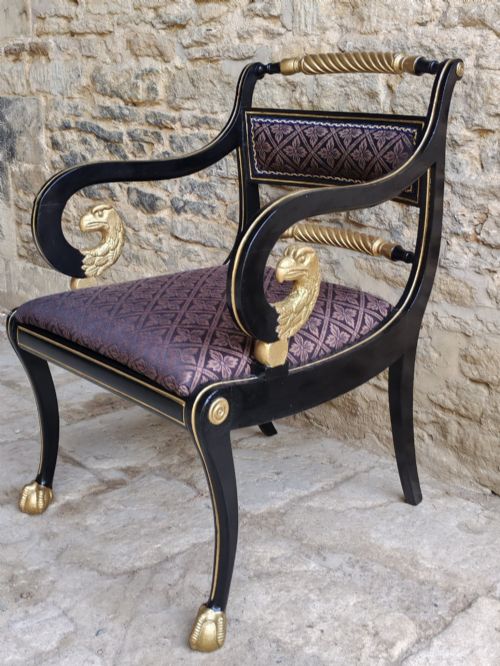
The pieces recorded span multiple periods including Georgian, Regency, William IV, Victorian, and Edwardian eras. Mahogany, oak, and walnut form the structural framework, while leather, cane, and fabric provide the seating surfaces.
Originating primarily within English cabinetmaking traditions, these chairs reflect the shifting domestic and study habits of the nineteenth and early twentieth centuries. Surviving examples demonstrate how seating was adapted to accommodate reading stands and writing slopes.
Materials and Technique
Cabinetmakers utilised hardwoods such as mahogany, oak, and walnut to build the robust frames required for daily use. Joinery techniques varied from pegged mortise and tenon joints in earlier pieces to machine-assisted construction in later Victorian examples.
Upholstery methods involved hand-stitched horsehair and webbing beneath coverings of leather, hide, velvet, or cane. Brass fittings frequently secured mechanical reading stands, casters, and adjustable writing ledges to the wooden framework.
Some chairs arrived with built-in reading stands that angle books precisely toward the reader.
Craftsmanship and Proportion
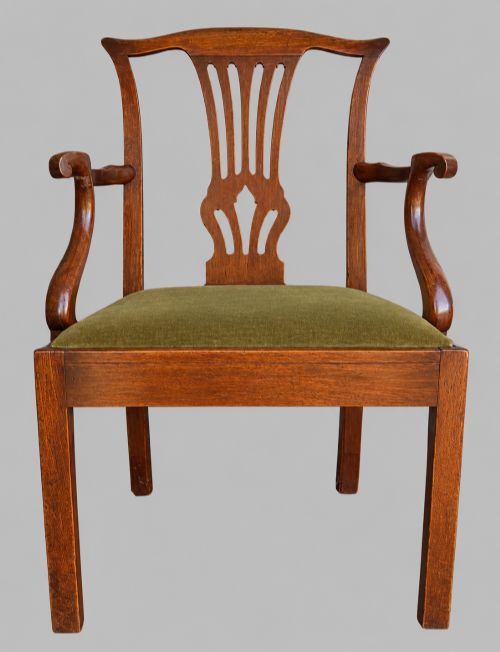
The standard of carving and timber selection dictates the refinement of each piece. Superior examples display crisply executed decorative details, such as blind fretwork or lambrequin back splats, matched with well-proportioned frames.
The integrity of the original timber and the quality of the integration between the seating frame and the writing attachment separate standard utility pieces from finer salon or library furnishings.
The Library Armchair with Desk Glossary
- Cockfighting chair
- A low-backed seating form designed for spectator sports, adapted with a padded armrest used as a chest support. The rider sat straddling the seat facing backward.
- Caning
- A woven lattice of rattan strips used for seats and back panels. It provides flexibility and airflow.
- Blind carving
- Carved ornament applied directly to the solid timber surface without pierced work. It is frequently seen on Georgian mahogany frames.
Library Armchair with Desk: Frequently Asked Questions
How were these chairs used?
These chairs served dual purposes for reading, studying, and letter writing in domestic libraries and home offices. The integrated writing slopes or stands allowed users to draft correspondence without moving to a separate desk.
They provided comfortable seating for extended periods of study, accommodating books and papers directly on or beside the seat structure.
What woods were used?
Cabinetmakers predominantly utilised mahogany, oak, and walnut for the structural frames of these pieces. Mahogany offered durability and a rich tone favoured in Georgian and Regency workshops.
Oak and walnut appeared frequently across Victorian and Edwardian iterations, selected for their strength and distinctive grain patterns.
How do I care for leather?
Leather upholstery requires regular dusting and occasional treatment with appropriate conditioning balms to prevent drying and cracking. Avoiding direct sunlight helps preserve the colour of hand-dyed hides.
Gentle cleaning maintains the natural patina developed over decades of use.
How do I identify a period piece?
Dating relies on examining the construction methods, timber species, and stylistic vocabulary evident in the carving and joinery. Georgian and Regency pieces exhibit hand-cut joints and specific decorative motifs like lambrequin splats.
Later Victorian and Edwardian examples incorporate machine-made components and varied upholstery materials such as oil cloth or cane.