
Library Accent Chair
A library accent chair offers solid seating with historic character, spanning Georgian frames to Edwardian leather club chairs for quiet reading spaces.
Library Accent Chair
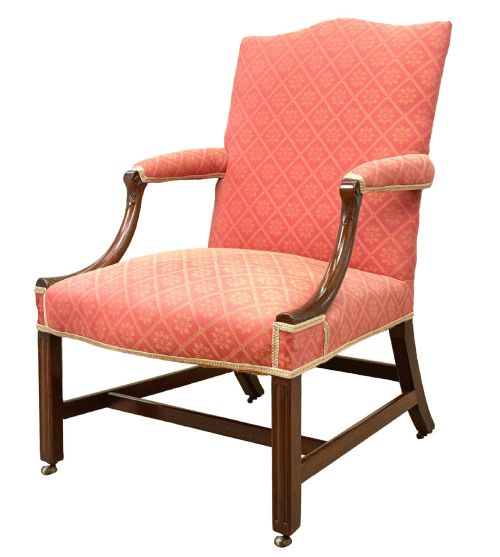
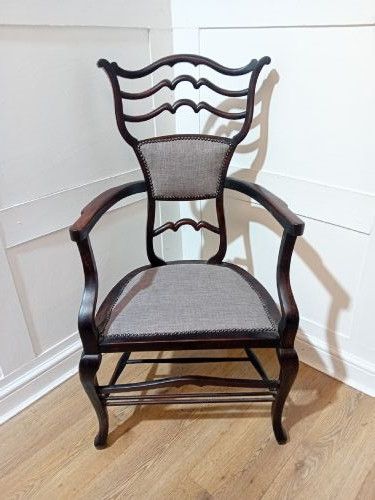
A library accent chair brings formal seating into studies and reading rooms, drawing on centuries of domestic design. These pieces combine sturdy wooden frames with upholstered seats intended for extended periods of reading or writing.
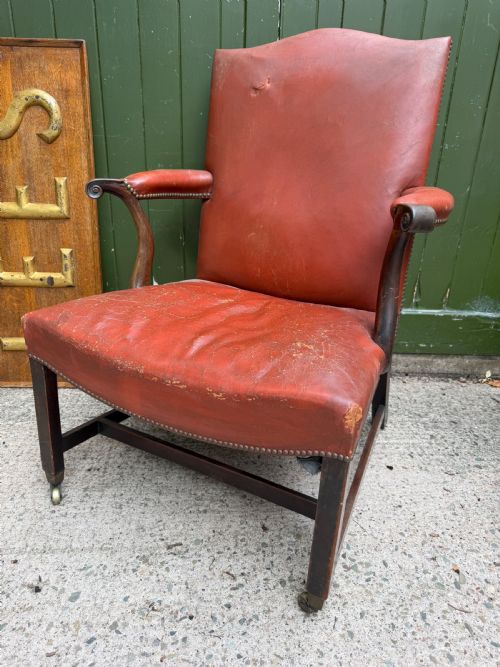
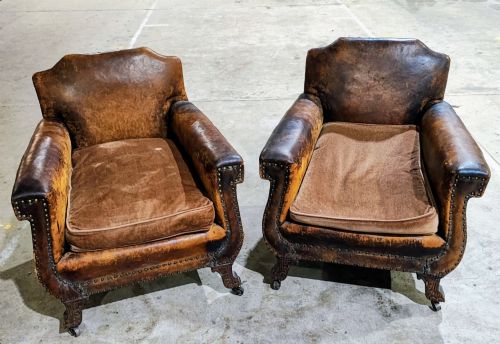
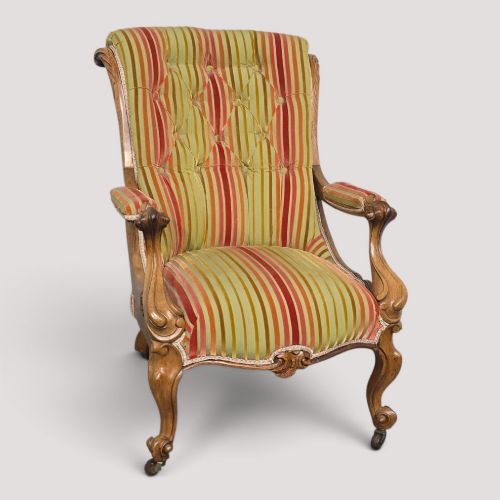
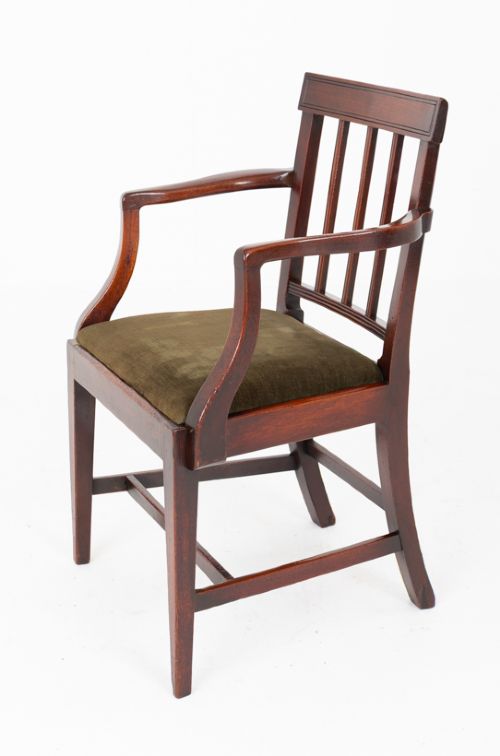
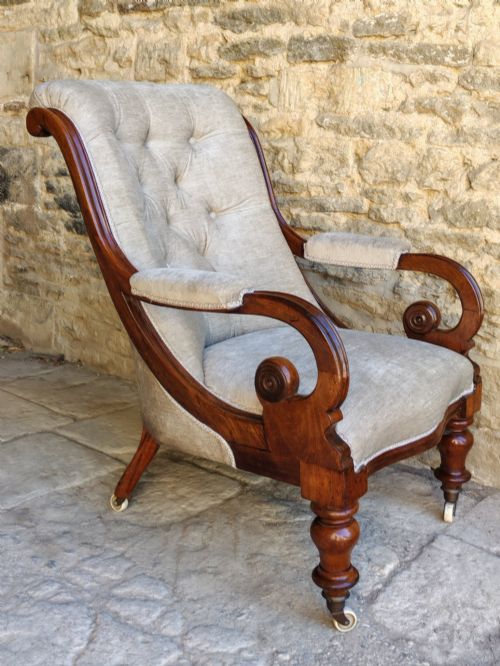
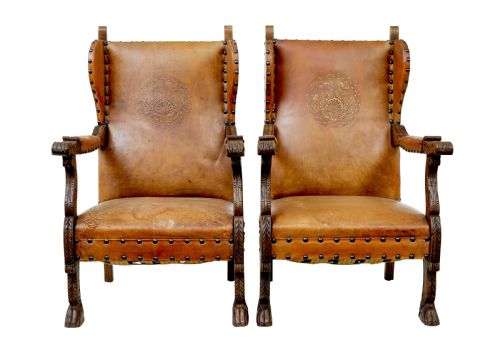
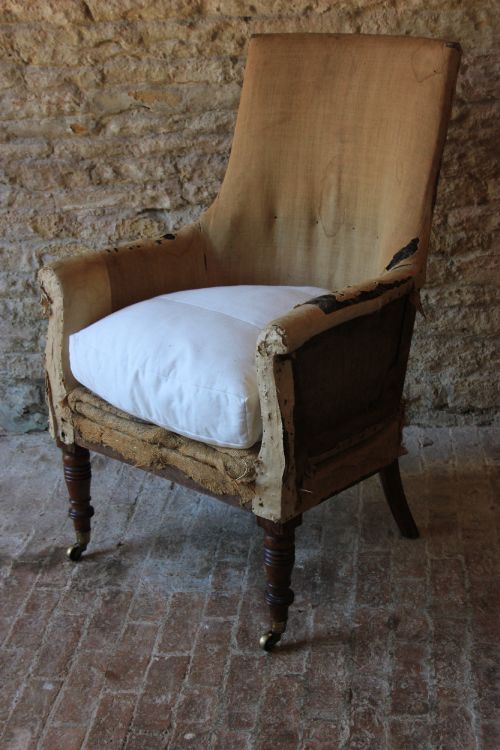
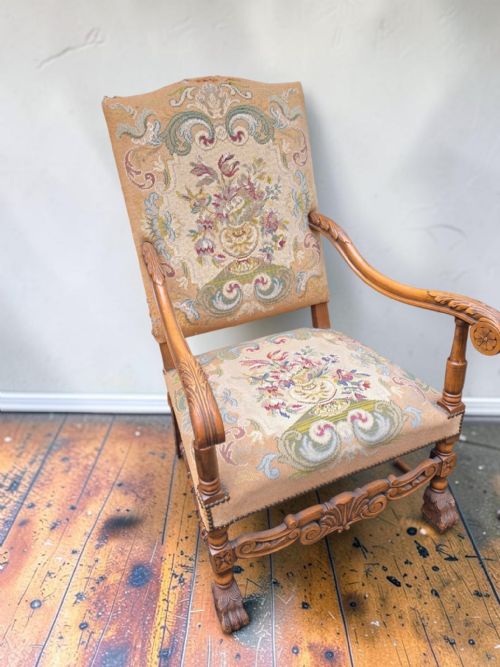
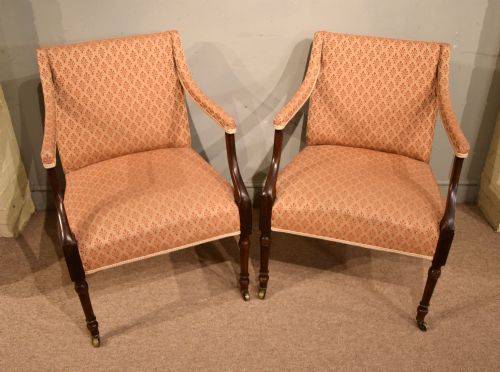
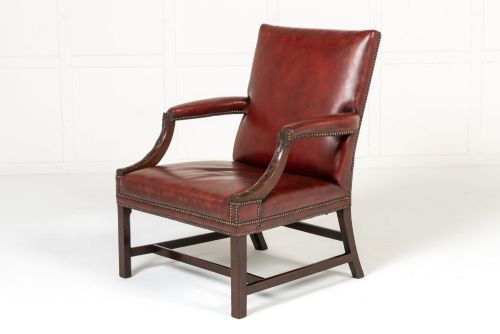
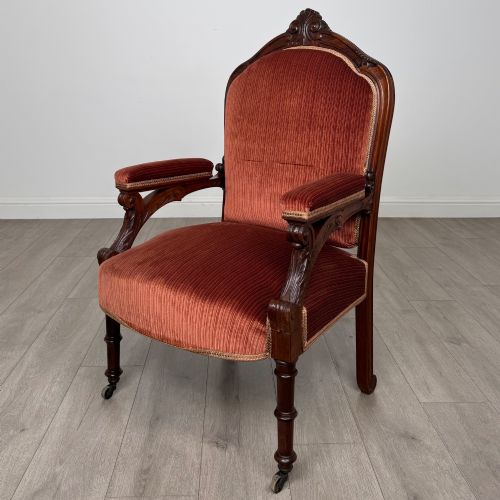
The selections on this page range from generous George III mahogany Gainsborough chairs to later Victorian oak armchairs and Edwardian leather club chairs. Buyers frequently encounter nineteenth-century interpretations alongside earlier eighteenth-century forms.
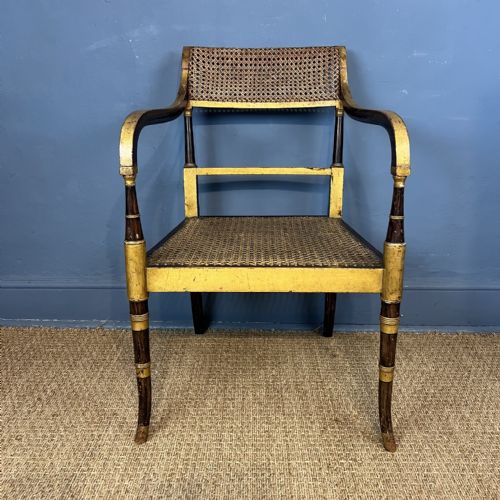
Makers and manufacturers produced these armchairs in styles such as Regency, Gothic Revival, and Edwardian. Each period contributes distinct proportions and decorative treatments to the overarching category of library seating.
Distinctions in Quality
The calibre of a piece rests upon the crispness of timber carving and the architectural integrity of the frame. Superior examples display balanced proportions and tight joinery that resists shifting over decades of use.
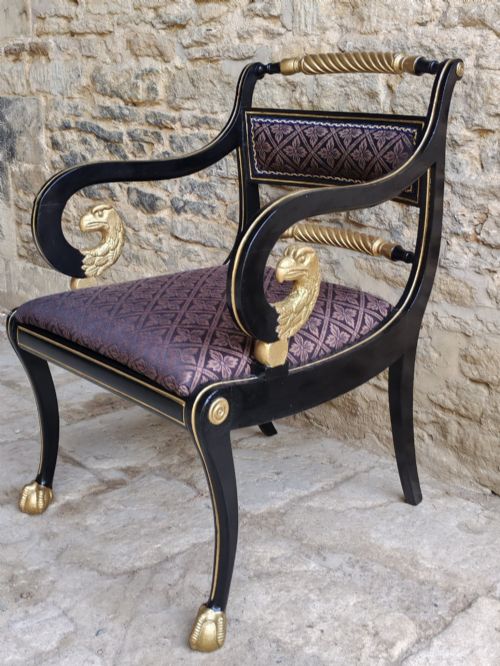
Materials dictate upper tiers of execution, particularly dense mahogany or rosewood matched with high-grade leather or period-correct textiles. Subtle touches like parcel gilding or careful wood turning elevate standard seating into finer work.
Listings incorporate woods such as mahogany, oak, walnut, and rosewood alongside brass fittings and leather upholstery across multiple centuries.
The Library Accent Chair Glossary
- Gainsborough chair
- A type of upholstered armchair with an open-framed mahogany structure, wide seat, and padded arms originating in the mid-eighteenth century. It served primarily in libraries and writing rooms.
- Bergère armchair
- An enclosed upholstered armchair with exposed wooden framing, commonly featuring cane panels on the back and sides. This French-influenced form gained popularity in British interiors.
- Club chair
- A deep, heavily upholstered armchair traditionally covered in leather, designed for comfort in studies and smoking rooms. Edwardian and later examples offer generous proportions.
- Gothic Revival
- A nineteenth-century design movement utilising medieval architectural motifs such as pointed arches, tracery, and heavy oak construction. Chairs in this style emphasise vertical lines.
- Parcel gilt
- A decorative treatment where specific carved or raised portions of a wooden frame receive a thin layer of gold leaf while the surrounding wood remains exposed.
Library Accent Chair: Frequently Asked Questions
What defines a library accent chair?
A library accent chair combines a supportive wooden frame with upholstered seating intended for reading rooms and studies.
These pieces prioritise sturdy armrests and comfortable back angles, drawing on historic styles from the Georgian, Victorian, and Edwardian eras.
Are these chairs suitable for daily use?
Most library armchairs are constructed from dense hardwoods like oak, walnut, or mahogany, making them structurally robust for everyday seating.
Original leather or fabric upholstery may require careful maintenance or professional restoration depending on its condition.
What is the difference between Regency and Victorian styles?
Regency seating often displays classical restraint, utilising scroll arms, parcel gilding, and dark woods like rosewood and mahogany.
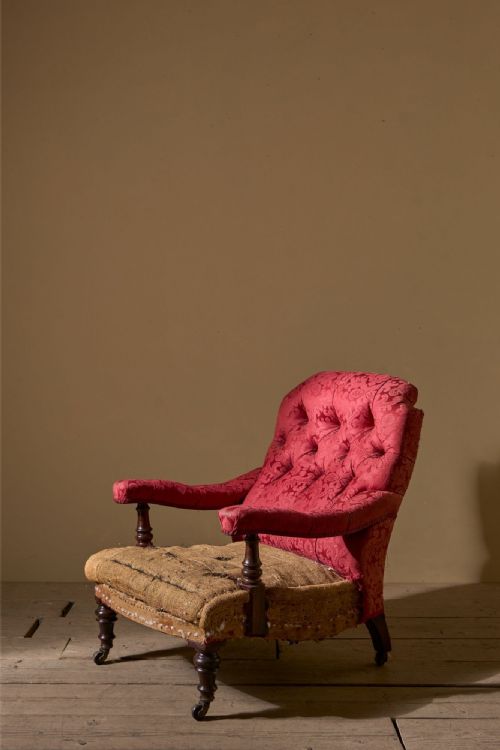
Victorian pieces tend toward heavier proportions, incorporating carved oak, buttoned leather, and revival motifs such as Gothic or Elizabethan details.