

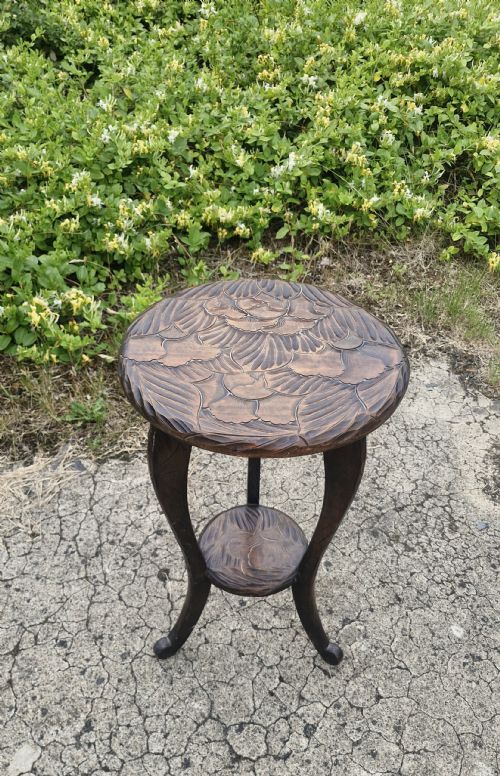
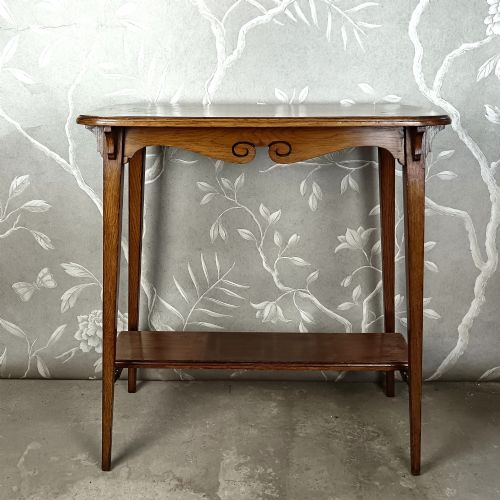


Liberty Carved Plant Stand
These liberty carved plant stand examples bring distinctive Arts and Crafts and revival design directly to your interior.
Liberty Carved Plant Stand
When you search for a liberty carved plant stand, you are exploring decorative occasional tables and display furniture associated with the prominent London retailer. The examples on this page span several decades from the late nineteenth century through to the 1920s, encompassing Edwardian pieces alongside Victorian and later works.
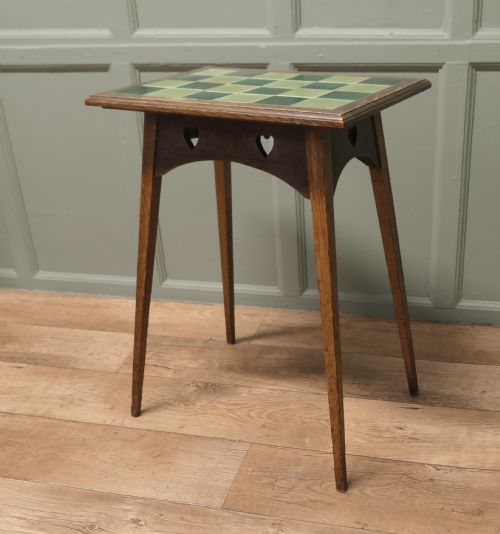
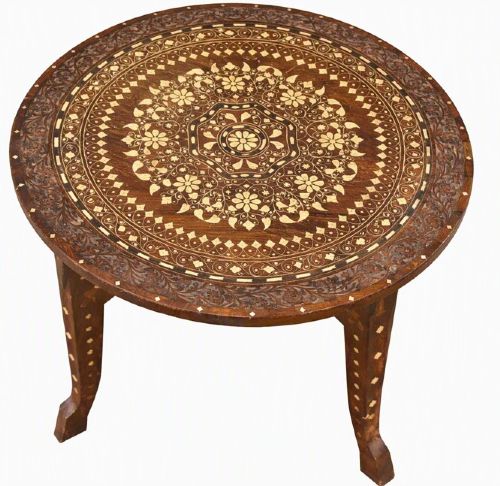
The forms vary from compact plant stands to multi-tiered occasional tables and side tables. Stylistic influences cross between traditional British Arts and Crafts, Anglo-Japanese design, and Moorish or Anglo-Indian revivalism, reflecting the eclectic taste championed by the firm.
Materials and construction methods
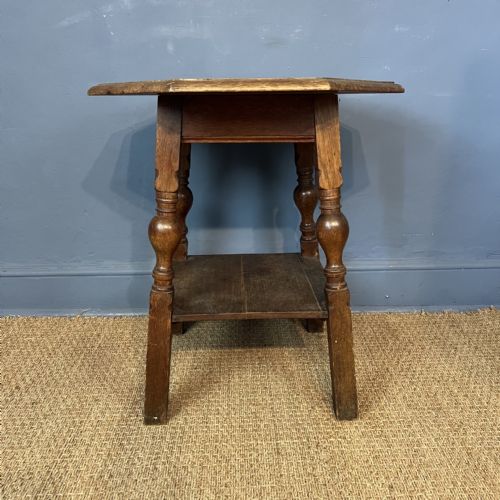
Construction relies heavily on solid oak and diverse hardwoods, sometimes finished with ebonisation to mimic more exotic timber. Skilled artisans utilised traditional joinery alongside intricate hand carving to shape surfaces and supports.
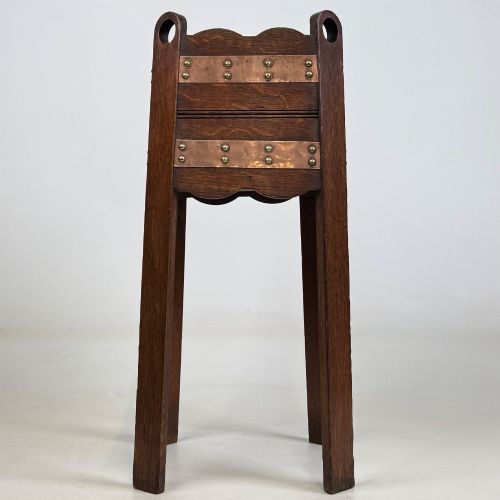
Surface ornamentation distinguishes many pieces through the incorporation of bone inlay, mother-of-pearl, and glazed ceramic tiles. Metal accents in copper also appear, alongside delicate fretwork and detailed pierced panels.
Some tables require tiny bone fragments to sit precisely flush, proving that historic artisans occasionally needed microscopic patience.
Assessing craftsmanship and detail
The distinction between standard production and superior execution lies in the depth and crispness of the hand carving. Pieces featuring complex inlay work in bone or mother-of-pearl demand higher levels of artisan precision than simpler carved wooden surfaces.
Integrity of materials and the presence of maker stamps or attributions influence the standing of an individual piece. The integration of contrasting media, such as ceramic tiles or inset metalwork, demonstrates greater ambition in design and assembly.
Liberty and Co·Liberty of London
The Liberty Carved Plant Stand Glossary
- Arts and Crafts
- A design movement promoting handcraftsmanship and simple forms. It rejected mass production in favour of traditional artisan skills.
- Anglo-Japanese
- A style blending British furniture forms with Japanese decorative motifs and construction techniques. This aesthetic gained immense popularity in the late nineteenth century.
- Moorish Revival
- An architectural and decorative style drawing inspiration from Islamic architecture. It frequently employs geometric patterns and intricate woodwork.
- Ebonised wood
- Timber treated with a chemical stain or dark finish to imitate ebony. This technique provided a sleek, dark surface for decorative items.
Liberty Carved Plant Stand: Frequently Asked Questions
How do I identify a Liberty piece?
Many items feature stamps, paper labels, or distinct stylistic traits associated with the retailer's cataloguing of the period.
Attributions often rely on documented design patterns, specific woodcarving signatures, and the fusion of Eastern and Western motifs seen in the construction.
Where should I place a plant stand?
These compact tables function well in corners, hallways, or beside seating where vertical display space is limited.
They provide a stable platform for botanical displays, lamps, or small decorative objects while adding architectural interest to a room.
What woods were commonly used?
Oak is the predominant timber found in Arts and Crafts iterations, particularly in solid English forms.
Other examples utilise various hardwoods, sometimes ebonised or inlaid with contrasting materials like bone and mother-of-pearl.
How do I care for antique wood?
Maintain stable indoor humidity levels and keep wooden surfaces away from direct heat sources and strong sunlight.
Dust regularly with a soft dry cloth and avoid applying modern silicon-based polishes that can degrade historic finishes over time.