
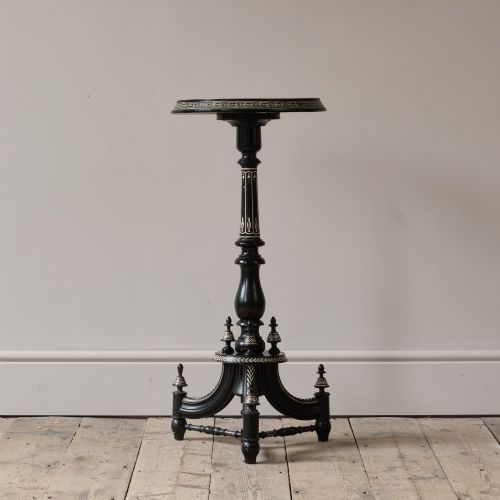
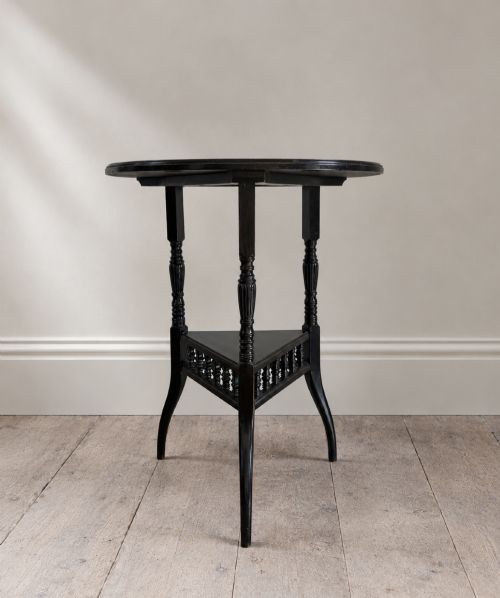
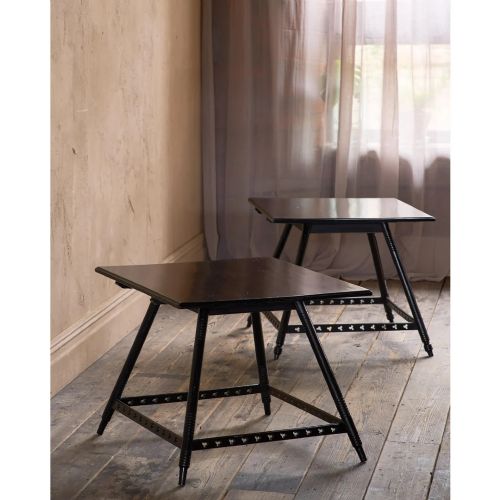
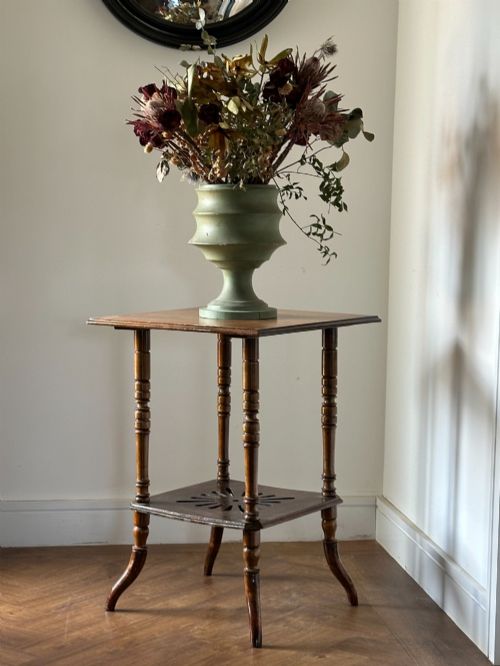


Anglo Japanese Plant Stand
An anglo japanese plant stand brings the disciplined lines of late nineteenth-century design into a room, offering a sturdy perch for foliage or ceramics.
Anglo Japanese Plant Stand
An anglo japanese plant stand sits within a tradition of nineteenth-century design that draws heavily on Eastern motifs. These pieces typically take the form of plant stands, occasional tables, side tables, and corner shelves created during the Victorian and Edwardian eras.
The aesthetic movement and arts and crafts styles dominate this selection, frequently bearing the distinct influence of designers such as E.W. Godwin. Buyers encountering these listings will primarily find ebonised wood and mahogany constructions that reflect the period's fascination with Japanese art.
How they were made
Cabinetmakers utilised ebonised wood, hardwood, and mahogany to achieve the dark, dramatic surfaces characteristic of the style. These woods were often hand-carved to render intricate detail and subtle relief work across the frame.
Construction techniques relied on solid timber framing and precise joinery to support the slender legs and tiered surfaces typical of occasional tables and plant stands.
Listings span the nineteenth century up to 1920, predominantly featuring ebonised wood and mahogany across side tables and plant stands.
What varies in quality
The calibre of a piece rests largely on the crispness of the carving and the depth of the ebonised finish. Superior examples display clean lines and balanced proportions that echo documented artistic designs of the period.
Material selection also dictates worth, with dense hardwoods and well-figured mahogany holding an advantage over plainer stained timbers. Maker attribution adds another layer of distinction when construction matches known retail houses of the era.
Liberty of London·Liberty and Co·E W Godwin
The Anglo Japanese Plant Stand Glossary
- Ebonised wood
- Timber treated with a dark stain or finish to imitate ebony. This process was a staple of nineteenth-century aesthetic design.
- Japonisme
- The study and influence of Japanese art and aesthetics on Western works. It shaped much of the decorative output of the late Victorian period.
- Aesthetic movement
- A nineteenth-century artistic current emphasising visual beauty over narrative or moral themes. Furniture from this circle favoured simple geometry and orientalising details.
- Occasional table
- A small, versatile table designed for a specific, intermittent use rather than central seating arrangements. They appear frequently in various heights for display purposes.
Anglo Japanese Plant Stand: Frequently Asked Questions
How do I identify an anglo japanese plant stand?
Look for characteristic nineteenth-century markers such as ebonised surfaces, rectilinear or bamboo-turned frames, and decorative motifs inspired by Japanese art.
Check the timber quality and construction methods to see if they align with Victorian workshop standards of the aesthetic movement.
Where should I place a plant stand at home?
These pieces suit corners, window bays, or empty wall spaces where their vertical form can support potted plants or decorative ceramics without obstructing pathways.
Ensure the weight of the pot matches the stability of the stand, particularly on older or more slender occasional tables.
Are these stands suitable for daily use?
Most pieces function well for holding lighter decorative objects, lamps, or potted plants as originally intended by nineteenth-century makers.
Avoid placing excessively heavy items on older ebonised or mahogany surfaces to preserve the original joints and finish.
What is the difference between aesthetic movement and arts and crafts pieces?
Aesthetic movement items often embrace sleek ebonised finishes and overt oriental influences, while arts and crafts pieces tend to highlight the natural grain of woods like mahogany and hardwood.
Both movements overlap significantly in this category, sharing a commitment to artistic integrity and handcrafted detail.