


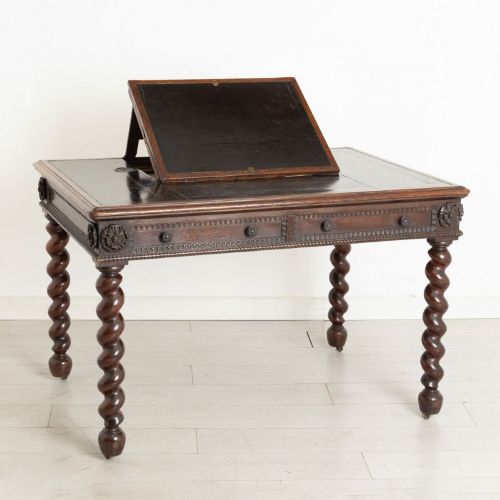

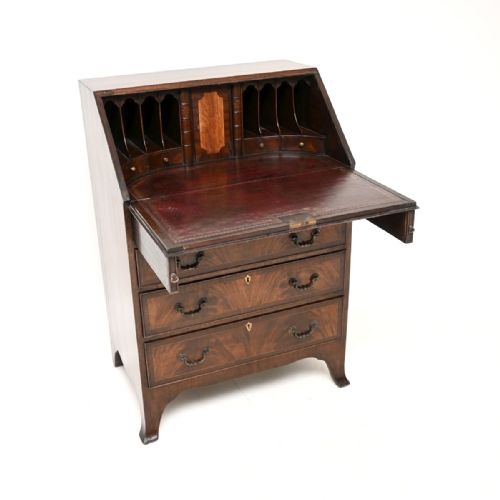


Leather Top Slope Desk
A leather top slope desk brings traditional writing furniture into daily service through compact storage and angled writing surfaces.
Leather Top Slope Desk
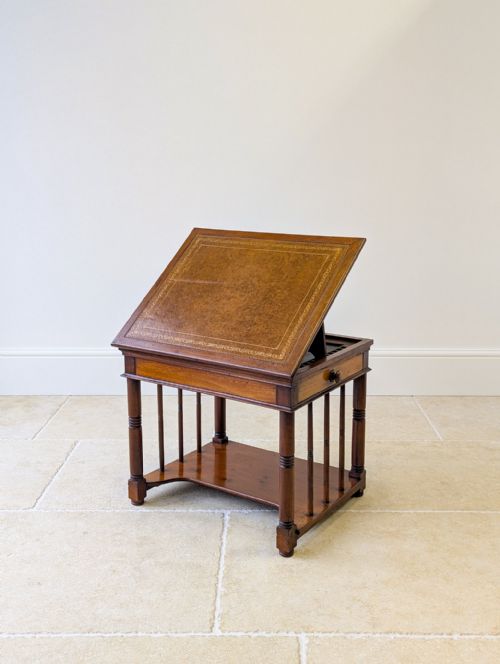
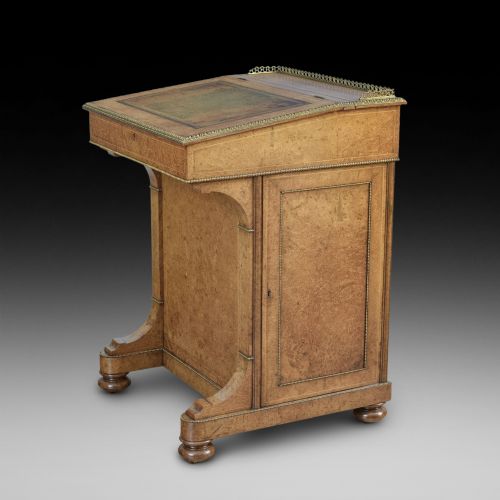
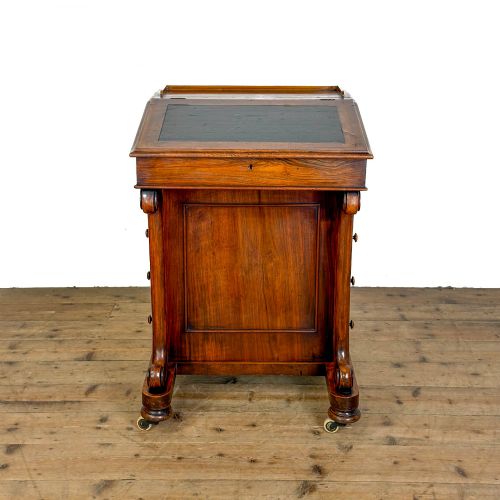
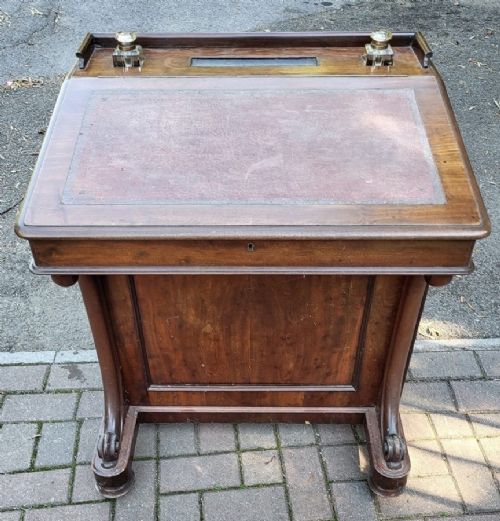
A leather top slope desk encompasses forms such as Davenport desks, Dickens desks, pedestal desks, and writing tables originating from Georgian, Regency, William IV, and Victorian periods. Buyers encounter variations ranging from compact walnut and burr walnut Davenports to large mahogany pedestal desks and oak architect pieces.
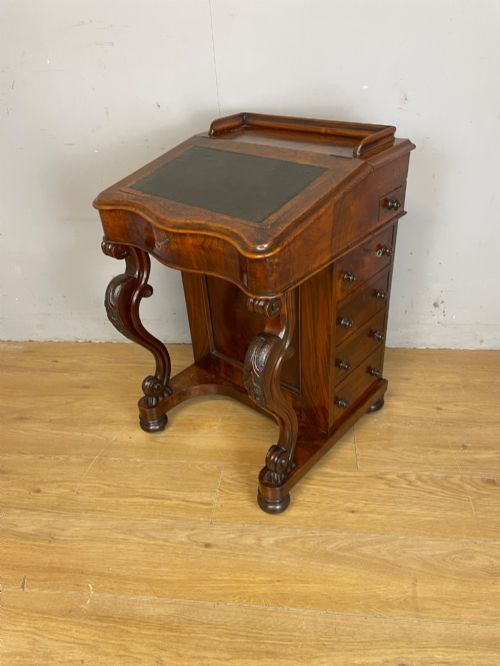
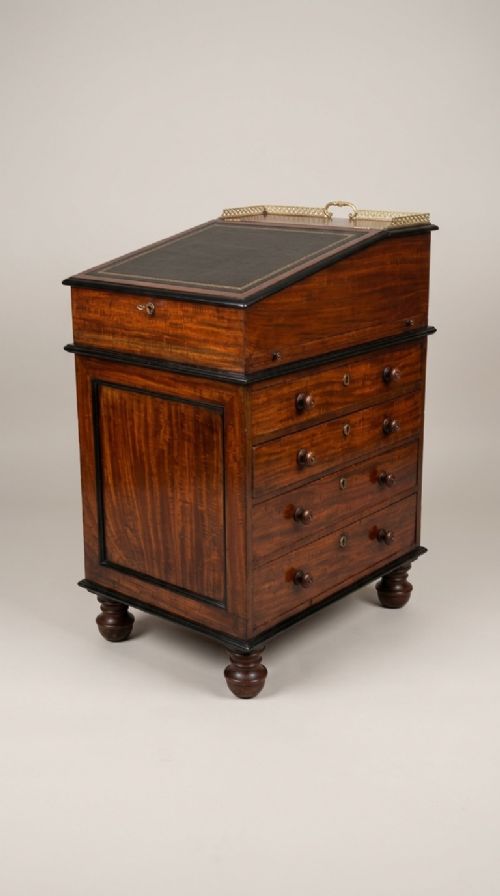
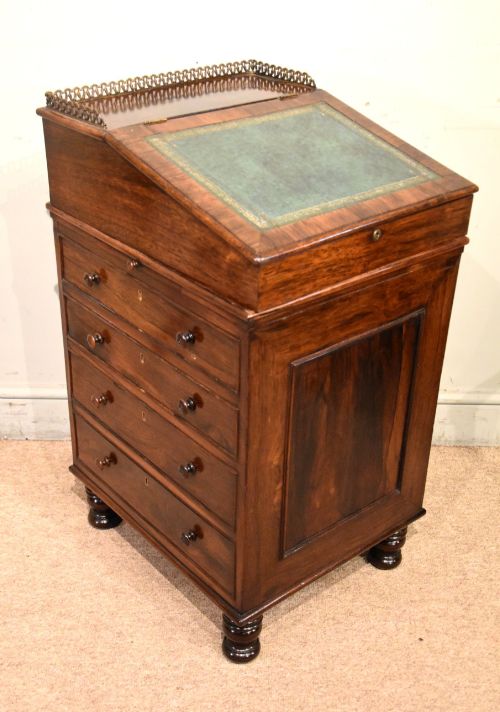
The most common examples on this page are Victorian and nineteenth-century Davenport desks, typically featuring a slanted writing lid inset with leather and a pedestal of drawers below. Pieces span periods from the eighteenth century through to Edwardian interpretations, constructed in woods like mahogany, rosewood, and oak.
Craftsmanship and Proportion
Quality rests in the selection of timber, such as highly figured burr walnut or dense mahogany, paired with precise inlay and crossbanding. Finer pieces demonstrate superior cabinet-making through tightly fitted drawers, substantial brass mounts, and well-executed interior compartments in satinwood.
Proportion and execution separate standard examples from notable workshops like Gillows. The crispness of carved details, such as oak Green Man motifs, and the integration of functional elements like sliding desk tops or dual-sided drawers dictate the standing of a piece.
Listings feature woods including mahogany, burr walnut, rosewood, oak, satinwood, and amboyna across Georgian, Regency, William IV, and Victorian periods.
Gillows of Lancaster·Simpsons of Kendall
The Leather Top Slope Desk Glossary
- Davenport
- A compact writing desk featuring a sloping, leather-inset top over a pedestal of drawers. This form became popular during the Regency and Victorian eras.
- Dickens desk
- A large double-sided pedestal desk with a sloped writing surface and an upper tier of pigeonholes and small drawers. These desks provide extensive workspace and storage.
- Crossbanding
- A border technique where thin strips of veneer are laid perpendicular to the grain of the primary surface. This frames panels of mahogany or burr walnut.
- Gallery
- A decorative raised rail, often made of brass or wood, positioned along the top edge of a desk to prevent items from rolling off.
- Pedestal desk
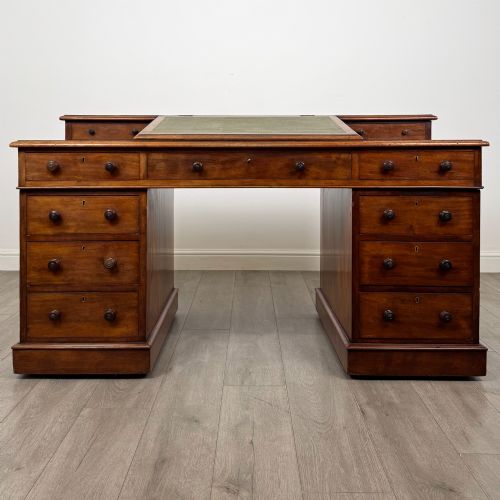
- A heavy freestanding desk supported by two banks of drawers or cupboards. Large Victorian variations often incorporate inset leather writing surfaces.
Leather Top Slope Desk: Frequently Asked Questions
What is a Davenport desk?
A Davenport is a compact writing desk featuring a sloping lid with a leather writing surface that lifts to reveal storage. The main body contains a pedestal of drawers, often with side drawers opening to one side.
First appearing in the Regency period and remaining popular through the Victorian era, these desks were designed for smaller spaces without sacrificing utility.
How do I identify a Dickens desk?
A Dickens desk is a large pedestal desk defined by an upper stationary tier of small drawers and pigeonholes backed by a central sloped writing surface. They are typically double-sided to allow two people to sit opposite one another.
Most examples seen are from the Victorian period, constructed in mahogany or oak.
What woods were commonly used?
Cabinet makers utilised a range of timbers, with mahogany and walnut forming the majority of surviving pieces. Burr walnut and rosewood provide highly figured grain patterns on Victorian examples.
Secondary woods and lighter timbers like satinwood frequently appear on interior desk fittings and crossbanded borders.
How do I care for the leather top?
The leather inset requires gentle cleaning with a dry or barely damp cloth, avoiding harsh modern chemical cleaners that strip the finish. Regular conditioning with appropriate leather balms keeps the material supple.
Protecting the surface from direct sunlight and excessive moisture preserves the leather and the surrounding wood frame.