


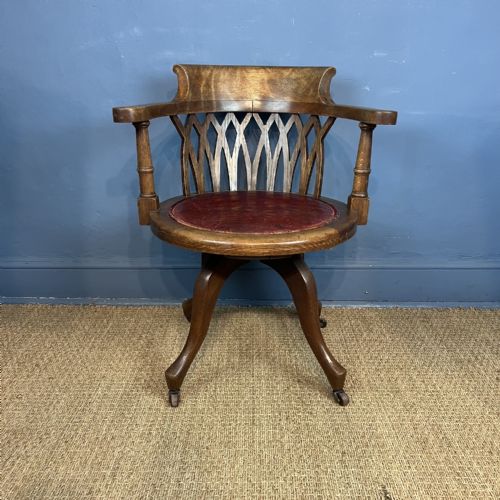
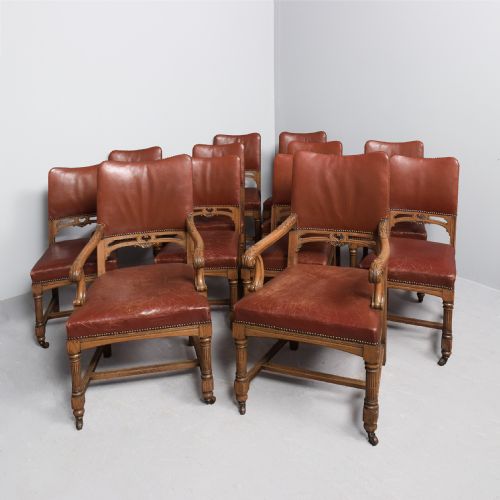
Leather Seat Armchair
A leather seat armchair combines sturdy wooden frames with hard-wearing hides, offering robust support for daily study, dining, or fireside reading.
Leather Seat Armchair
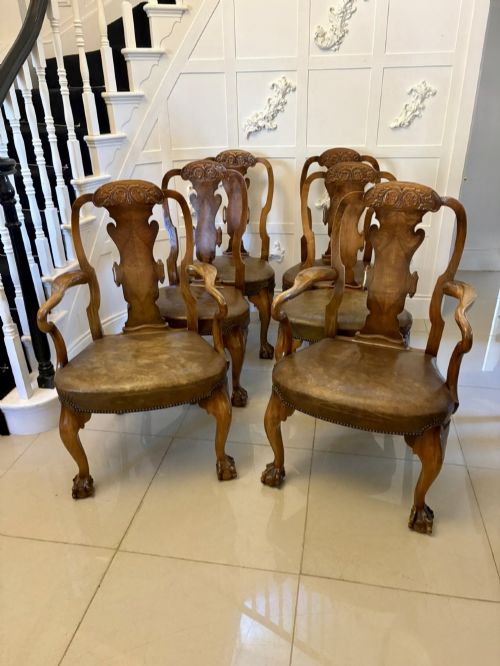
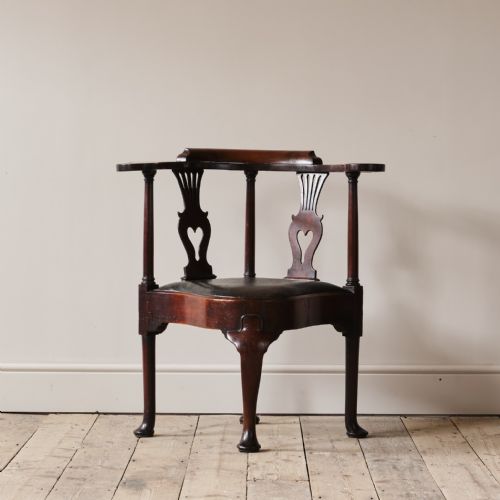
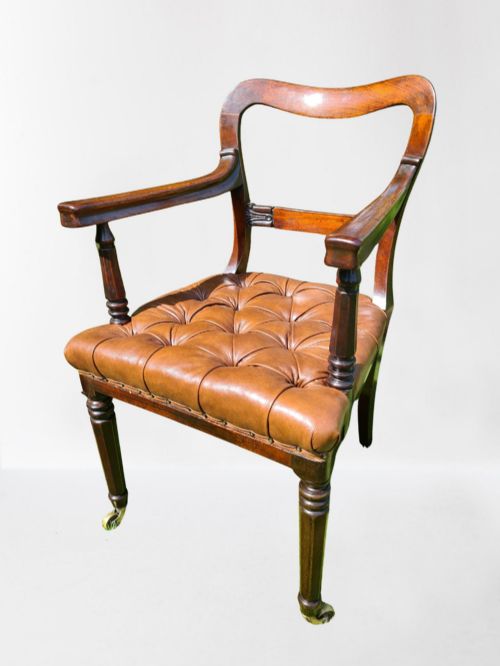
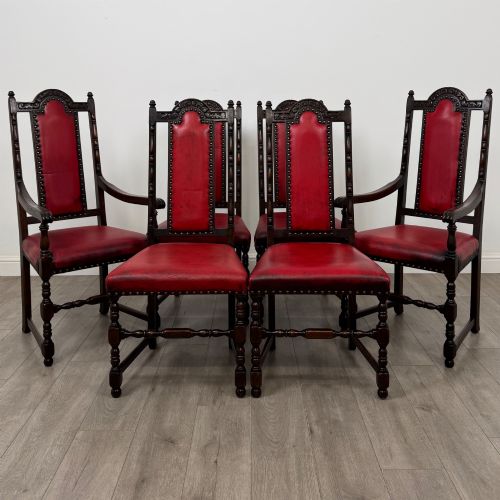
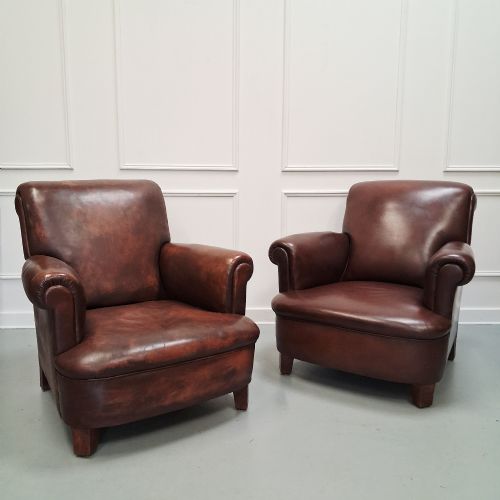
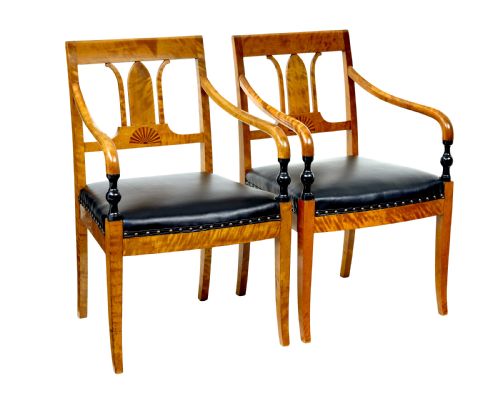
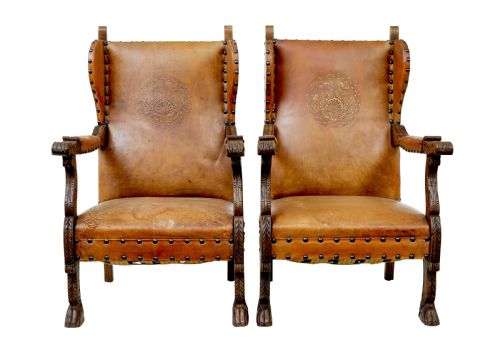
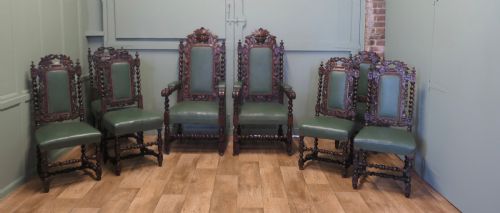
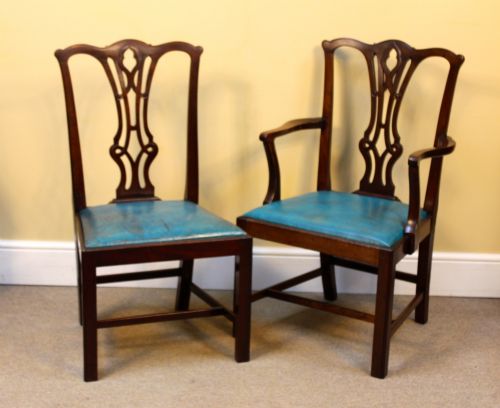
A leather seat armchair serves various domestic and institutional functions, appearing as swivelling desk chairs, low fireside seats, and formal dining carvers across multiple eras. The pieces span Georgian library chairs, Victorian revolving office seats, and 1930s French club chairs, each built for sustained utility.
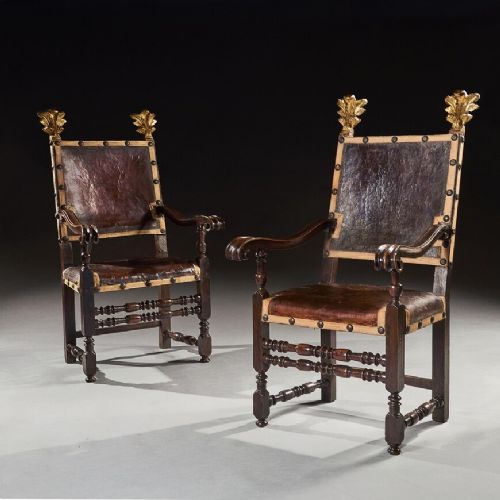
The most common examples on this page are Victorian and Edwardian oak or mahogany desk chairs and sturdy 1930s club chairs. Buyers also encounter Georgian Gainsborough chairs and Italian Baroque armchairs featuring parcel-gilt walnut frames.
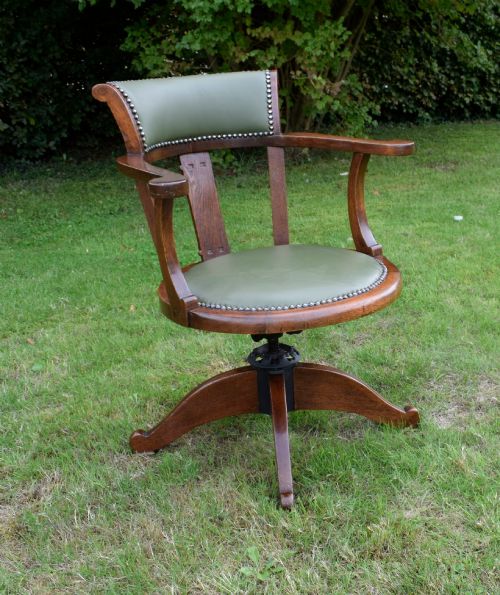
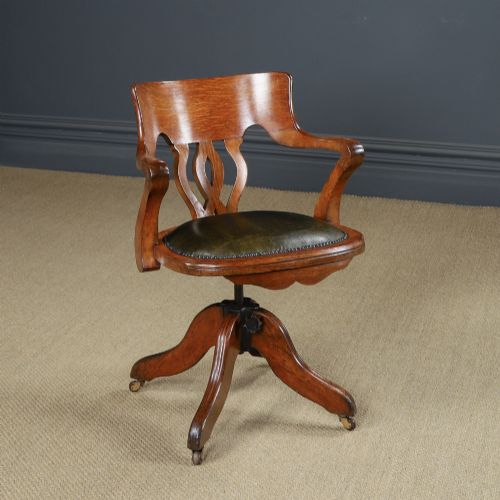
Workshops utilised different structural forms depending on the intended room, ranging from deep-seated lounge chairs to upright dining carvers and revolving office seating fitted with brass castors.
Materials and construction methods
Makers constructed the load-bearing frames using dense hardwoods such as mahogany, oak, walnut, and satin birch, often joined with mortise and tenon joints to withstand heavy movement. Brass fittings, iron swivel mechanisms, and castors appeared frequently on desk and library chairs from the nineteenth century onward.
Upholsterers stretched leather over stuffed pads, securing the edges with brass clout nails or decorative studwork. Natural hide was hand-dyed or left in its original finish, paired occasionally with embossed patterns or button-backed detailing.
Several chairs include revolving swivel bases designed to keep nineteenth-century clerks spinning productively between multiple ledgers.
Evaluating craftsmanship and condition
Quality rests in the structural integrity of the timber frame and the depth of hand-carving on arms, legs, and rails. Superior pieces display crisp mouldings, tight joinery, and heavy timbers that show minimal movement over centuries of use.
The state of the leather seating influences the desirability of the piece, with hand-dyed hides showing even patination and securely fastened brass studwork marking the work of competent workshops.
Hille·Harry and Lou Epstein
The Leather Seat Armchair Glossary
- Gainsborough chair
- A wide, open-armed armchair with a padded seat and back, standing on square or cabriole legs, designed during the eighteenth century for writing desks and parlours.
- Club chair
- A deep, heavily upholstered low-backed armchair originating in France during the early twentieth century, typically wrapped in thick leather.
- Carver
- An armchair matching a set of side dining chairs, traditionally placed at the head of a dining table for the host.
- Parcel-gilt
- Partially gilded with gold leaf or powder over a prepared surface, highlighting specific carved details on wooden frames.
- Bergere
- An enclosed upholstered armchair with wooden framing exposed around the sides and back, sometimes fitted with a loose leather cushion.
Leather Seat Armchair: Frequently Asked Questions
How do I identify a Victorian desk chair?
Victorian desk chairs frequently incorporate revolving mechanisms, solid oak or mahogany frames, and green or brown leather upholstery studded with brass nails. They often feature sturdy four-way wooden bases mounted on metal castors for office utility.
Makers of this period prioritised ergonomic swivel functions, leading to sturdy spindle-backed designs and comfortable padded seats intended for long hours of administrative work.
Where were club chairs used?
Club chairs originated as comfortable lounge seating for smoking rooms, studies, and gentlemen's clubs, offering deep proportions and soft cushioning.
Their robust construction and heavy leather coverings allowed them to withstand heavy daily use in domestic and social environments.
What is a Gainsborough armchair?
A Gainsborough armchair is an eighteenth-century seating form characterised by open padded arms, an upholstered back, and exposed wooden legs.
These chairs were specifically built for use at writing tables and libraries, combining formal elegance with supportive seating.
How do I care for antique leather?
Antique leather benefits from occasional light cleaning and conditioning with appropriate natural balms to maintain the suppleness of the hide.
Avoiding direct sunlight and excessive heat protects the historic surface from drying and cracking over time.