
Edwardian Mahogany Carver
An edwardian mahogany carver brings together solid timber and sweeping revival styles to anchor a traditional dining table or desk.
Edwardian Mahogany Carver
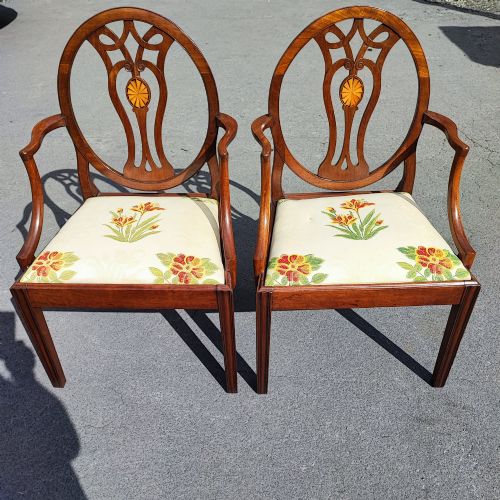
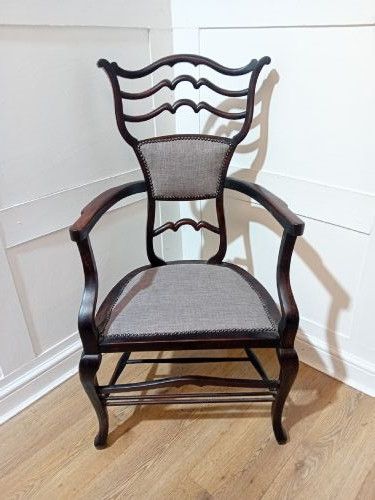
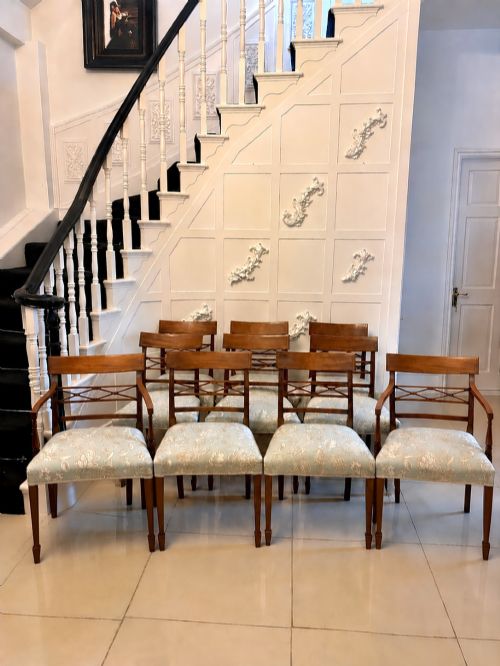
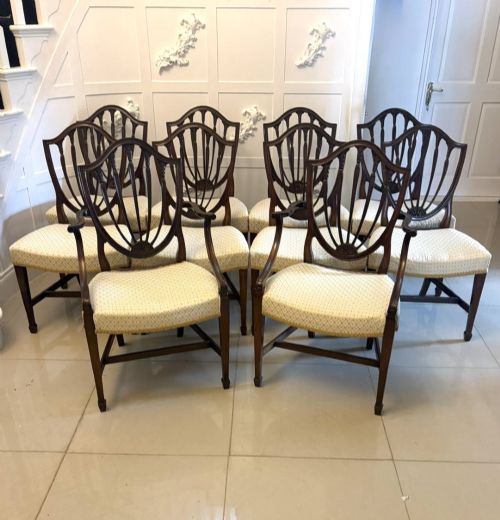
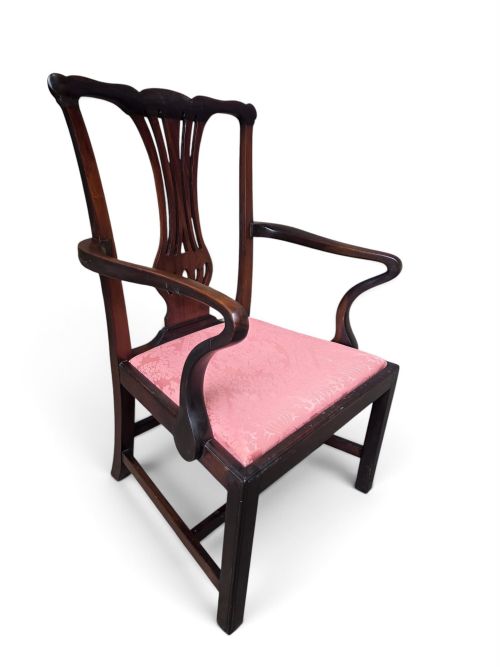
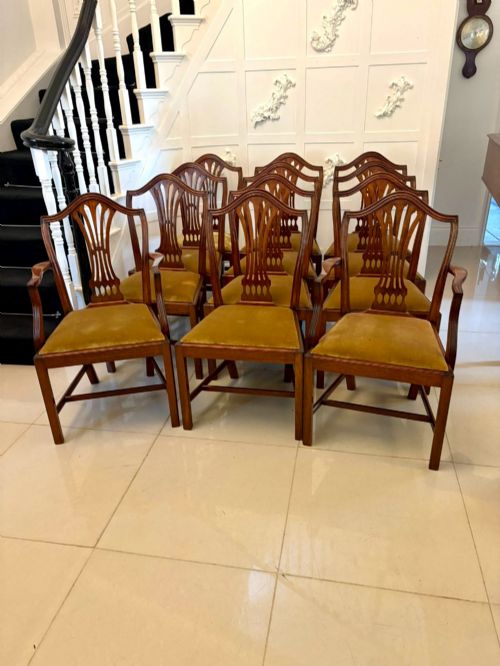
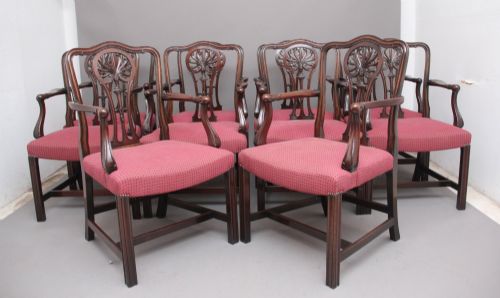
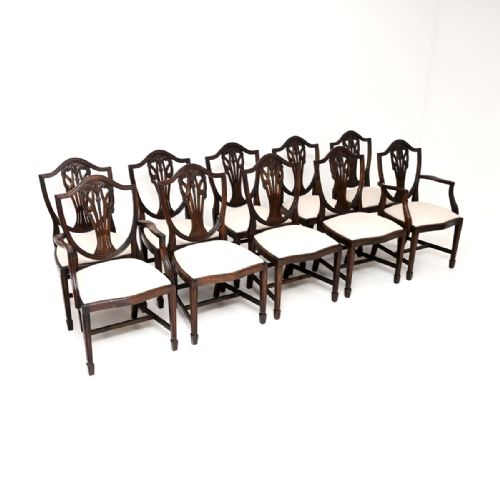
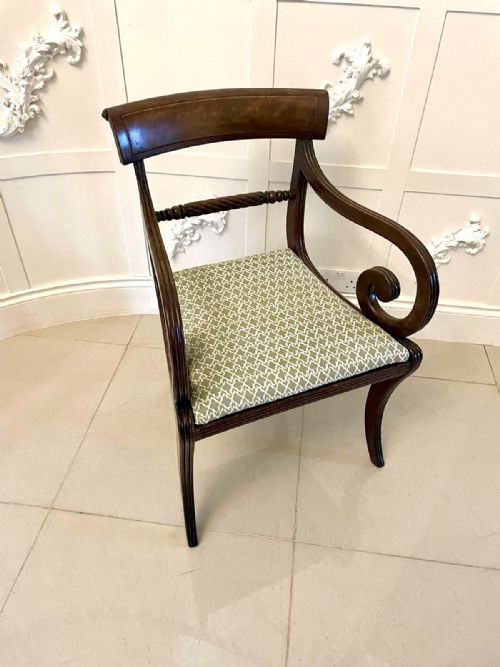
An edwardian mahogany carver is an armchair designed to match a set of dining chairs, typically featuring open arms and a supportive backrest. These pieces appear frequently alongside larger dining sets or as standalone library and desk chairs.
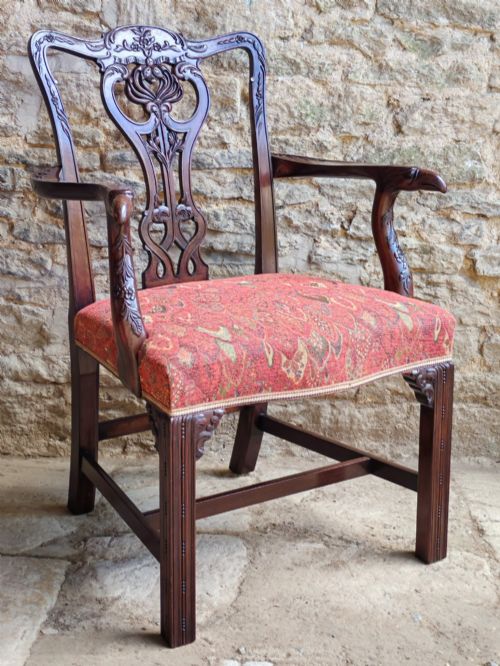
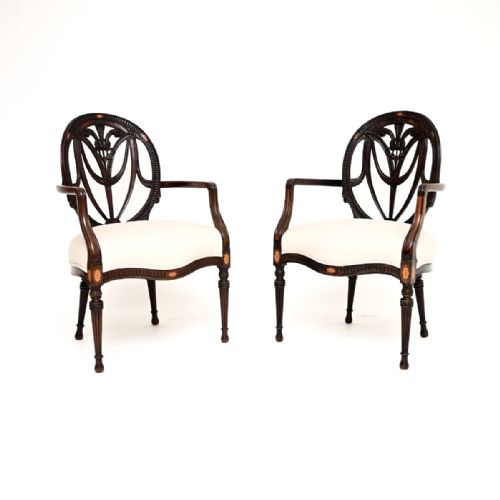
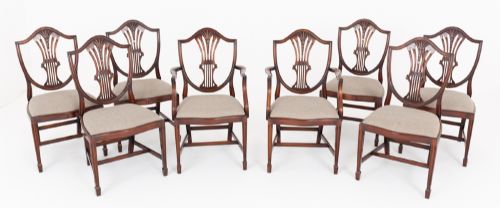
The form draws heavily on eighteenth-century vocabulary, incorporating shield backs, interlaced splats, and occasional inlay work. Most examples date from the Edwardian era around nineteen hundred to nineteen ten, though nineteenth-century Victorian antecedents also occur.
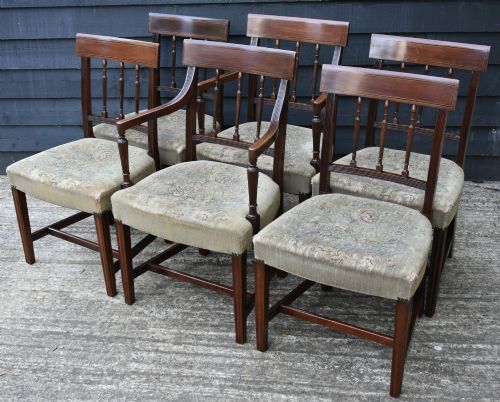
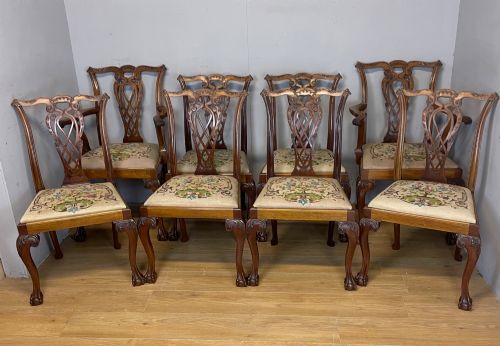
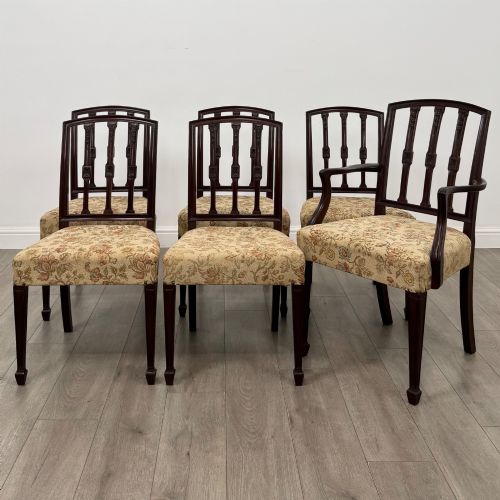
Makers often produced these armchairs in pairs or as the designated elbow chairs within larger dining sets. The resulting forms range from simple slat-back library seats to heavily carved Chippendale and Hepplewhite revival models.
Materials and construction
Makers relied primarily on mahogany for its strength, rich grain, and suitability for intricate carving on splats and legs. Secondary woods supported internal frames, while brass accents and string inlay provided decorative contrast.
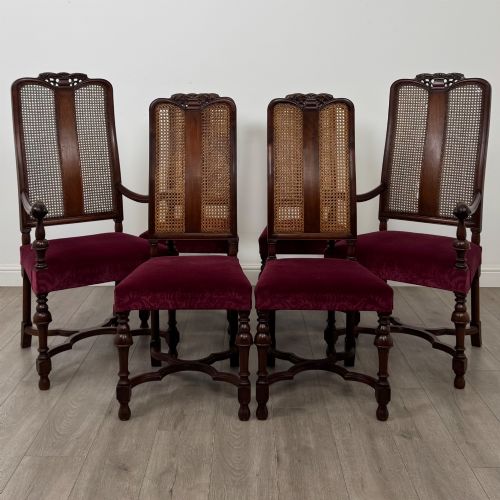
Upholstered elements utilised fabric, leather, velvet, and cane to provide seating comfort within the wooden framework. Joinery techniques ensured that open arms and high backs remained rigid under daily use.
Some armchairs arrived with cane panels designed to keep nineteenth-century gentlemen cool during long speeches.
Distinctions in quality
The depth and crispness of carved detail separate standard production from superior workshop output. Crisp splats, well-defined claw-and-ball feet, and balanced proportions indicate skilled cabinet work.
Material selection also dictates the standing of a piece, with figured mahogany veneers, delicate satinwood stringing, and heavy original leather upholstery elevating the construction.
Howard and Sons·Warings·Maple and Co·Alfred Allen of Birmingham·Waring and Gillow
The Edwardian Mahogany Carver Glossary
- Carver
- An armchair designed to match a set of dining chairs, distinguished by its open arms. These pieces traditionally sat at the head and foot of a dining table.
- Shield Back
- A chair back shaped in the outline of a heraldic shield, popularised by Hepplewhite and frequently revisited during the Edwardian period. The central splat usually rises from a carved urn or swag base.
- Splat
- The vertical wooden strip running from the seat to the top rail in the middle of a chair back. Makers often pierced or carved these elements in the manner of Chippendale.
- String Inlay
- A narrow band of contrasting wood or light satinwood embedded flush into the mahogany surface. This technique created delicate geometric lines along chair legs and rails.
Edwardian Mahogany Carver: Frequently Asked Questions
How do I spot an edwardian carver?
Look for lighter framing timber and revival motifs such as Sheraton inlay or Edwardian marquetry combined with turn-of-the-century construction methods.
These chairs often show proportions and decorative restraint characteristic of the period between eighteen ninety and nineteen twenty.
Were carvers used at desks?
Open armchairs frequently served in libraries and studies as well as dining rooms. Their supportive arms suited writing and reading tasks.
Desk variants often incorporate sturdy wooden seats or leather upholstery designed for daily use.
Can I mix styles at a table?
Sets often combined matching side chairs with a pair of carvers at the heads of the table. Mixing revival styles requires attention to wood tone and leg design.
Mahogany provides a unifying visual link even when chair backs vary between shield and interlaced designs.
What is satinwood stringing?
Satinwood stringing is a decorative inlay technique where thin strips of pale timber are set into darker mahogany. This adds linear contrast to chair rails and backrests.
Craftsmen utilised this method to brighten formal salon and dining chairs.