




Leather Low Seat
These leather low seat examples bring compact comfort and rich texture to a room, offering practical utility alongside distinct period character.
Leather Low Seat
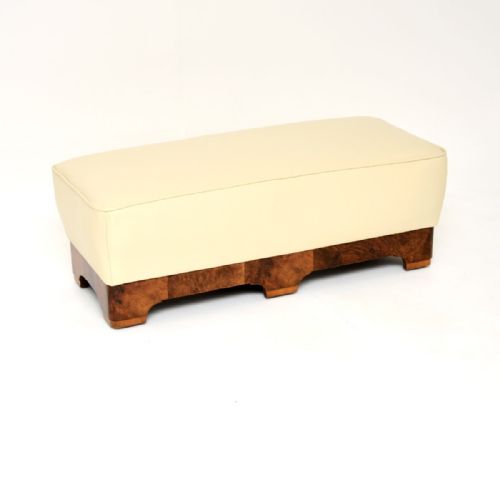
A leather low seat encompasses various forms such as stools, ottomans, footstools, dressing stools, and low accent chairs. These pieces emerge across the nineteenth century, the Edwardian era, and into the Art Deco period of nineteen thirty.
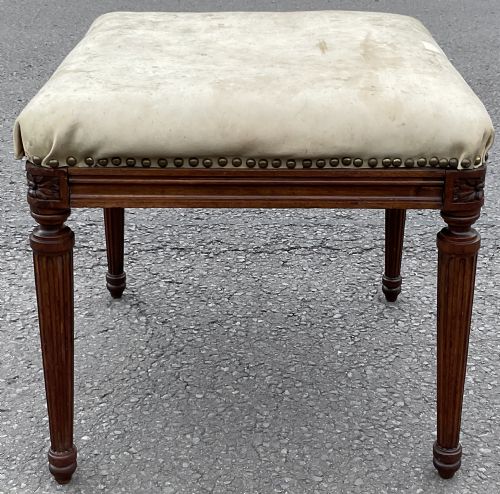
The version most commonly encountered on this page is the compact stool or footstool, often framed in woods like oak, mahogany, or burr walnut. Alongside these, low nursing chairs and desk chairs appear, providing low seating configurations with upholstered leather pads.
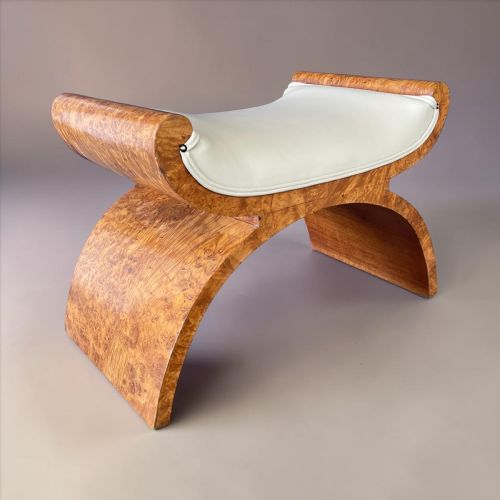
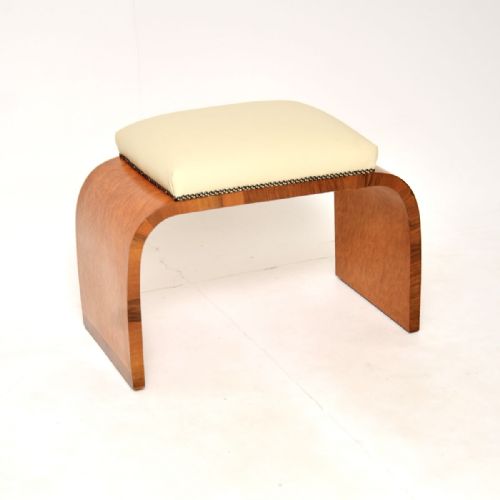
Origins span traditional English vernacular styles, revivalist movements including Jacobean, Chippendale, and Carolean, as well as distinct Art Deco interpretations. Each object demonstrates a specific period approach to low seating proportions.
Materials and construction methods
Frames rely on solid hardwoods such as oak, mahogany, walnut, and beech, frequently shaped through turning, carving, or smooth veneering. Burr walnut and birds eye maple provide figured wooden surfaces on specific Art Deco variants.
Upholstery utilises leather and hide, secured to frames using brass tacks or studs. Structural joinery incorporates traditional methods, seen in joint stools and framed seating from the nineteenth and early twentieth centuries.
Listings feature items spanning the nineteenth century, Victorian era, Edwardian period, and nineteen thirty.
Distinguishing quality in construction and material
Quality separates through the selection of timber and the precision of cabinetmaking. Heavily figured veneers like burr walnut or birds eye maple, alongside detailed hand-carved elements such as lions heads, distinguish finer pieces from plain utility items.
The grade and tanning of the leather upholstery influence the tactile appeal and durability of the surface. Substantial timber frames with tight joints indicate superior initial manufacture compared to lighter, simpler constructions.
Harry and Lou Epstein
The Leather Low Seat Glossary
- Joint stool
- An early form of wooden stool constructed with mortise and tenon joints rather than turned legs. These sturdy pieces date back centuries and served various household uses.
- Nursing chair
- A low-seated chair traditionally designed for comfort and ease near a hearth or nursery fire. They frequently feature upholstered seats and low backs.
- Burr walnut
- A wood harvested from the burl growth of a walnut tree, yielding highly decorative and swirling grain patterns. Cabinetmakers prize this material for high-status furniture surfaces.
- Carolean style
- A decorative style spanning the late seventeenth century, revived in later periods with richly carved woodwork and scroll legs. Pieces in this style often incorporate walnut frames.
Leather Low Seat: Frequently Asked Questions
What is a leather low seat?
A leather low seat is a general category covering short stools, footstools, and low chairs upholstered in leather or hide. These items date from the nineteenth century through to nineteen thirty.
They were designed for resting feet, sitting near low tables, or use in dressing rooms and nurseries.
How do I date a leather low seat?
Dating relies on identifying the timber species, the style of the wooden frame, and the upholstery technique. Victorian pieces often use mahogany and rosewood, while nineteen thirty examples show streamlined Art Decoveneers.
Hardware such as brass tacks and the method of wood joinery also help determine the era of manufacture.
Where were these pieces used originally?
These low seats functioned in various domestic settings, including drawing rooms, bedrooms, and studies. Footstools accompanied armchairs, while dressing stools sat before vanity tables.
Low chairs served near fireplaces or in nurseries, offering comfortable seating close to the floor.
How do I care for antique leather?
Antique leather requires gentle cleaning and occasional conditioning to maintain its flexibility and prevent drying. Avoiding direct sunlight and excessive heat preserves the natural hide.
Regular dusting with a soft cloth keeps the surface clean without stripping the original patina.