


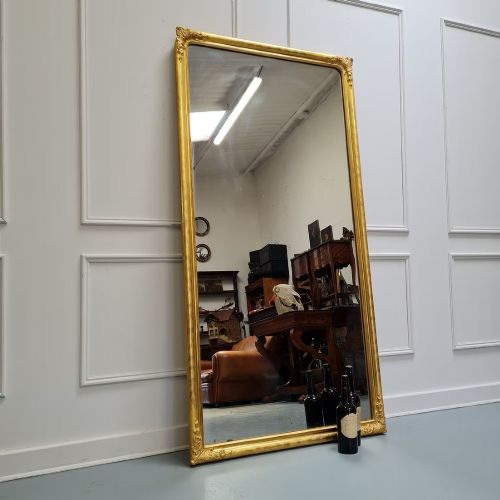


Leaning Floor Mirror
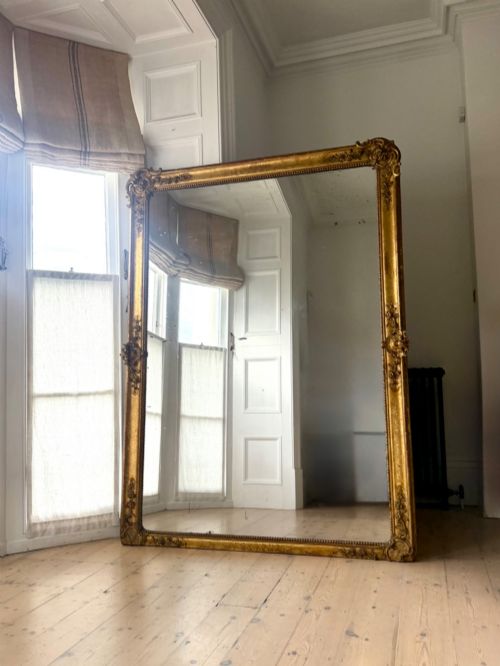
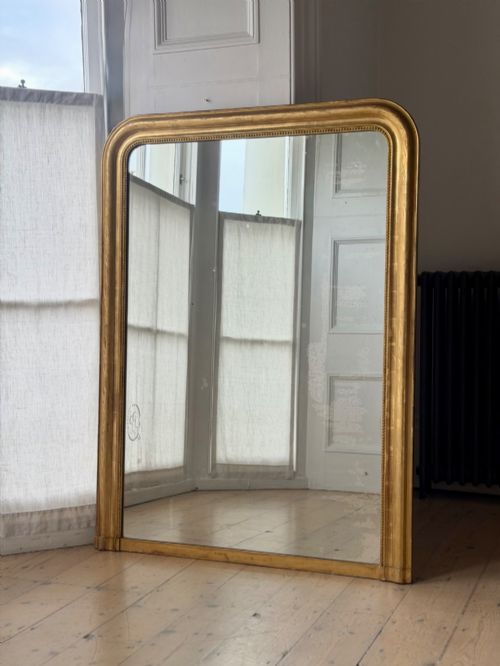
Leaning floor mirror examples bring scale and proportion to a room, offering tall reflective surfaces framed in period timber and gesso.
Leaning Floor Mirror
When you search for a leaning floor mirror, you encounter large tall vertical glasses designed to rest against a wall rather than hang from a fixed bracket. These objects provide full-length reflection and occupy significant vertical wall space in period interiors.
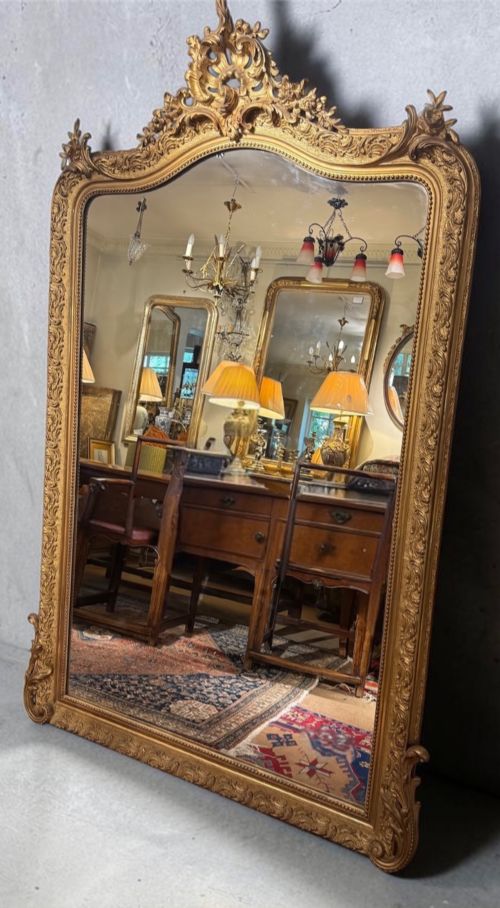
The pieces available here draw heavily from nineteenth-century French and English traditions, spanning eras from the Victorian period through to Edwardian years. Common formats include arched tops, shaped tops, and rectilinear frames intended for principal rooms.
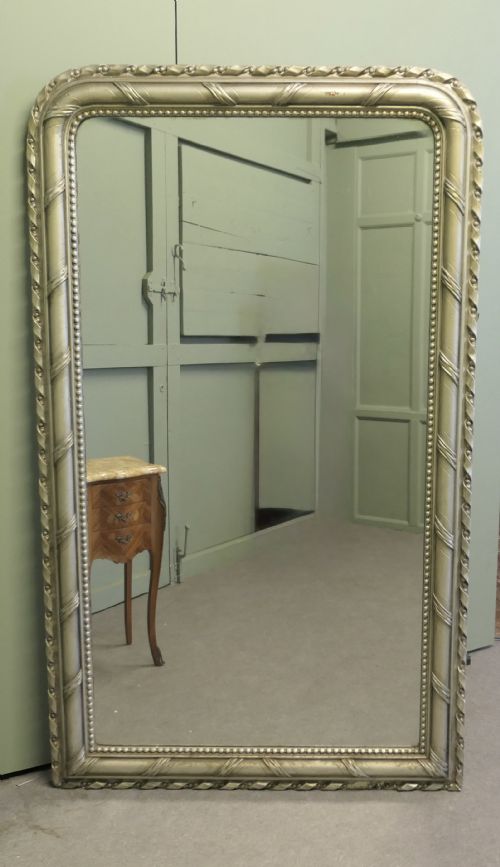
Most examples rely on substantial wooden carcases finished with carved gesso, gilt, silver leaf, or paint. They function simultaneously as architectural elements and practical dressing glasses.
How they were made
Craftsmen built the primary frames from pine and other hardwoods, constructing sturdy joints capable of supporting heavy glass plates. Carved wood and gesso ornamentation was then applied to the surface before gilding or painting.
Finishers utilised gold leaf, silver leaf, or oil paint to coat the gesso mouldings, often leaving subtle tool marks and textures visible in the surface. Glass plates were cast and silvered by hand, resulting in the characteristic depth seen in nineteenth-century mirrors.
The inventory spans the Victorian and Edwardian eras, incorporating Louis Philippe and neoclassical stylistic influences.
What varies in quality
The standard of a leaning floor mirror depends significantly on the crispness of the carved wood and gesso relief work. Finer examples display deeply undercut foliage, scrolls, and mouldings that retain sharp definition beneath the original gilding or paint.
Proportion and scale also dictate the visual strength of the piece, with larger vertical formats requiring balanced framing to maintain stability. The integrity of the original surface finish, whether gilt or painted, distinguishes superior examples from heavily restored alternatives.
The Leaning Floor Mirror Glossary
- Gesso
- A plaster-like mixture applied to wood frames to create a smooth surface for carving and gilding. It allows intricate relief ornamentation to be modelled before the application of metal leaf.
- Giltwood
- Timber coated with a thin layer of gold leaf over a prepared ground. It provides a luminous surface that catches ambient light in a room.
- Overmantle
- A large horizontal or vertical mirror designed to hang or rest above a fireplace mantelpiece. Many floor-standing examples share similar decorative vocabularies with these fireplace fixtures.
- Pier glass
- A tall mirror traditionally placed between two windows on a pier of wall. These glasses often share dimensions and proportions with modern floor-standing pieces.
Leaning Floor Mirror: Frequently Asked Questions
How do I secure a leaning floor mirror safely?
These tall glasses are heavy and require careful positioning against a structurally sound wall to prevent tipping. Many owners use concealed anchor brackets attached to the upper frame for stability.
Ensuring the floor surface is level also helps distribute the weight evenly across the base of the frame.
What periods do these mirrors come from?
The selection consists primarily of nineteenth-century items, including Victorian and Edwardian pieces alongside French provincial and Louis Philippe designs.
Dates range across the eighteen-sixties, seventies, nineties, and into the early nineteen-hundreds.
Are the frames made of solid wood?
The structural carcases are typically built from pine or carved wood to support the substantial weight of the glass plate and decorative gesso. Gilt or paint finishes are then applied over this wooden foundation.
This construction method provided the necessary rigidity for tall vertical hanging or leaning mirrors.
What finishes are most common on these frames?
Giltwood, silver leaf, and painted surfaces appear frequently across the available inventory. Many pieces retain their original distressed metallic or painted patination.
Scrollwork and architectural mouldings highlight these different surface treatments.