



Lead Glass Rummers
Lead glass rummers are heavy drinking vessels built for substantial toasts, prized by collectors for their tactile weight and period character.
Lead Glass Rummers
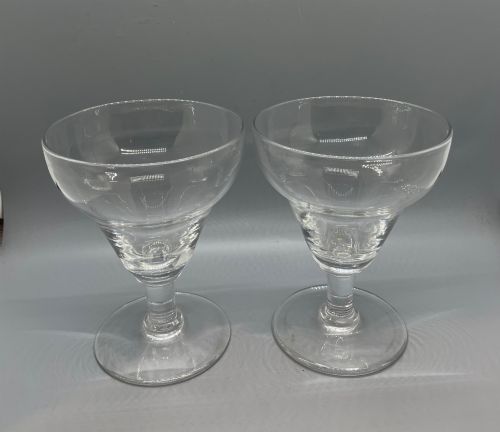
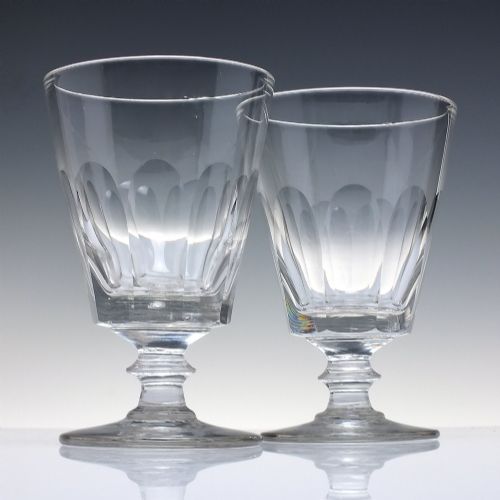
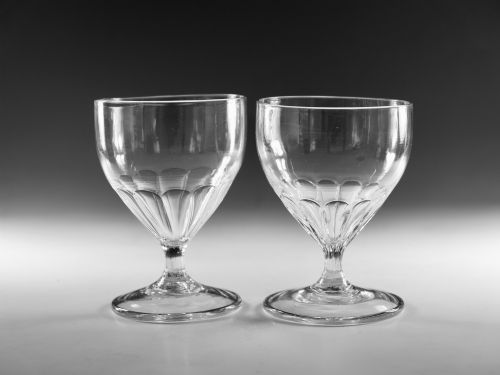
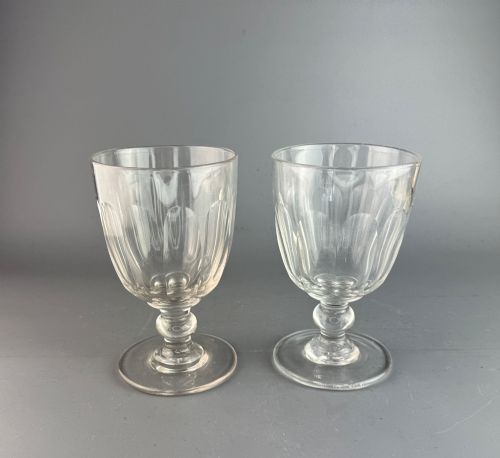
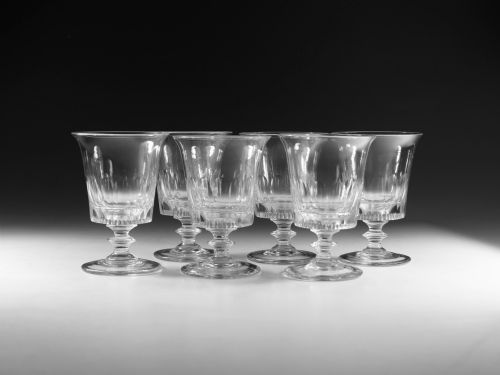
Lead glass rummers are substantial drinking vessels designed for ale, spirits, and wine during the Georgian, Regency, and Victorian eras. These drinking glasses appear in forms ranging from plain stems to square lemon squeezer feet and heavy bucket bowls.
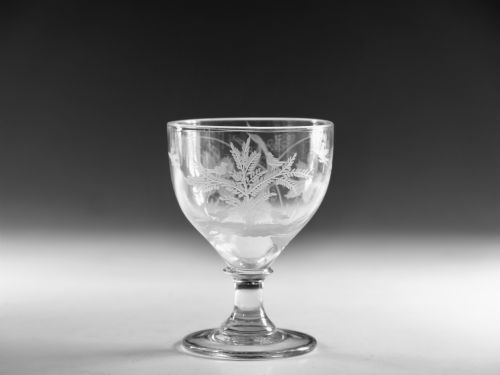
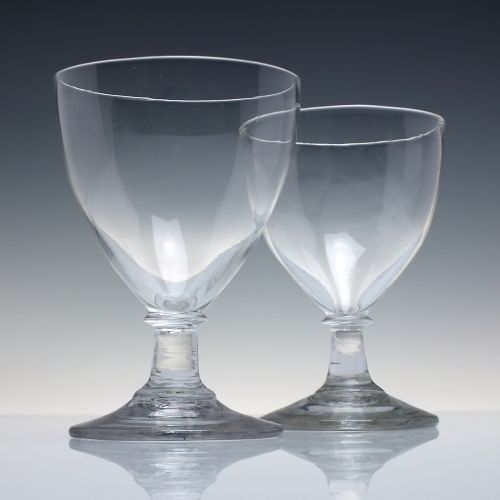
A buyer examining this page will most frequently encounter English pieces dating from the late 18th century through the mid 19th century. These items span simple ovoid bowl profiles to large serving rummers decorated with engraved hops and barley.
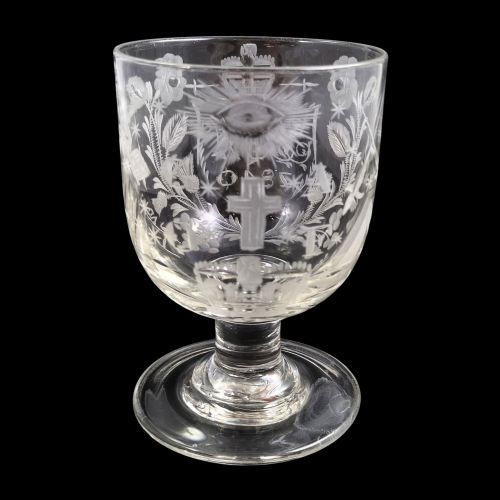
The selection includes matched pairs and larger sets alongside singular engraved examples featuring bridges, ships, and armorial motifs. Origins stretch across English workshops, including North-East regional variations.
Materials and technique
Maker's workshops utilised lead crystal, flint glass, and clear lead glass to achieve brilliance and a heavy physical presence. Hand-blown glass forms provided the foundational vessel before artisans applied their finishing techniques.
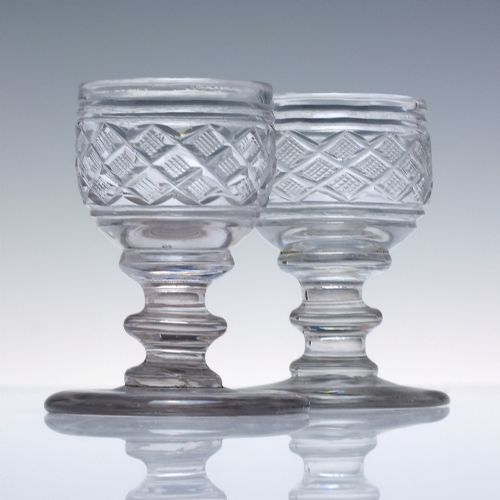
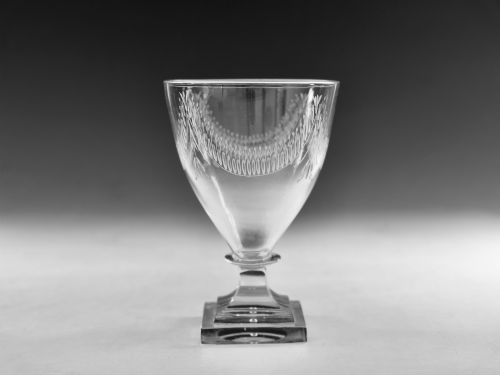
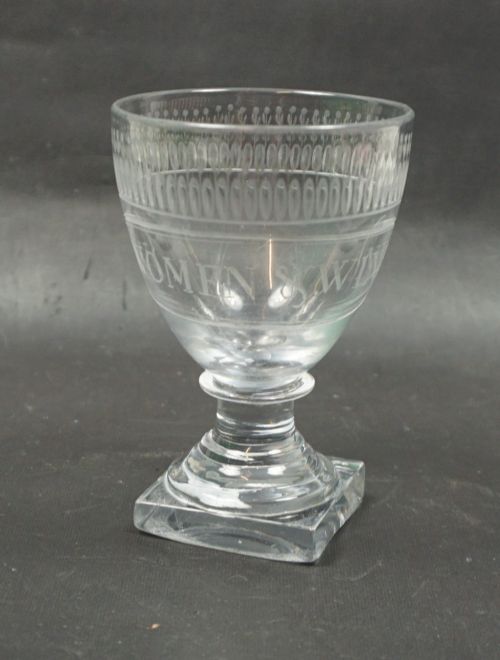
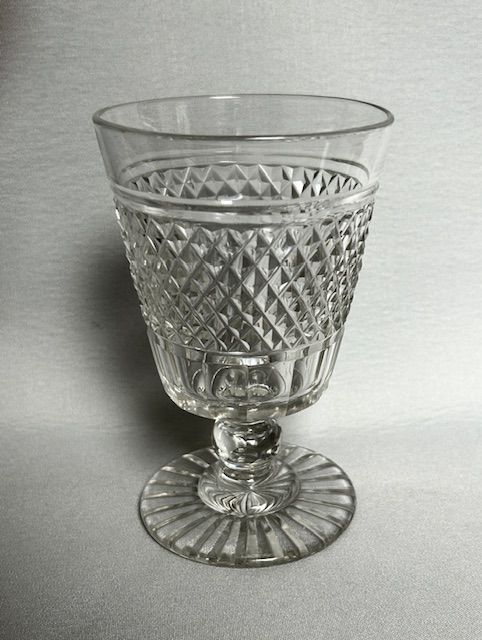
Surface decoration relied on wheel engraving and deep cutting, producing pan top designs, hobnail patterns, and etched pictorial scenes. Square bases were pressed or moulded separately before being joined to the bowl and stem.
Listings feature lead crystal, flint glass, and clear glass across Georgian, Regency, Victorian, and Edwardian periods.
Quality differences
The standard of lead glass rummers is dictated by the depth and clarity of the metal itself, alongside the crispness of any cut or engraved decoration. Sharp, well-defined wheel engraving on a heavy, clear body commands greater attention than soft or shallow surface work.
Proportion and stability also govern desirability, particularly in examples featuring square lemon squeezer feet or substantial ovoid bowls. The alignment of the bowl to the stem and the overall balance in the hand separate ordinary utility vessels from superior examples.
The Lead Glass Rummers Glossary
- Rummer
- A large drinking glass used primarily for ale, wine, or spirits during the 18th and 19th centuries. These vessels typically feature a stout bowl on a short stem and foot.
- Lemon squeezer base
- A square, pressed glass foot with distinctive indented corners resembling a citrus juicer. This foot style is frequently encountered on Georgian rummers and table glass.
- Hobnail cut
- A faceted geometric surface pattern resembling the iron hobnails used in heavy boots. It catches the light and adds considerable texture to the lower body of the glass.
- Ovoid bowl
- An egg-shaped bowl profile common on Georgian drinking glasses. This form directs aromas upwards while providing a comfortable hand-holding weight.
- Air twist
- An optical effect within the stem created by elongated air bubbles drawn through the molten metal during manufacture. It appears as delicate threads spiralling inside the glass.
Lead Glass Rummers: Frequently Asked Questions
What were lead glass rummers used for?
These robust vessels served everyday drinking needs for ale, wine, porter, and punch in homes and taverns. Their heavy build made them practical for toasts and communal drinking.
Larger versions functioned as serving rummers at the table, passing beverages between guests during formal dinners and gatherings.
How do I date a glass rummer?
Dating relies on observing foot shapes, bowl profiles, and manufacturing marks such as pontil scars on the underside. Georgian examples often display bucket or ovoid bowls with heavy, rounded or square feet.
Victorian and later pieces generally present heavier proportions, sharper mould lines, and different cutting styles compared to their 18th-century predecessors.
Why do some rummers have square feet?
Square bases, known as lemon squeezer feet, provided extra stability on uneven tavern tables and dining boards. They were pressed in moulds during the late Georgian and Regency periods.
This design feature adds distinct architectural weight to the lower portion of the drinking vessel.