







Lead Glass Dish
These lead glass dish examples bring substance to a table, combining clear metal and sharp cutting from the Georgian to the Edwardian eras.
Lead Glass Dish
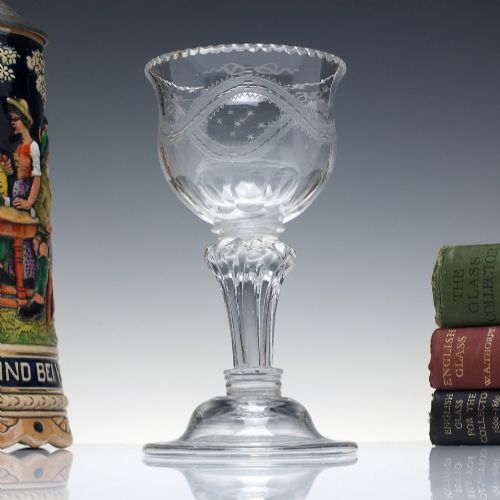
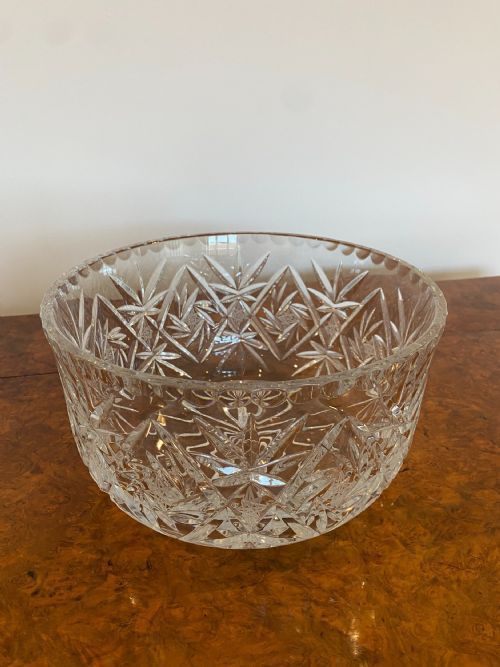
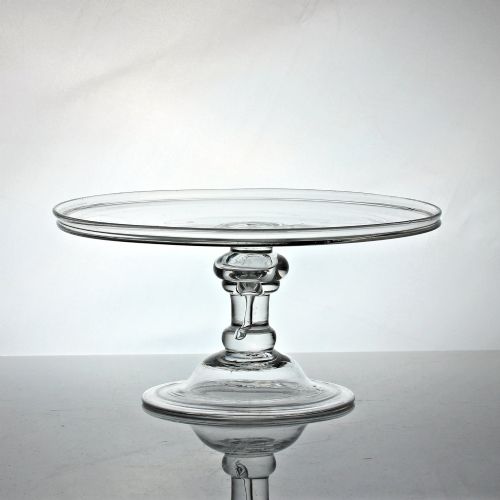
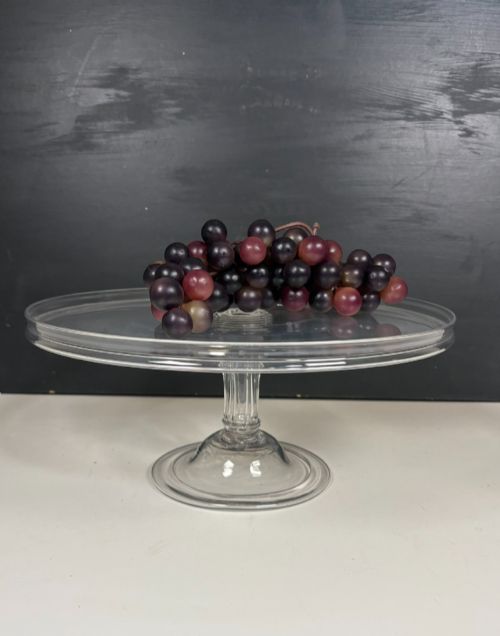
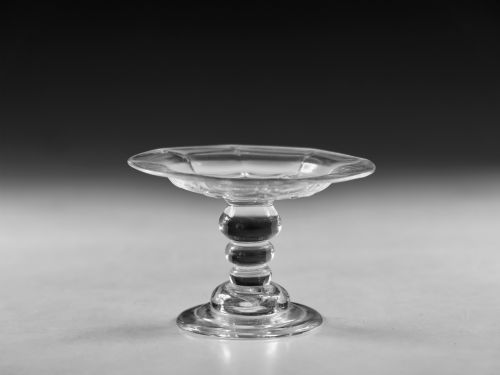
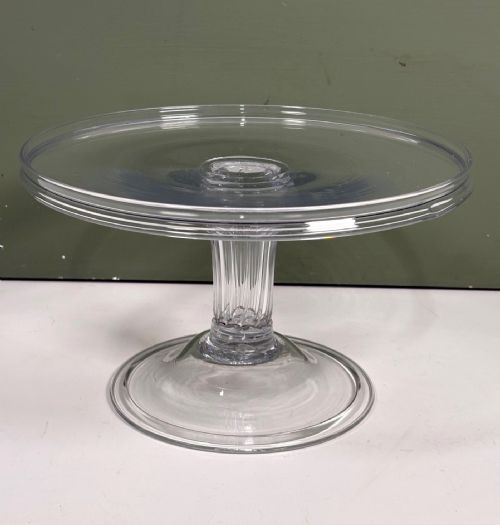
When searching for a lead glass dish, a buyer encounters heavy serving vessels, low sweetmeat plates, and stemmed tazzas designed for sweet treats or fruit. The most frequent forms on this page stem from the Georgian and Victorian periods, ranging from small patch stands to large fruit bowls.
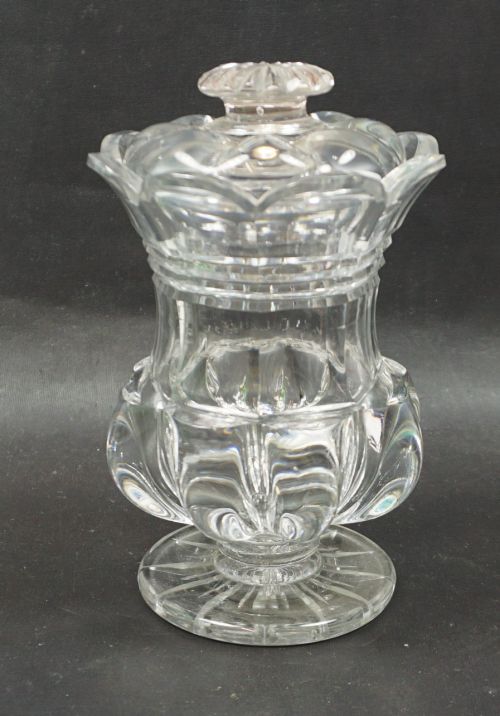
The selection includes specialised pieces such as lidded butter dishes, preserve jars, and jelly glasses alongside open centrepiece bowls. Origins span English manufacture alongside traditional Irish crystal and continental work from Belgium.
Earlier examples often feature heavy baluster stems or rib-moulding, whereas later Victorian and Edwardian items lean toward extensive wheel-cutting and clear lead crystal surfaces.
How they were made
Maker operations utilised heavy lead crystal and clear glass, shaped by free blowing or pressing into moulds such as pillar and honeycomb patterns. The addition of lead oxide to the metal increased the density and refractive index of the material, allowing for deeper brilliance.
Craftsmen then finished the vessels using wheels to cut facets, flutes, and geometric designs across the surface, occasionally adding fine engraving or blue over crystal cased layers.
Lead Glass Dish Retail Price Guide 2026
Typical asking prices for lead glass dish among the pieces listed under this phrase on Sellingantiques today, from the lower quarter to the upper quarter. They describe what is for sale here now, not the wider market.
Miniature patch stands designed for tiny beauty spots outlive the powdered faces they once served by nearly three centuries.
What varies in quality
The distinction between ordinary and superior pieces rests on the crispness of the cutting and the weight of the metal. Sharp, deep facets catch the light cleanly, whereas softer mouldings blur the geometric transitions.
Proportion and metal clarity further divide the range, with superior items displaying a clear, resonant ring and minimal internal bubbles or impurities in the lead crystal.
Val St. Lambert·Waterford
The Lead Glass Dish Glossary
- Lead crystal
- Glass containing a significant proportion of lead oxide, which adds weight, brilliance, and softness for easier cutting. This material forms the body of most serving dishes and tazzas on this page.
- Tazza
- A shallow ornamental bowl raised on a high foot or pedestal. These pieces were historically used to serve fruit, sweetmeats, or confections.
- Patch stand
- A small, low-footed dish originally used to hold cosmetic patches for the face. They often feature delicate baluster stems or terraced feet.
- Sweetmeat glass
- A specialised stemmed vessel designed to hold dry sweet confections or nuts. They appear with rib-moulding, twist stems, or flat dish tops.
- Pillar moulded
- A decorative technique where molten glass is pressed into a ribbed mould to create vertical columns of glass. This adds both structural strength and visual depth to jars and bowls.
Lead Glass Dish: Frequently Asked Questions
What is a lead glass dish used for?
These vessels served various functions on formal dining tables, primarily holding sweetmeats, jellies, preserves, or fruit. Smaller variants like patch stands held cosmetic items.
Over time, their roles shifted from active dining service to decorative display pieces, though their heavy lead crystal construction remains robust enough for modern table use.
How do I identify Georgian lead glass?
Georgian pieces typically display darker, heavier metal with a distinctive greyish or warm tone, often featuring hand-cut facets or opaque twist stems. Early examples may show pontil marks on the underside where the blowing iron was detached.
Later Victorian and Edwardian items tend to show brighter, more uniform machine-assisted cutting and crisper geometrical precision.
What is the difference between a tazza and a bowl?
A tazza stands upon a distinct central pedestal or stem, elevating the shallow serving surface above the table level. A bowl sits directly on a flat base or foot ring without a stem.
Both forms utilise heavy cut lead crystal, but tazzas offer a more vertical profile suited to centrepieces.