





Lead Glass Ale Goblet
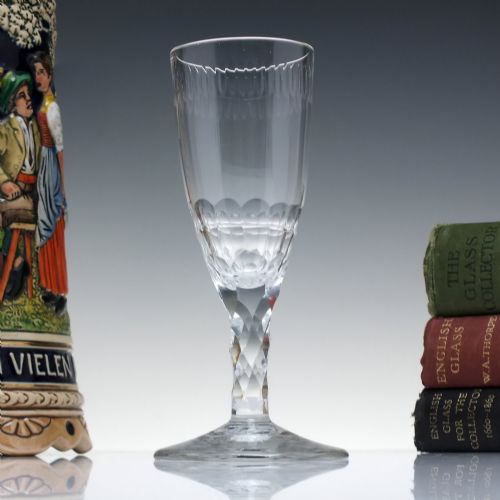
A lead glass ale goblet brings the tactile weight of Georgian drinking traditions directly to your table.
Lead Glass Ale Goblet
A lead glass ale goblet is a drinking vessel designed for malt beverages, appearing in forms across the eighteenth century and into the early nineteenth century. These items span periods such as the eighteenth century, the Georgian era, and around eighteen hundred, categorised primarily as glassware, drinkware, and stemware.
How these drinking vessels were produced
Glassmakers utilised lead crystal, lead glass, and flint glass to achieve clarity and weight in each piece. Hand-blown glass techniques allowed artisans to manipulate the molten material into specific stemware profiles.
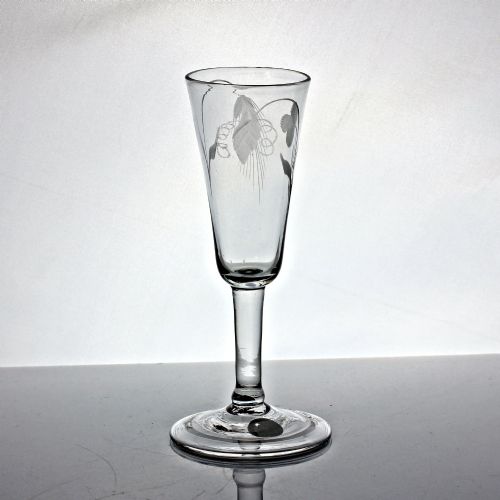
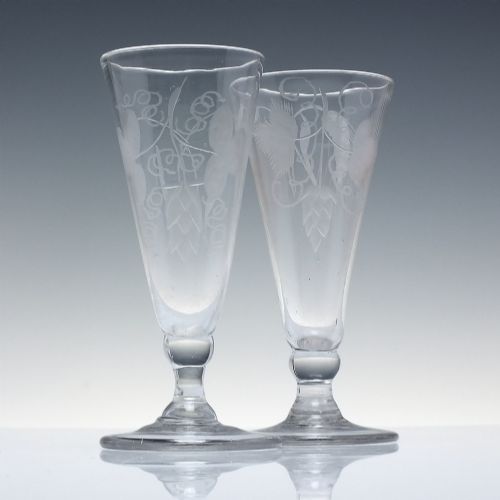
Decoration often involved white enamel work or precision wheel engraving to depict botanical motifs such as hops and barley. Internal stem structures like air twists and opaque twists were formed while the metal remained pliable.
Lead Glass Ale Goblet Retail Price Guide 2026
Typical asking prices for lead glass ale goblet among the pieces listed under this phrase on Sellingantiques today, from the lower quarter to the upper quarter. They describe what is for sale here now, not the wider market.
Early glassmakers occasionally incorporated tiny trapped impurities into the metal, reminding modern admirers of the fiery, imperfect furnace floor.
What separates examples across the range
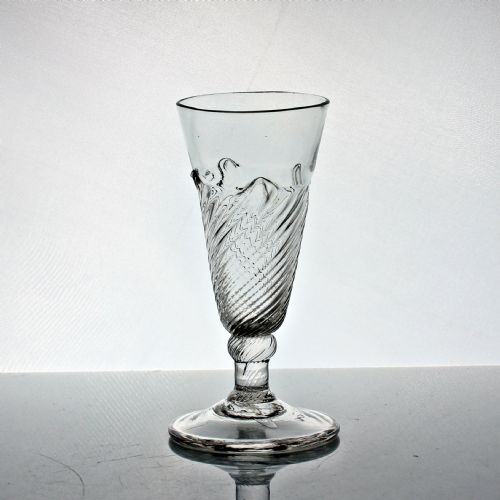
The finesse of the internal stem formation dictates much of the visual appeal, distinguishing simple draws from complex multi-spiral air twists. Engraved details also vary, with crisper wheel cuts on the bowl offering greater definition to motifs like hops and barley.
Proportion and foot construction influence the tactile balance of the vessel, where folded feet or heavy dwarf stems demonstrate deliberate stability and refined handling.
The Lead Glass Ale Goblet Glossary
- Air twist
- A decorative stem feature containing elongated bubbles pulled and twisted into spiral patterns during manufacture. This technique required considerable skill from the glassblower.
- Wrythen
- A surface pattern of subtle spiral ribs formed by twisting the glass while molten. It adds texture and light reflection to the bowl.
- Folded foot
- A base edge turned under and pressed flat to create a thickened rim for extra strength. This structural detail frequently appears on mid-eighteenth-century drinking vessels.
- Rummer
- A large, heavy-baluster drinking glass popular for serving rum, beer, or ale during the Georgian period. These vessels usually feature generous capacities and sturdy stems.
- Opaque twist
- A stem variation incorporating white or coloured enamel threads drawn into complex internal networks. It provides a striking contrast to clear flint glass.
Lead Glass Ale Goblet: Frequently Asked Questions
What defines a lead glass ale goblet?
These drinking vessels are characterised by their high lead content, which gives the metal extra brilliance, weight, and resonance when struck. They typically feature taller, narrower bowls suited to serving ales and beers.
Such proportions helped preserve the head on malt beverages during the eighteenth and early nineteenth centuries.
How were air twist stems made?
Glassmakers trapped air inside a molten gathering of metal before drawing and twisting the mass to elongate the bubbles into fine internal threads. This intricate process required precise temperature control.
Mastering the technique allowed workshops to produce delicate single and double series twist patterns.
What do hop and barley engravings signify?
Engravings of hops and barley directly reference the primary agricultural ingredients used in brewing traditional British ales. Artisans wheel-cut these botanical motifs onto the bowls to celebrate the contents.
Such decoration connects the physical glassware to the social drinking customs of the Georgian era.
How do dwarf ale glasses differ?
Dwarf ale glasses feature shorter, more compact stems while maintaining the slender bowl proportions typical of tall ale variants. This lower centre of gravity provided greater stability on crowded tavern or dining tables.
They represent a practical adaptation in stemware design without sacrificing capacity or aesthetic balance.
Can I use these antique glasses daily?
While these pieces were originally created for active use, their age and delicate lead glass composition require careful handling today. Hand washing in lukewarm water without harsh detergents helps preserve the historical material.
Many collectors prefer to display them while occasionally enjoying a quiet drink from a sturdy Georgian rummer.