









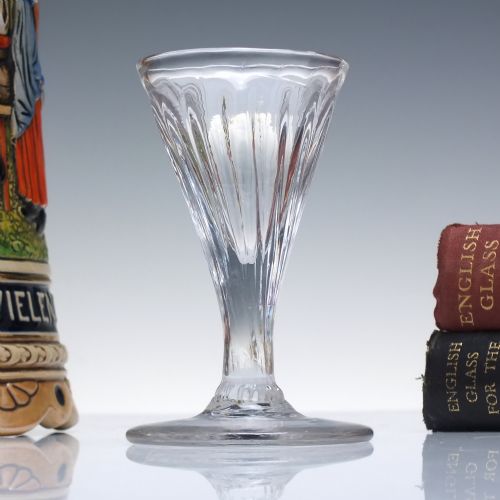


Lead Crystal Cordial Glasses
Lead crystal cordial glasses are small drinking vessels from the eighteenth and nineteenth centuries, prized for their heavy metal content and brilliant light refraction.
Lead Crystal Cordial Glasses
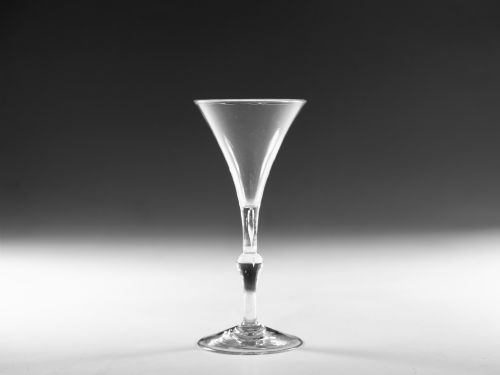
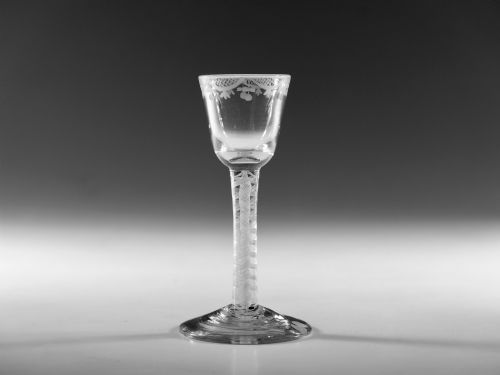
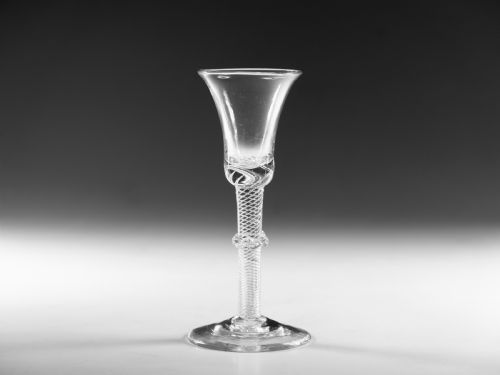
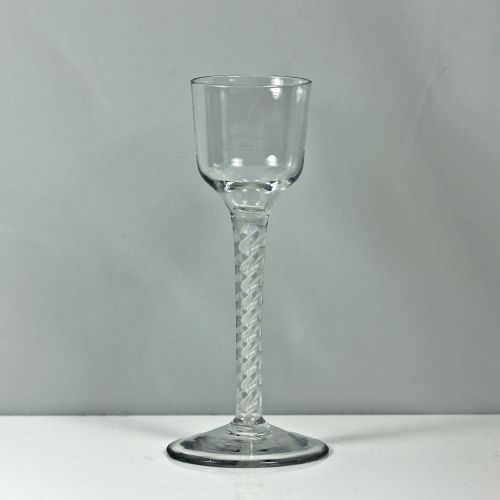
The forms encompass gin glasses, dram glasses, and toastmaster glasses alongside standard cordial shapes. These pieces showcase diverse stems, from early baluster designs to intricate air twists, opaque twists, and mercury twists, anchored by wide foot bases or conical feet.
Georgian specimens dominate the selection, offering hand-blown glass construction with engraved, etched, or rib moulded bowl decorations. You also encounter nineteenth-century sherry glasses and twentieth-century Baccarat dram glasses demonstrating the evolution of table glassware.
Assessing quality and manufacture
Quality rests in the clarity of the metal, the precision of the stem twists, and the crispness of any engraved or etched decoration. Finer pieces demonstrate superior weight distribution, perfect symmetry in the bowl and foot, and absolute transparency without cloudiness.
The complexity of the internal twist formation dictates much of the distinction between standard vessels and exceptional examples. Hand-pulled faceted stems and deeply cut bowls also separate basic utility items from superior collector pieces.
Lead Crystal Cordial Glasses Retail Price Guide 2026
Typical asking prices for lead crystal cordial glasses among the pieces listed under this phrase on Sellingantiques today, from the lower quarter to the upper quarter. They describe what is for sale here now, not the wider market.
The listings span the eighteenth, nineteenth, and early twentieth centuries, encompassing Georgian, Regency, and Art Nouveau styles.
Baccarat
The Lead Crystal Cordial Glasses Glossary
- Lead Crystal
- Glass containing a high percentage of lead oxide, which increases weight, brilliance, and workability for cutting and engraving. This material rings clearly when struck and refracts light intensely.
- Air Twist
- A stem enclosing elongated spiral channels of air created by drawing and twisting bubbles trapped in the molten glass. It appears as a silvery thread running through the centre of the stem.
- Opaque Twist
- A stem containing white or coloured enamel glass rods twisted into complex internal threads during manufacture. This technique became popular during the middle decades of the eighteenth century.
- Baluster
- A heavy, thick stem shape resembling a traditional architectural support, characteristic of early eighteenth-century drinking vessels. These stems often feature distinct nodes, knops, and collar rings.
- Folded Foot
- A base edge turned underneath during formation to create a rounded, thickened rim that adds stability and prevents chipping. This feature is frequently observed on eighteenth-century tavern and drinking glasses.
- Rib Moulded
- Glass blown into a patterned dip-mould to impart vertical or spiral ridges onto the exterior surface of the bowl. The piece was then often expanded and finished by hand.
Lead Crystal Cordial Glasses: Frequently Asked Questions
What were cordial glasses used for?
These vessels served for consuming potent liqueurs, cordials, and distilled spirits in small quantities after meals. Their modest bowl capacities matched the high alcohol content and strong flavours of eighteenth-century drinks.
They functioned across dining tables and taverns, where hosts poured measured portions of spirits for guests. The small size encouraged sipping rather than draining the glass in a single draught.
How do I identify a Georgian glass?
Georgian pieces typically exhibit hand-blown characteristics such as pontil marks on the underside of the foot and slight irregularities in the glass metal. The forms rely on traditional period silhouettes like baluster stems and heavy lead glass compositions.
Examine the foot for a folded rim and check the stem for period-specific twist configurations. Eighteenth-century examples also show subtle tool marks and softer surface wear accumulated over centuries.
What is a mercury twist?
A mercury twist is a stem variation featuring a continuous, shimmering internal channel that resembles liquid metal trapped inside the glass. The effect results from an optical illusion created by an elongated air bubble reflecting light.
Glassmakers achieved this appearance by manipulating air trapped within the stem during the pulling process. These stems date predominantly to the mid-eighteenth century and command attention for their optical brilliance.