




Late Victorian Wall Clock
These late victorian wall clock pieces are functional timekeepers housed in timber cases that bring reliable mechanical time to the domestic interior.
Late Victorian Wall Clock
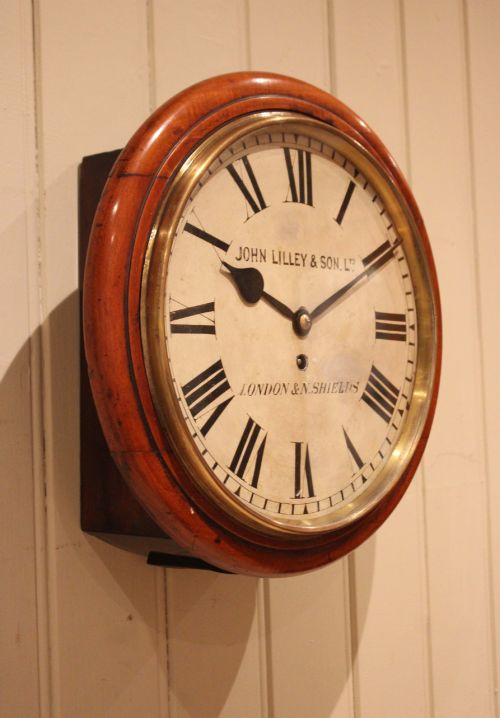
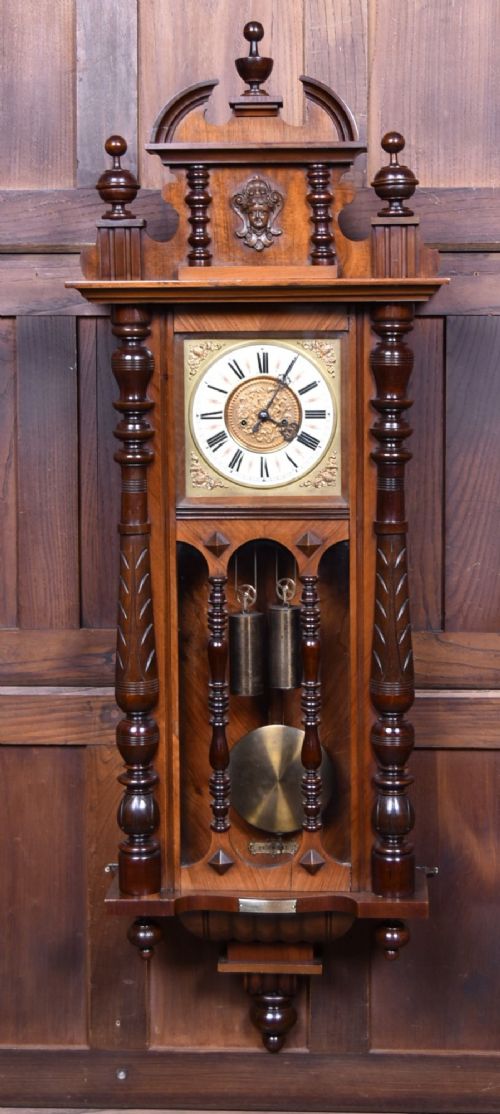
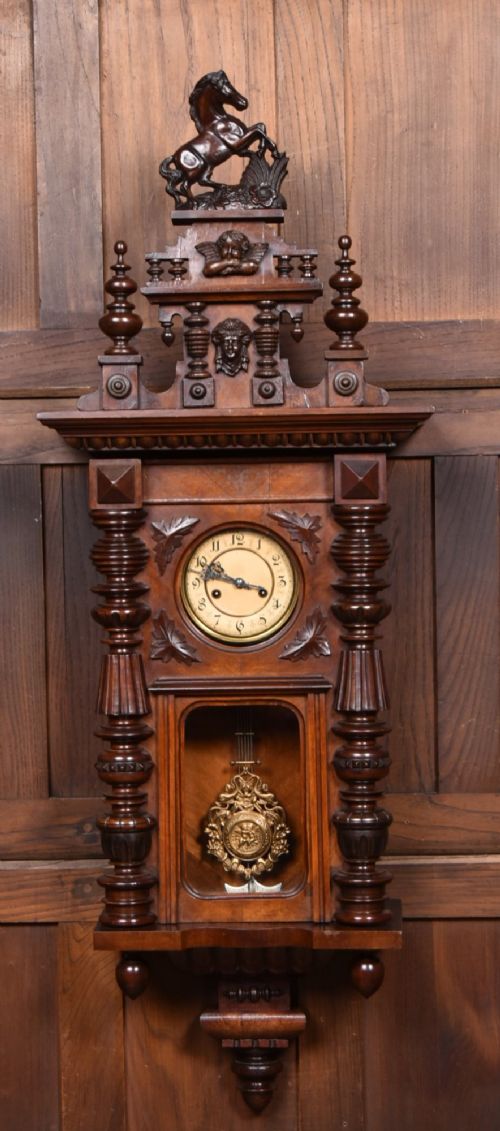
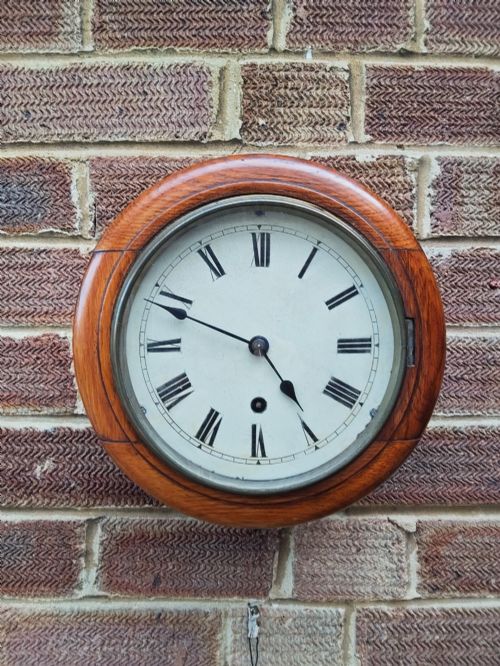
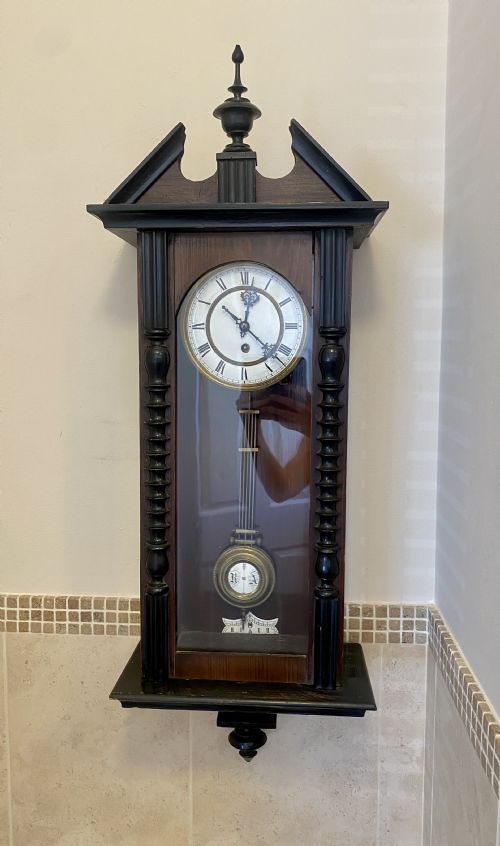
A late victorian wall clock represents a period of domestic timekeeping spanning the late nineteenth and early twentieth centuries, appearing most frequently in forms such as fusee dial clocks and Vienna regulators. These items range from sturdy oak and mahogany school or office timepieces to refined walnut and rosewood Vienna wall clocks intended for the parlour.
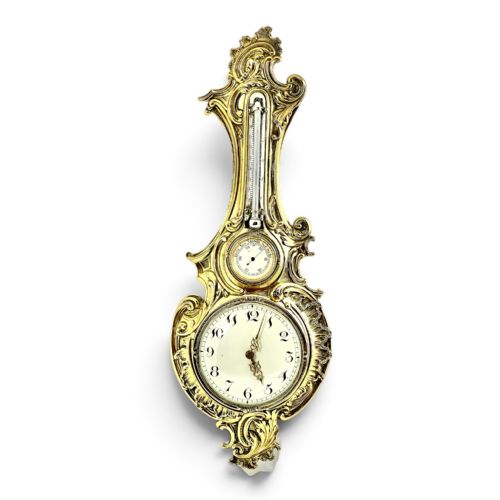
The evidence shows a strong presence of English fusee dial clocks alongside German movements, particularly those housed in walnut cases from makers such as Lenzkirch. Buyers will also encounter combined pieces that integrate barometers and thermometers into the timber wall case alongside the clock face.
Originating primarily from the 1880s to the turn of the twentieth century, these wall clocks reflect both utilitarian office designs and decorative residential styles including Victorian Rococo Revival and Biedermeier influences. The variety encompasses octagonal frames, drop-dial silhouettes, and miniature striking movements.
How they were made
The cases of a late victorian wall clock are constructed from dense timbers such as mahogany, walnut, oak, and rosewood, frequently enhanced with brass inlay or mother-of-pearl details. Cabinetmakers shaped these woods to house intricate mechanical movements while providing secure wall mounting through robust backboards and hinged side doors.
Dials are typically formed of enamel, glass, or convex glass surfaces set within brass bezels, protecting the painted numerals and delicate steel hands. The movements rely on brass gears, springs, and fusee or weight-driven mechanisms designed to maintain consistent tension and accurate timekeeping over eight-day durations.
Periods represented in the inventory span the 1870s, 1880s, 1890s, and early twentieth century up to 1910.
What varies in quality
Quality in a late victorian wall clock lies in the precision of the mechanical movement and the choice of cabinet timbers. Finer examples display carefully figured walnut or rosewood veneers, meticulous brass inlay, and crisp enamel dials paired with high-grade fusee movements.
Simpler office or school clocks prioritise robust utilitarian construction in solid mahogany or oak. The degree of hand-finishing on the movement plates and the incorporation of secondary instruments like thermometers and barometers also distinguish standard production from superior workshop output.
W&H Sch·AG Lenzkirch·James Bell, Bath
The Late Victorian Wall Clock Glossary
- Fusee
- A conical pulley used in clock movements to maintain even force on the gear train as the mainspring unwinds. This mechanism ensures consistent timekeeping accuracy throughout the running period of the clock.
- Vienna Regulator
- A precision wall clock style originating in Austria, typically featuring a long glazed wooden case and a compensated pendulum. These movements are prized for their accuracy and fine visible mechanics.
- Drop Dial
- A clock case design where a circular dial sits above an elongated wooden trunk that encloses the pendulum swing. This form was widely utilised in railway stations, offices, and domestic hallways.
- Silver Gilt
- Silver that has been coated with a thin layer of gold for decorative effect. This finish appears on barometer and thermometer stations associated with clock installations.
Late Victorian Wall Clock: Frequently Asked Questions
What is a fusee dial clock?
A fusee dial clock is a timepiece driven by a fusee cone and chain mechanism that regulates the power delivered from the mainspring.
This system provides steady force to the escapement, resulting in more reliable timekeeping than standard spring-driven alternatives.
How do I hang a wall clock safely?
Hanging a wall clock requires locating a secure wall fixing that supports the full weight of the timber case and mechanical movement.
The clock must hang plumb against the surface to ensure the pendulum swings evenly and the escapement ticks in a regular beat.
Where were these clocks used?
These clocks served in diverse environments ranging from formal residential parlours and libraries to railway stations, schools, and offices.
Utilitarian dial clocks suited public spaces, while walnut and rosewood Vienna regulators suited domestic reception rooms.
How do I identify a Vienna regulator?
A Vienna regulator is identified by its tall glazed wooden case designed to display the pendulum and precision gear train.
These clocks typically feature refined timber veneers and delicate porcelain or enamel dials with subsidiary seconds.