
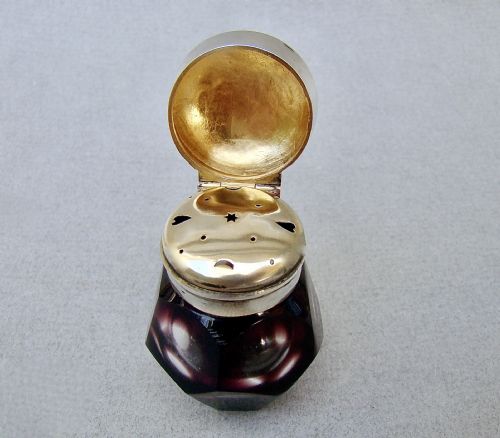


Late Victorian Silver Flask
A late victorian silver flask is a pocket or vanity essential from the end of the nineteenth century, sought after for its tactile combination of metal and glass or leather.
Late Victorian Silver Flask
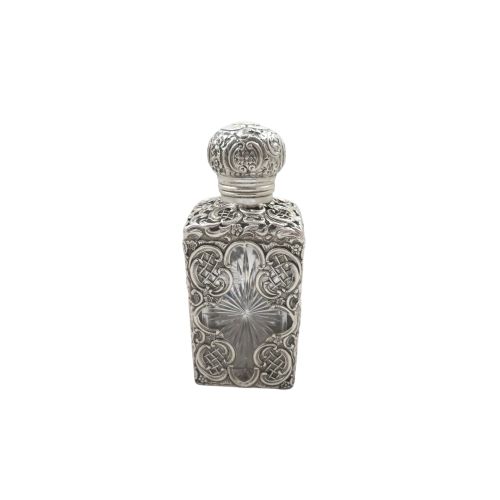
When you search for a late victorian silver flask, you encounter two distinct forms designed for very different uses. The first category comprises pocket-sized spirit flasks, often wrapped in crocodile leather or skin and fitted with silver plating for field sports and travel. These robust items typically date from the 1880s and 1890s.
The pieces on this page span the Victorian and late Victorian periods, originating predominantly from English and French workshops. You will find both pocket spirits containers and tabletop scent flasks represented in the current selection.
Assessing Quality and Execution
Quality in these flasks rests upon the crispness of the silver chasing and the integrity of the fitted mounts. Superior examples display detailed repoussé work, such as cherub or angel decoration, securely attached to undamaged glass or intact leather.
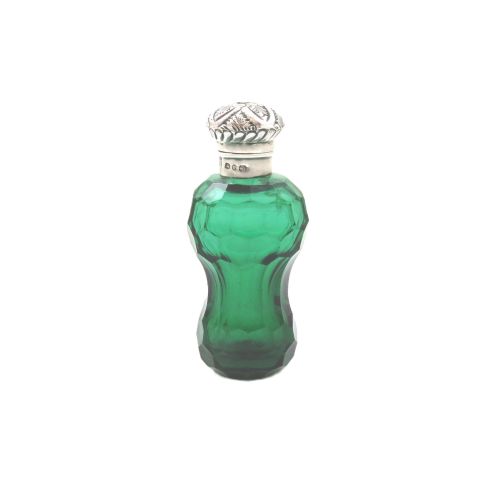
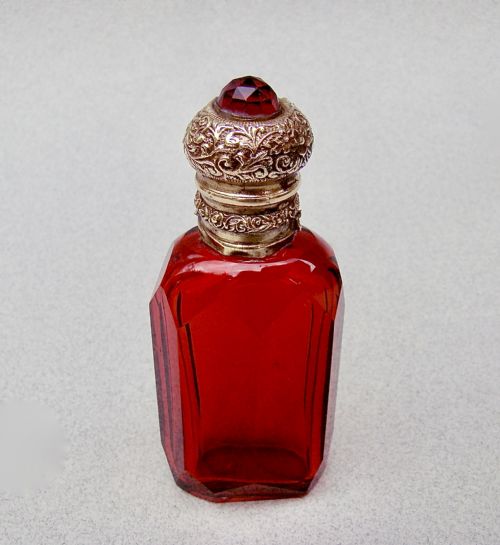
The weight and clarity of the glass, whether deeply cut or uniformly coloured in opaline or amethyst tones, indicate the standard of production. Makers who utilised heavy gauge silver plate or solid sterling mounts produced pieces that survive with tighter lid closures and better preserved surfaces.
The site listings feature items from the Victorian period, specifically spanning the decades of the 1880s and 1890s.
Walker & Hall·Mappin & Webb·Creswick & Co
The Late Victorian Silver Flask Glossary
- Vinaigrette
- A small ornamental box or bottle containing a sponge soaked in aromatic vinegar. These vessels feature a pierced internal grille made of silver.
- Opaline Glass
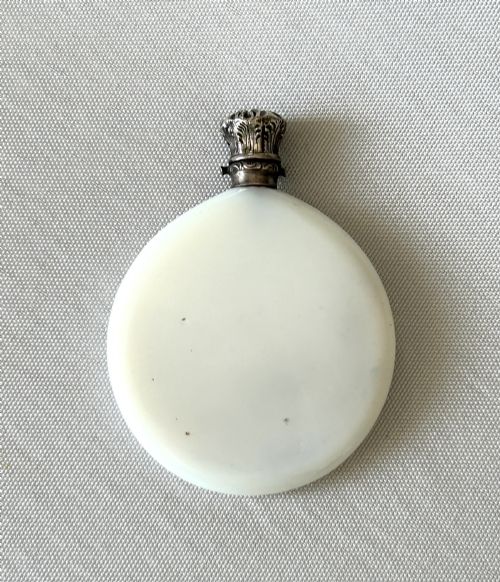
- An opaque or translucent glass popular in the nineteenth century, often appearing in soft pastel shades for scent bottles.
- Ormolu
- Gilded brass or bronze mounts applied to decorative glass objects, frequently seen on French Victorian pieces.
- Chasing
- The technique of hammering metal from the front to create raised decorative designs without removing material.
- Sterling Silver
- An alloy of silver containing ninety-two point five percent pure silver and seven point five percent other metals, chiefly copper.
Late Victorian Silver Flask: Frequently Asked Questions
What is the difference between a scent bottle and a hip flask?
Scent bottles are small tabletop or purse vessels designed to hold perfume or aromatic vinegars, usually made from coloured glass with sterling silver mounts.
Hip flasks are pocket containers built for spirits, typically constructed from silver-plated metal wrapped in crocodile leather for field use.
How do I date a late victorian silver flask?
Dating relies on hallmarks stamped onto the sterling silver mounts, which indicate the assay office, standard mark, and date letter for years in the late nineteenth century.
Stylistic cues such as chased angel decorations and the use of opaline or amethyst glass also point toward the 1880s and 1890s.
Were these flasks used by men or women?
Pocket spirit flasks wrapped in crocodile skin were primarily carried by men during hunting and outdoor pursuits.
Scent bottles and perfume flasks belonged on women's dressing tables or inside chatelaines for personal refreshment.
What coloured glass was used in these flasks?
Maker choices included opaline glass, amethyst glass, ruby glass, cut glass, and green glass for perfume and scent bottles.
Clear cut glass also appears frequently, often paired with sterling silver collars and hinged caps.