

Late Victorian Oak Furniture
Late Victorian oak furniture brings robust timber, deep carving and utilitarian purpose straight into daily domestic life.
Late Victorian Oak Furniture
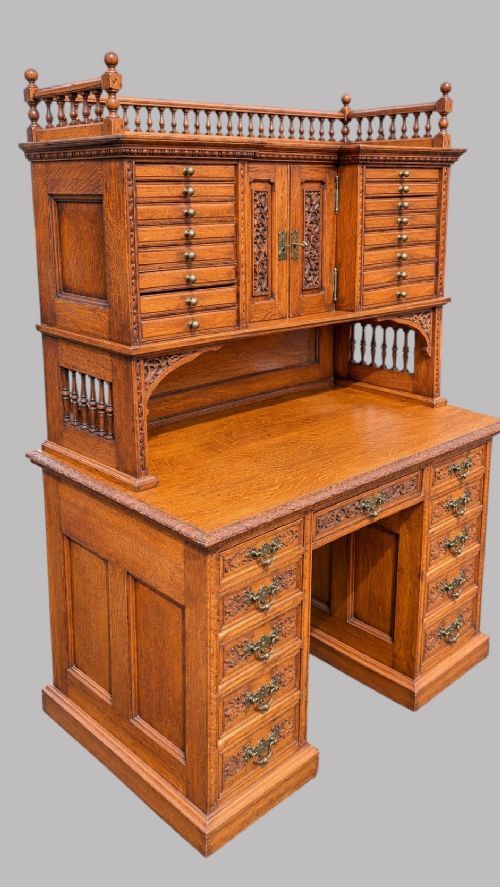
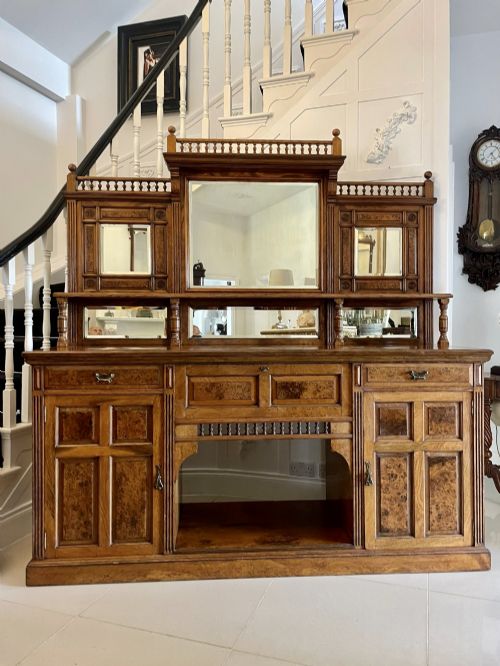
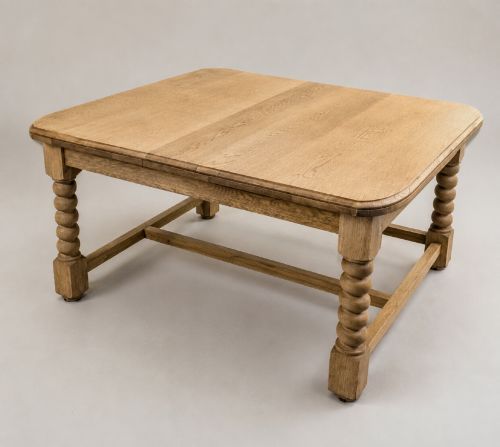
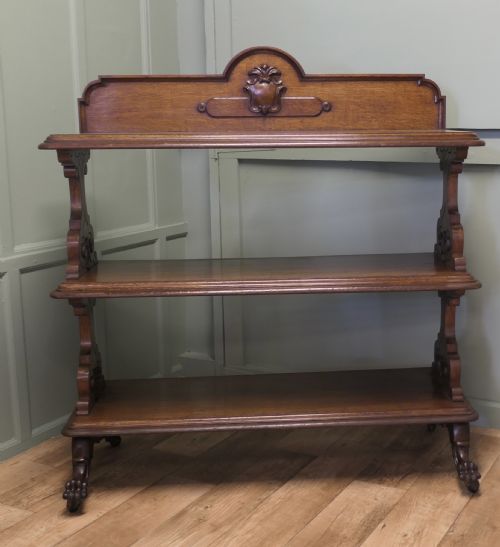
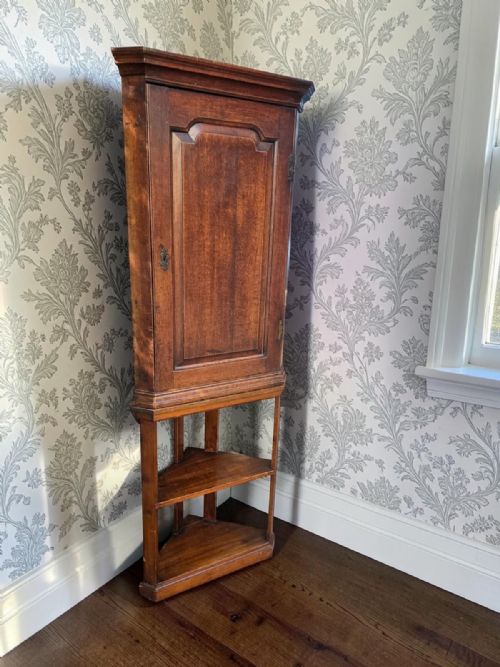
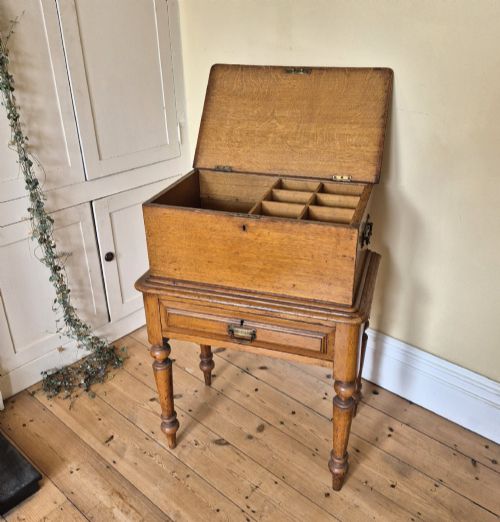
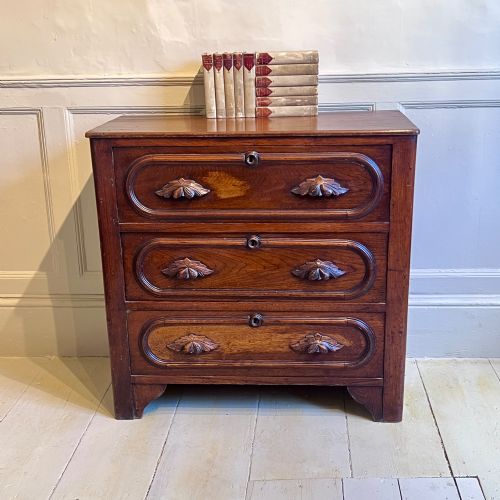
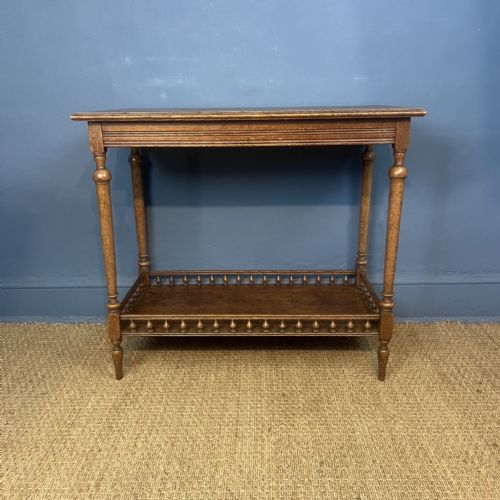
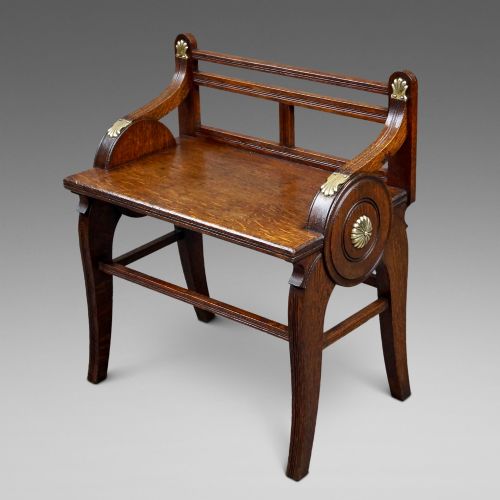
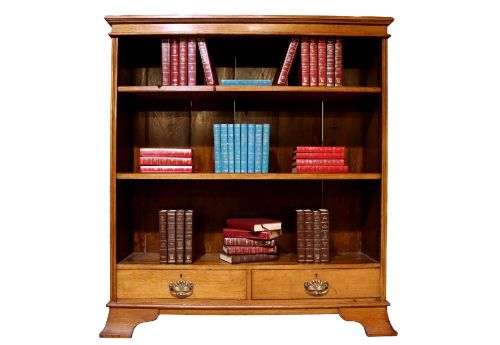
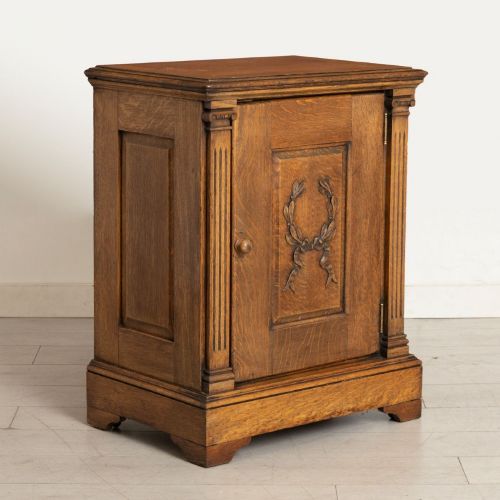
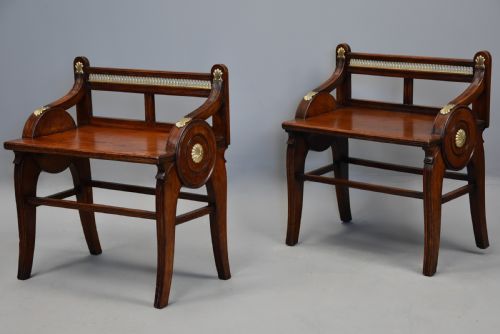
When searching for late victorian oak furniture, buyers encounter a dense selection of utilitarian and decorative objects spanning the decades around the turn of the nineteenth and twentieth centuries. These pieces encompass sturdy desks, carved hall benches, sideboards, buffets, cabinets, and washstands originating predominantly from English and British workshops.
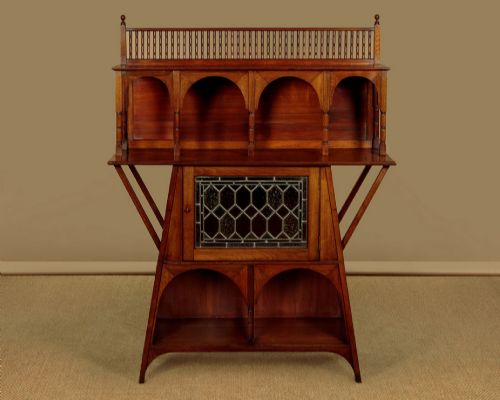
The aesthetic vocabulary on this page moves between heavy Gothic Revival forms, expressive Arts and Crafts designs, and refined Aesthetic Movement pieces. Makers utilised the natural grain of oak to anchor domestic interiors, creating sturdy furniture intended for heavy daily use in entrance halls, studies, and dining rooms.
Materials and construction
Joiners and cabinetmakers relied primarily on solid oak, frequently supplemented by pollard oak veneers, bleached finishes, or ebonised wood elements. Metalwork components such as brass hinges, handles, and mounts provided both structural reinforcement and visual contrast against the timber.
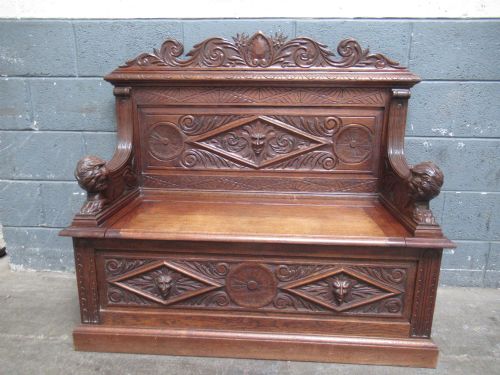
Carving formed a central part of the construction process, ranging from intricate Green Man motifs on hall stands and cabinets to disciplined geometric patterns on Arts and Crafts sideboards. Secondary materials including leather, marble, glass, and fabric appear on desktops, washstand tops, and cabinet backs.
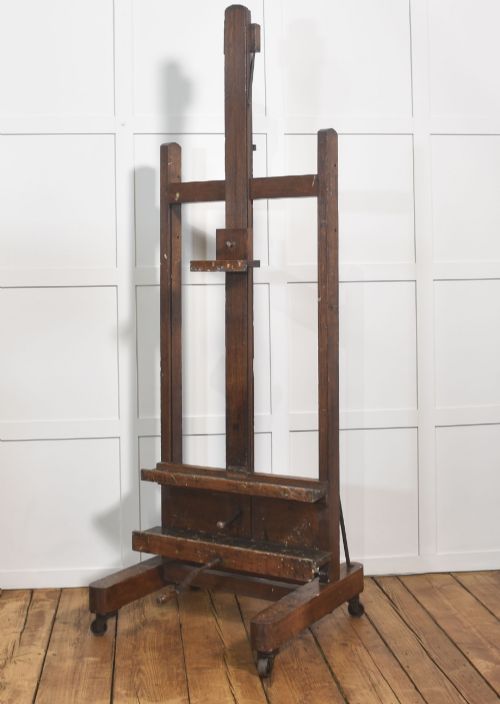
Listings feature oak combined with marble, leather, and brass across varied forms including pedestal desks, easel stands, and washstands.
Judging quality in oak pieces
The hierarchy of quality in these items rests on the ambition of the design and the competence of the execution. Pieces originating from documented firms or prominent retail houses typically exhibit superior timber selection, more deeply articulated carving, and better-integrated brass hardware.
Construction methods also divide standard domestic furniture from superior examples. Heavy architectural detailing, fully adjustable mechanisms on studio easels or campaign beds, and original stencilled or inlaid decorations elevate individual cabinets and desks above basic utility pieces.
Liberty and Co·Garnett and Sons·Harris Lebus·Wright and Hunter
The Late Victorian Oak Furniture Glossary
- Pollard oak
- Timber taken from trees that have been pollarded, producing a heavily knotted and decorative grain pattern. This timber was frequently utilised on mirror backs and cabinet doors for visual impact.
- Green Man
- A sculptural architectural ornament depicting a human face emerging from or entwined with foliage. It appears regularly on carved oak hall stands, benches, and cupboard doors from this era.
- Aesthetic Movement
- A late nineteenth-century design style emphasising visual beauty over narrative or moral purpose. Furniture in this style often incorporates ebonised wood surfaces and minimalist geometric lines.
- Gothic Revival
- An architectural and decorative style drawing inspiration from medieval forms. Pieces built in this idiom feature pointed arches, heavy linenfold panels, and robust credence cabinets.
- Credence cabinet
- A medieval-derived sideboard or cupboard form resurrected in the late nineteenth century. It served historically for the storage and inspection of food or precious vessels.
Late Victorian Oak Furniture: Frequently Asked Questions
What defines late victorian oak furniture?
These items comprise heavy domestic wooden furnishings produced during the final decades of the nineteenth century. They incorporate various regional British styles ranging from vernacular farmhouse tables to elaborate Arts and Crafts sideboards.
The timber used is predominantly solid oak, often accented with brass mountings, carved panels, and specialised hardware. Their construction prioritises durability and utility alongside distinct aesthetic movements.
How do I identify an arts and crafts piece?
Arts and Crafts pieces emphasise visible construction techniques, unpretentious oak surfaces, and disciplined hand-craftsmanship over excessive factory ornamentation. They frequently feature exposed tenon joints, hammered copper or brass handles, and simpler geometric silhouettes.
These items often lack the heavy machine-carved flourishes seen in standard Victorian Gothic Revival work, focusing instead on the honest display of the natural timber grain.
Were these pieces used in hallways?
Hall furniture formed an essential category of late nineteenth-century domestic production. Large carved oak benches with lift-up seats, narrow hall stands, and umbrella racks were specifically designed for entrance spaces to receive visitors and store outdoor garments.
Many incorporate mirrors and intricate Green Man carvings, turning utilitarian cloakroom storage into an impressive decorative feature for the home's primary entryway.
What is the aesthetic movement style?
The Aesthetic Movement rejected industrial mass production in favour of artistic refinement and simplified, harmonious forms. In oak furniture, this translated to clean rectangular lines, occasional ebonised wood finishes, and restrained ornamentation.
Items from this movement coordinate easily with diverse interior schemes due to their architectural restraint and emphasis on pure form and material quality.