
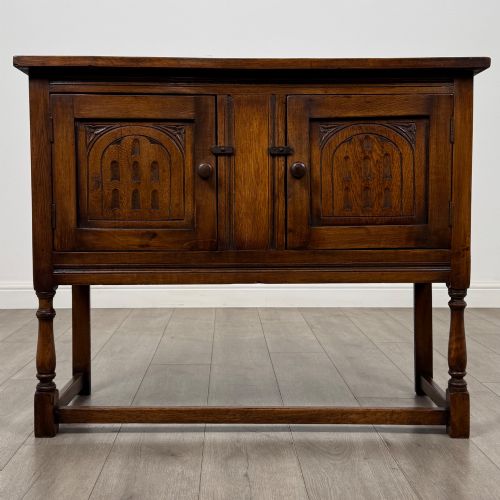
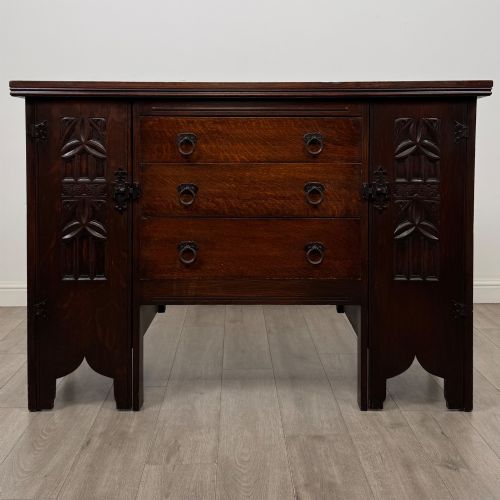
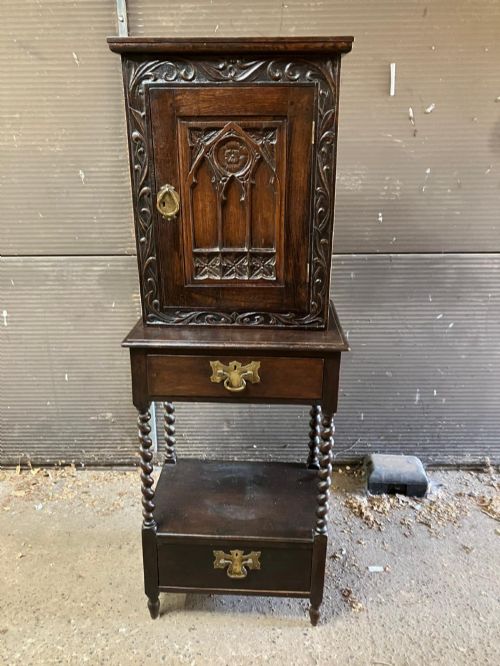
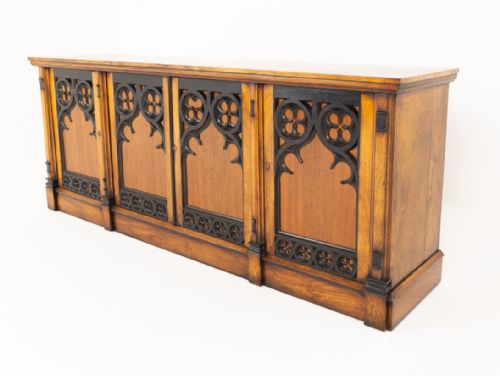


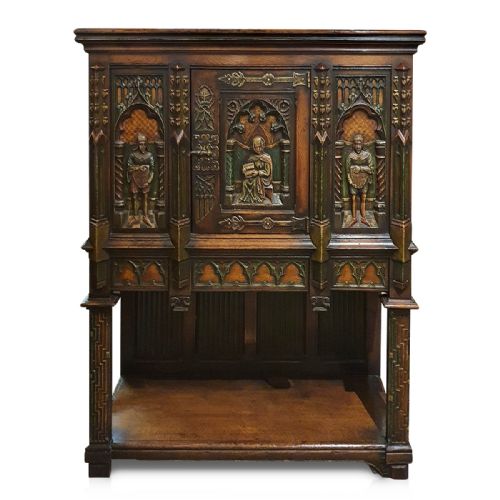

Gothic Tracery Oak Cabinet
These gothic tracery oak cabinets bring architectural depth to an interior, shaped from sturdy timber and carved with pointed archwork.
Gothic Tracery Oak Cabinet
A gothic tracery oak cabinet combines robust storage with the vertical emphasis of medieval architecture, appearing across forms such as hall cupboards, sideboards, bookcases and cabinets on stand. The selection spans the sixteenth century up through the nineteenth and twentieth centuries, incorporating Regency, Victorian and Edwardian interpretations.
Most examples encountered here belong to the nineteenth century and the Edwardian period, often reflecting the Gothic Revival and Flamboyant Gothic styles. Buyers regularly encounter oak hall cupboards, side cabinets and corner cabinets featuring carved panels, iron or brass hardware and occasional glass or polychrome elements.
How they were made
Makers built these pieces primarily from solid oak, sometimes combining ebonised wood details with wrought iron hinges, brass fittings and fabric panels. The construction relies on traditional joinery to support heavy timber doors and carved framework.
Carving forms the central technique, rendering intricate window tracery, church cabinet panels and pointed arches directly into the wood. Polychrome highlights and glazed sections appear on select pieces to add visual texture to the dark timber.
The listings here feature oak combined with iron, brass, glass, polychrome and fabric, spanning the sixteenth century to the Edwardian era.
What varies in quality
Depth and sharpness in the woodcarving separate standard vernacular pieces from masterworks, particularly where tracery and surface relief are rendered with architectural precision. Crisp detailing in the arches and linenfold or church panels indicates superior execution by the maker.
The selection of timber grain and the integration of original iron or brass hardware influence the character of each cabinet. Pieces that retain harmonious proportions alongside robust structural joints hold greater visual presence.
The Gothic Tracery Oak Cabinet Glossary
- Tracery
- Openwork stonework or woodwork forming a pattern of branching lines within the upper part of a Gothic window or screen. Cabinetmakers adapted this architectural motif to door panels and cupboard fronts.
- Gothic Revival
- An architectural and decorative style beginning in the mid-eighteenth century and flourishing through the nineteenth century. It revives medieval forms such as pointed arches, quatrefoils and heavy oak construction.
- Creedence cabinet
- A small side table or cupboard historically used in churches for holding sacramental bread and wine. Domestic versions appeared in revival periods for display and storage.
- Ebonised wood
- Timber treated with chemical stains or black finishes to imitate ebony. It provides stark contrast against natural oak in Victorian and Edwardian furniture.
- Flamboyant Gothic
- The final phase of Gothic architecture in France, characterised by flame-like tracery patterns. Cabinets from this tradition display twisting, sinuous curves in their carved woodwork.
Gothic Tracery Oak Cabinet: Frequently Asked Questions
Where did people use these cabinets?
These cabinets served primarily in hallways, dining rooms and reception spaces to store household goods and display books or plate.
Larger sideboards and creedence cabinets occupied principal rooms, while smaller hall cupboards fitted narrower transitional spaces.
How do I date a gothic oak cabinet?
Dating relies on examining the construction methods, secondary timbers, hardware and the specific character of the revival style.
Sixteenth-century examples display different joinery and tool marks compared to nineteenth-century Gothic Revival or Edwardian pieces.
Are these cabinets heavy?
Solid oak construction combined with thick doors and iron hardware makes these pieces exceptionally heavy and robust.
Placement requires careful planning to accommodate their substantial weight and physical presence within a room.
How should I care for old oak?
Maintain the timber by avoiding direct sunlight and excessive temperature fluctuations that can dry out the wood.
Occasional application of appropriate wax preserves the surface sheen without building up heavy residues on the carvings.