
Late Victorian Mahogany Cabinet
When you search for a late victorian mahogany cabinet, you enter a diverse world of practical storage and display furniture from the end of the nineteenth century.
Late Victorian Mahogany Cabinet
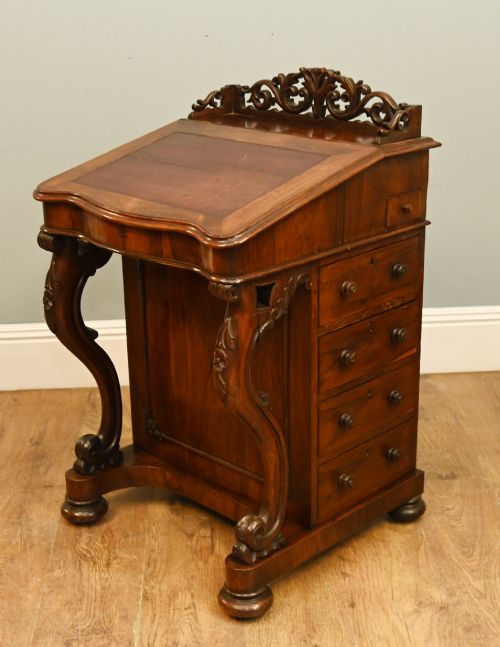
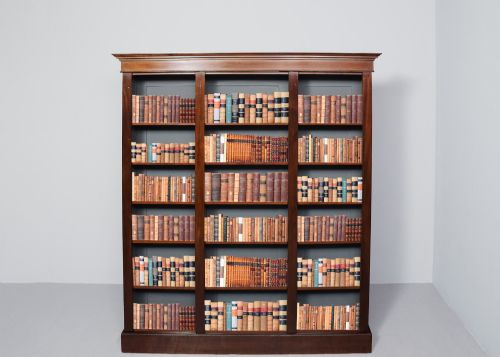
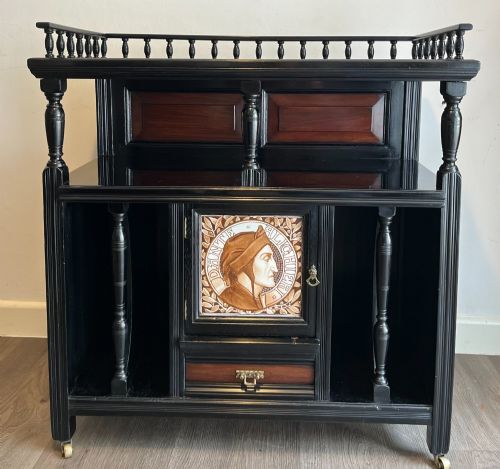
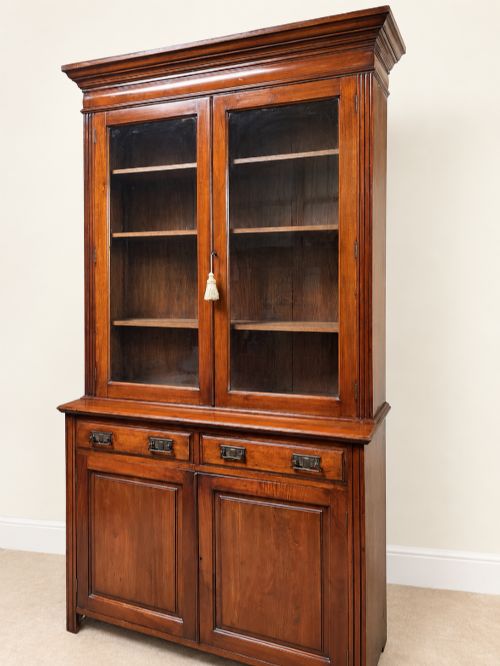
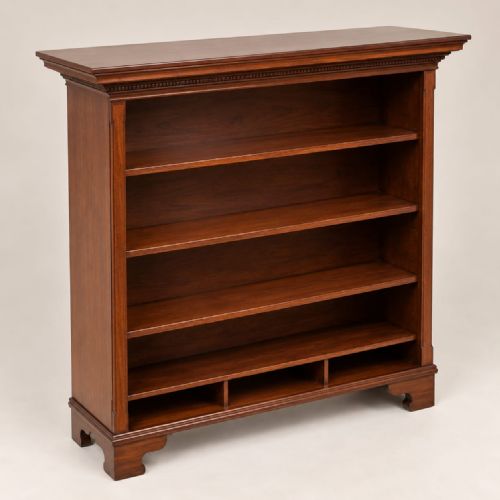
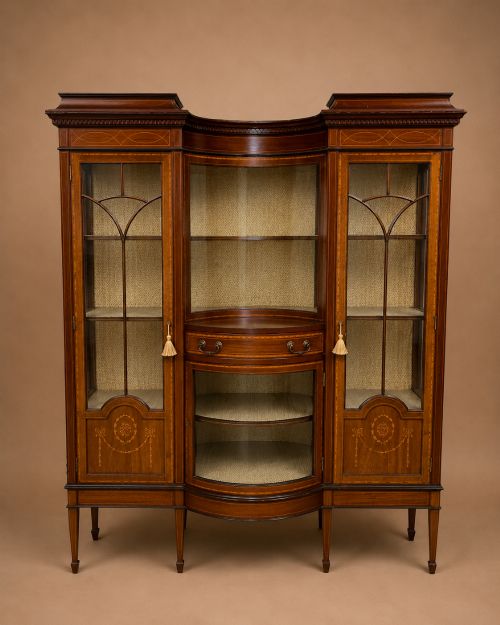
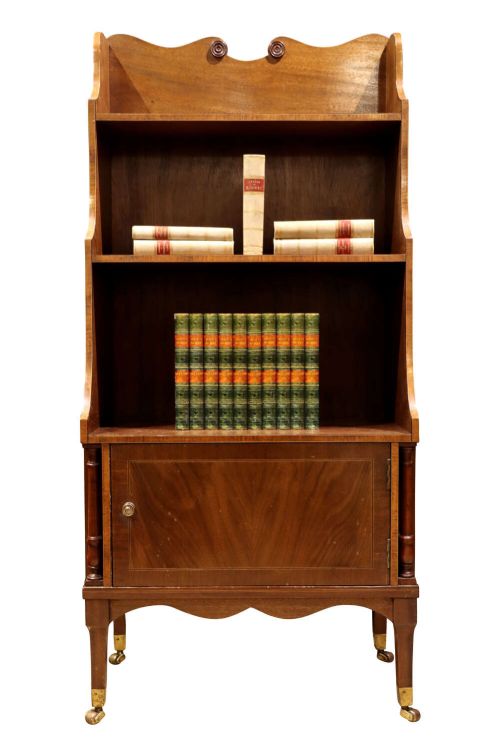
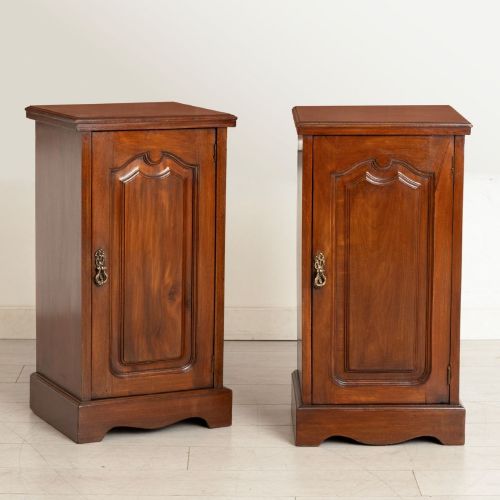
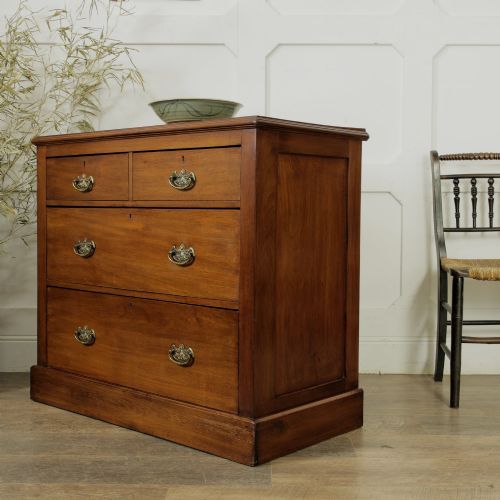
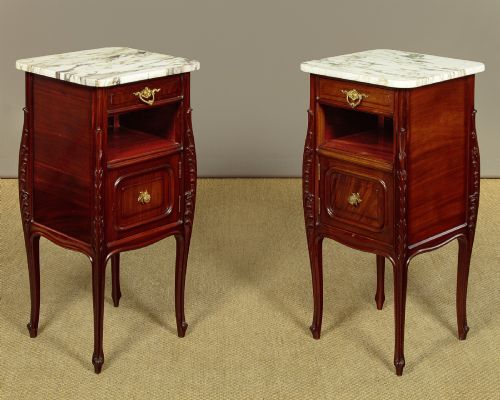
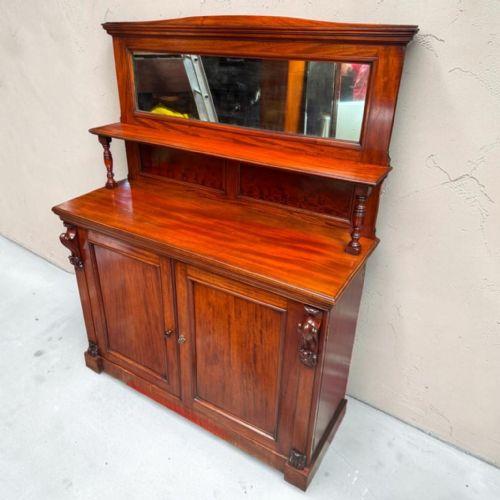
A late victorian mahogany cabinet encompasses a wide variety of forms designed for domestic interiors, ranging from tall bookcase cabinets and open bookcases to compact bedside cupboards and specialised collector chests. These pieces typically date from the 1880s through to 1900, capturing a period when cabinet makers drew inspiration from earlier furniture traditions.
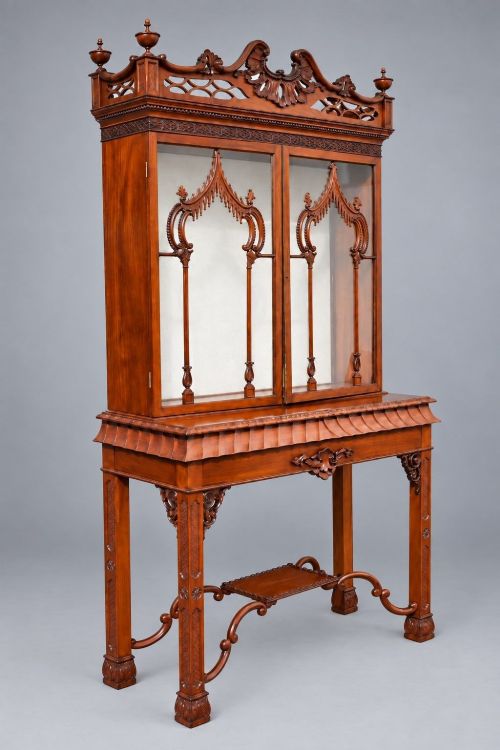
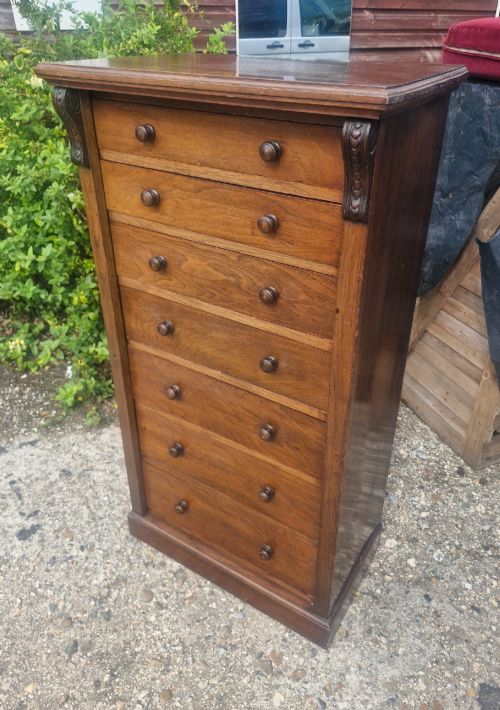
Display cabinets and corner cupboards feature prominently, often utilising glazed doors to showcase porcelain and curiosities within the parlour or drawing room. Side cabinets, chiffoniers, and music cabinets offer more concealed storage, while specialised formats like Wellington chests and filing cabinets cater to specific organisational needs.
Revival styles heavily influence the design language of these pieces, with Chippendale, Sheraton, and Louis XV revivals appearing frequently alongside aesthetic movement and arts and crafts interpretations. Buyers encounter both freestanding floor units and smaller hanging variants, adaptable to different room sizes and layouts.
Materials and Construction
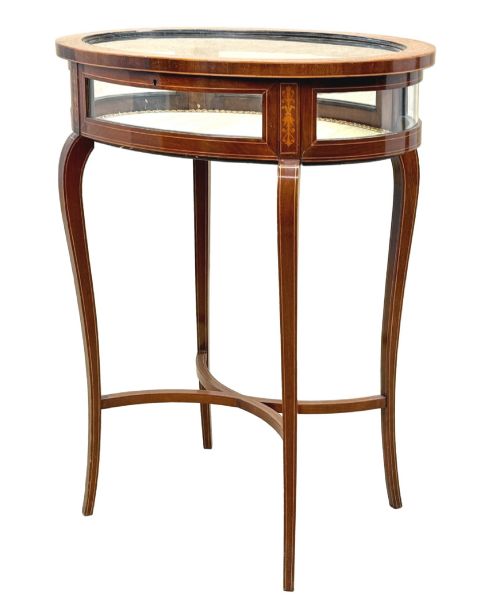
Solid mahogany and mahogany veneers form the primary structural body of these pieces, frequently paired with secondary timbers and supported by brass hardware or castors. Workshops applied contrasting veneers and stringing, notably satinwood and fruitwood, to create delicate inlay work on door panels and friezes.
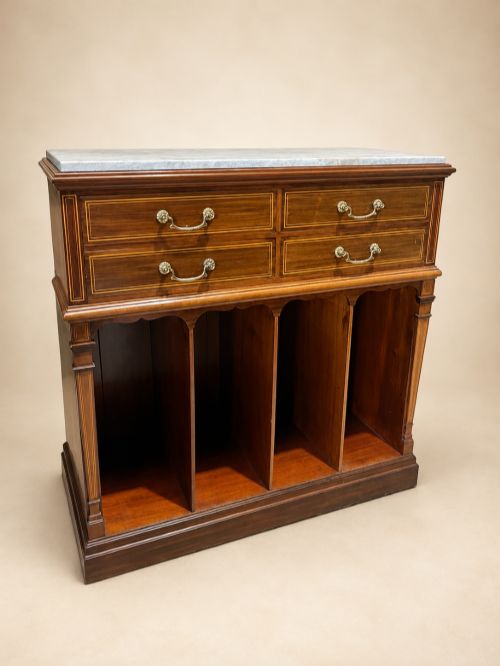
Glazing techniques involve timber astragal bars dividing glass panes on display doors, while interiors often incorporate adjustable wooden shelving or fitted drawers. Marble tops appear on certain bedside and washstand formats, providing durable and decorative upper surfaces.
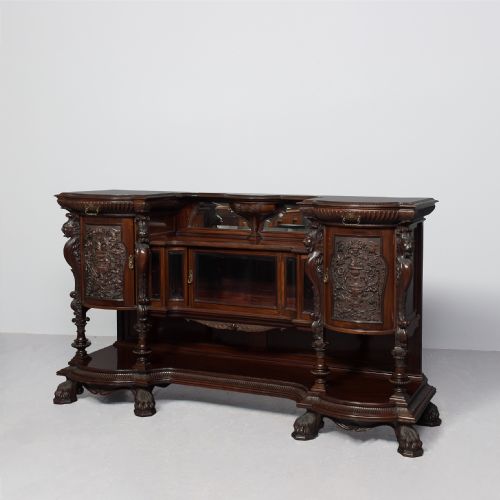
Mirror glass frequently integrates into back panels of display and sideboard units to reflect light through stored objects. Carved wooden ornamentation, such as scrollwork or crests, adds relief to cornices and door frames on more elaborate examples.
Listings demonstrate a frequent use of satinwood inlay and marble tops across bedside and display cabinets.
Assessing Quality
The degree of hand craftsmanship distinguishes standard production furniture from exhibition pieces created by prominent cabinet makers. Precision in the execution of marquetry inlay and the depth of carved detail indicate the level of skill invested in the piece.
Timber selection plays a major role in overall execution, with figured mahogany veneers and carefully matched grain patterns marking out superior examples. The structural integrity of drawer joints, the weight of brass mountings, and the clarity of the glass all contribute to the standing of a cabinet.
Edwards & Roberts·Shoolbred London·Maple & Co
The Late Victorian Mahogany Cabinet Glossary
- Astragal
- A small moulding profile, often used in a grid pattern across cabinet doors to hold individual panes of glass in place.
- Bijouterie
- A glass-topped display table or cabinet designed specifically for showing small valuable items, jewellery, or natural history specimens.
- Chiffonier
- A low sideboard or cabinet with a combination of drawers and cupboards, popular for dining and living room storage.
- Marquetry
- Decorative veneer work forming pictorial or geometric patterns by fitting together pieces of various coloured woods.
- Serpentine
- A furniture front curving outward in the centre and inward at the sides, creating a gentle undulating shape.
- Wellington chest
- A tall, narrow chest of drawers secured by a hinged vertical locking side bar that fastens with a key.
Late Victorian Mahogany Cabinet: Frequently Asked Questions
What is a late victorian mahogany cabinet used for?
These cabinets served various domestic purposes depending on their specific form, from storing books and sheet music to displaying porcelain and ornaments in the principal rooms of the house.
Smaller formats functioned as bedside storage or specialised receptacles for collections, while larger breakfront and bookcase variants anchored the library or drawing room.
How do I identify a late victorian piece?
Pieces from this era typically exhibit the dense grain and deep reddish-brown tones of nineteenth-century mahogany, frequently enhanced by satinwood or fruitwood stringing and inlay.
Construction methods bridge traditional hand-joinery with early machine-made components, and revival styles such as Sheraton and Chippendale heavily inform the decorative vocabulary.
Where should I place a corner cabinet?
Corner display cabinets and cupboards fit directly into room angles, making them an efficient choice for utilising awkward or underused architectural spaces.
They work effectively in dining rooms or hallways where floor space is limited, drawing the eye upward and providing secure display areas away from heavy foot traffic.
How do I care for mahogany furniture?
Maintain mahogany surfaces by dusting regularly with a soft, dry cloth and avoiding placement near direct heat sources or strong sunlight that might dry out the timber.
Periodic application of appropriate wax polish helps nourish the wood and preserve the natural lustre of the polished finish without building up heavy residue.