



Late Victorian Credenza
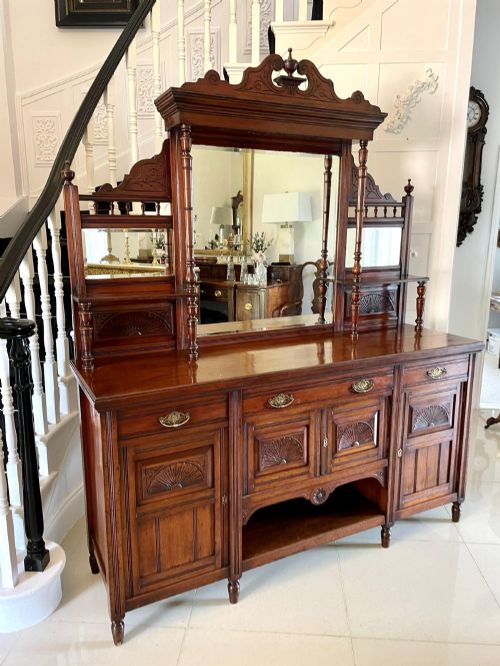
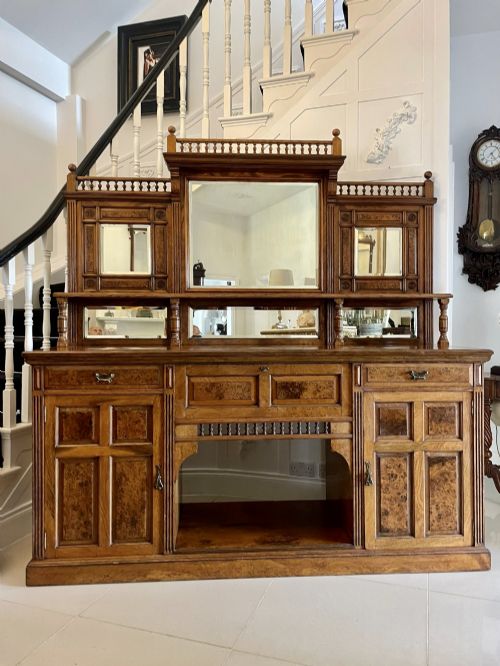
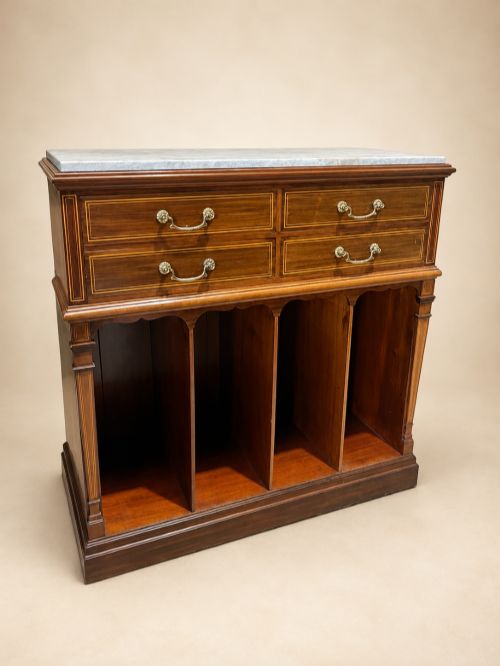
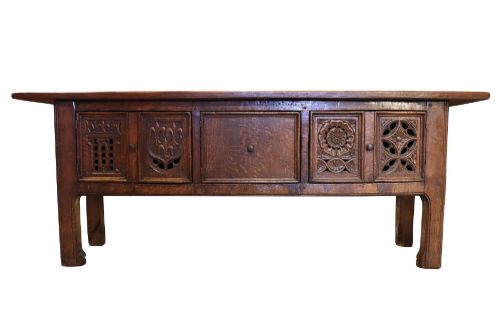
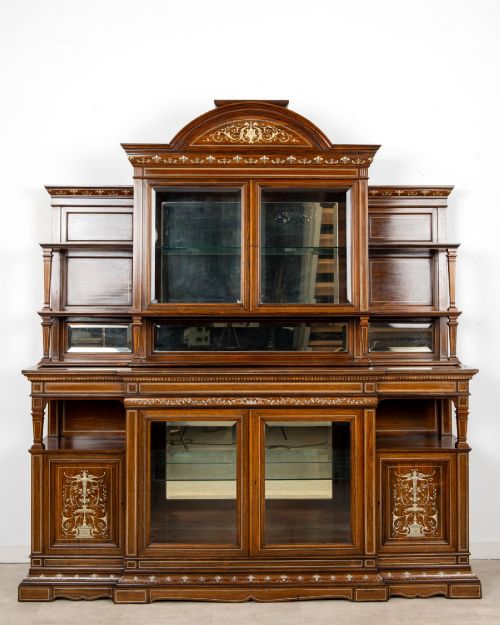
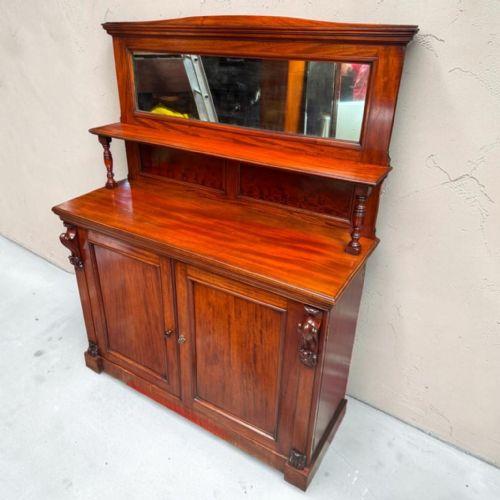
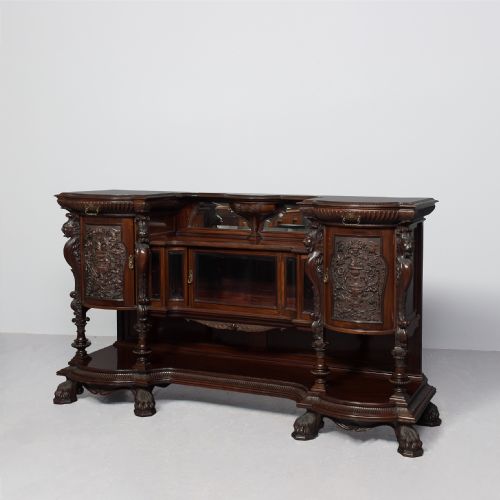
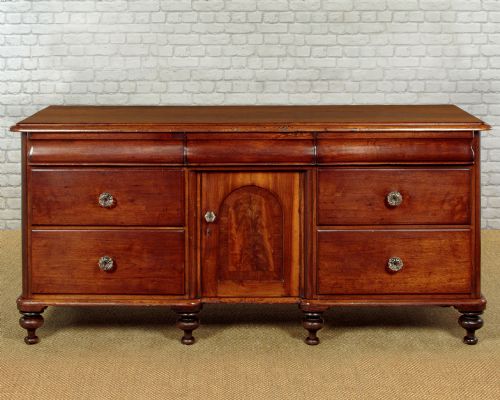
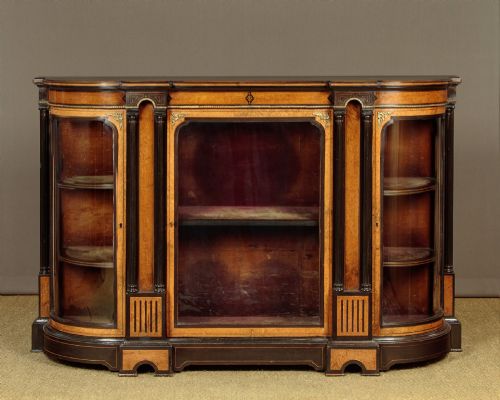
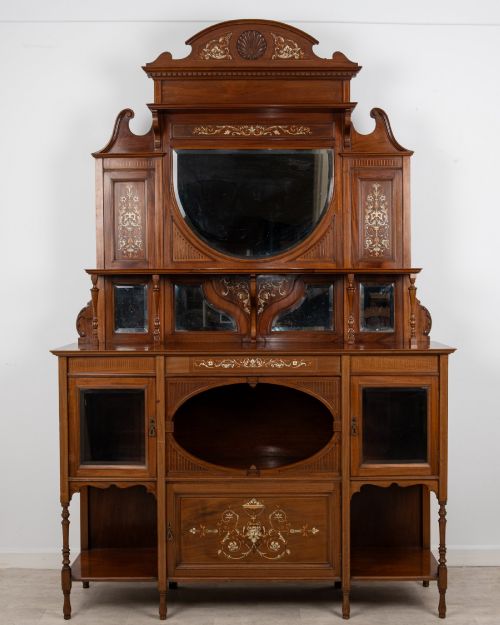
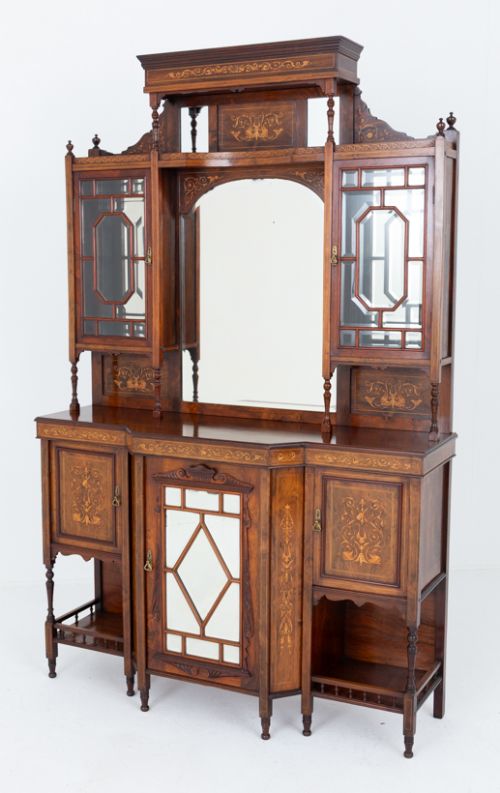
These late victorian credenza pieces are substantial nineteenth century cabinet furniture built to anchor a formal interior.
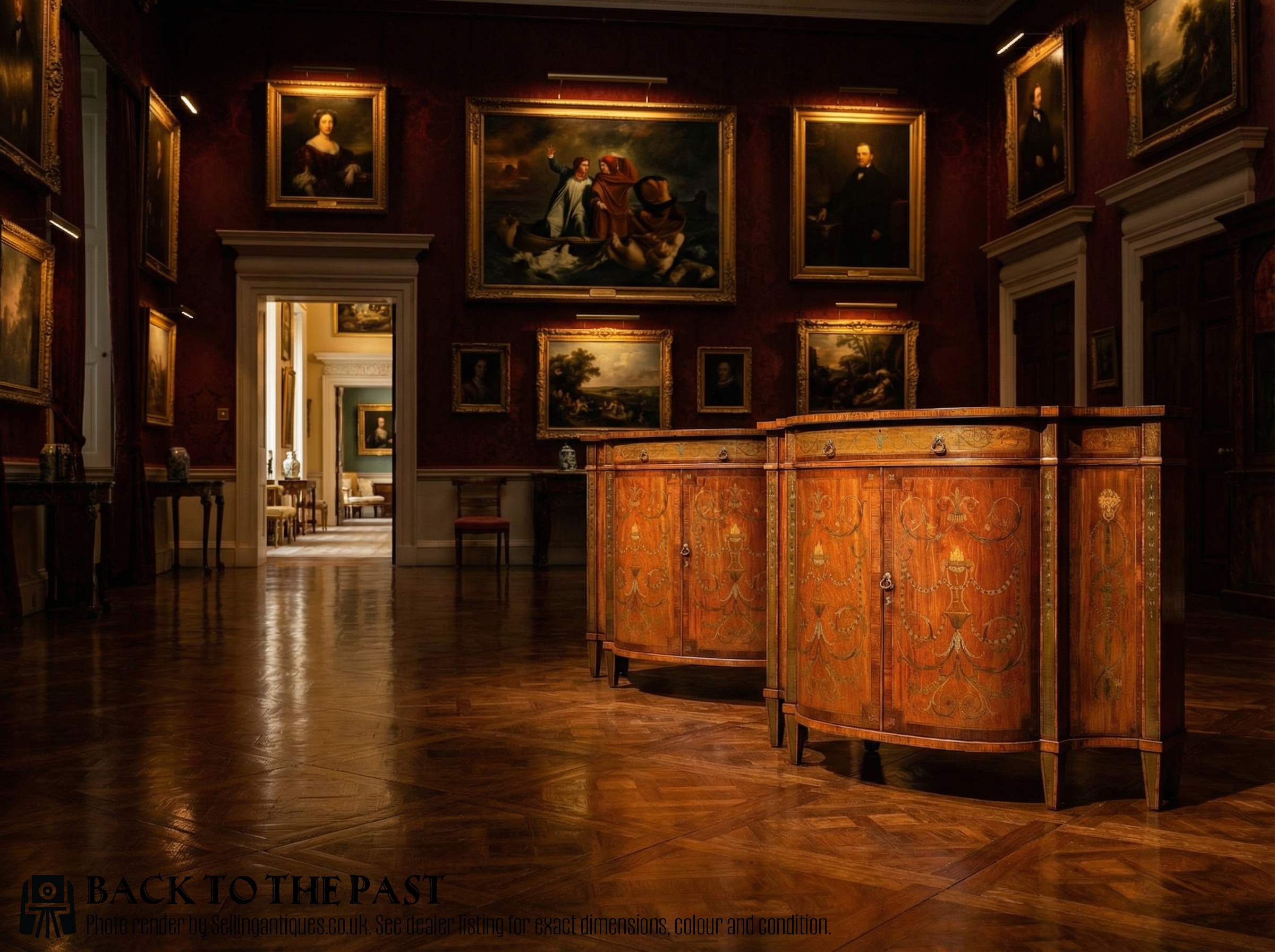
What a Late Victorian Credenza Is
A late victorian credenza sits within the broader category of nineteenth century side cabinets, sideboards, and chiffoniers. These forms serve as display and storage furniture for the dining room or drawing room.
The versions met on this page emerge primarily from the late nineteenth century around eighteen eighty to eighteen ninety. They bridge traditional Victorian forms and Sheraton Revival aesthetics.
Makers of the period construct these cabinets using timbers such as mahogany, walnut, burr walnut, ebonised wood, and satinwood. Many examples incorporate glass doors, brass mounts, and mirrors.
Construction and Materials
Cabinetmakers utilise dense hardwoods including mahogany, walnut, and satinwood as the structural foundation. Secondary woods support internal framing while decorative veneers such as burr walnut provide exterior figure.
Surface decoration relies on inlaid marquetry using contrasting timbers alongside painted details. Ebonised wood finishes offer a dark contrasting contrast while brass fittings secure doors and drawers.
Retail Price Guide 2026
Typical UK retail prices for late victorian credenza, calculated from the Sellingantiques database of over a million retail prices indexed since 2003. This retail price guide relies exclusively on Sellingantiques data; no external sources or auction records are used, so the figures do not describe the wider market.
The listings here span the nineteenth century, focusing specifically around the eighteen eighties and nineties with walnut and satinwood.
Markers of Quality
Quality rests in the selection of timber veneers and the precision of the marquetry inlay. Cabinets featuring figured burr walnut or carefully balanced satinwood displays demonstrate greater ambition from the workshop.
The integration of materials such as brass mounts, glass panels, and mirror glass separates standard production from finer output. Construction integrity in the doors and cabinetry dictates the longevity of each piece.
The Late Victorian Credenza Glossary
- Credenza
- A low cabinet or sideboard designed for display and storage, often featuring glazed central doors flanked by side cupboards.
- Marquetry
- The art of applying pieces of veneer to a structure to form decorative patterns, seen here in maple and other timbers.
- Sheraton Revival
- A late nineteenth century design style drawing inspiration from the late eighteenth century neoclassical work of Thomas Sheraton.
- Ebonised
- Wood treated with a dark stain or finish to imitate ebony, commonly utilised on nineteenth century decorative furniture.
- Satinwood
- A durable exotic timber with a lustrous yellowish grain, favoured for fine cabinetmaking and inlaid decoration.
Frequently Asked Questions
Where did these cabinets go in the house?
These pieces traditionally occupied prominent positions in formal reception rooms or dining spaces. They held household silver, glassware, and documents.
The flat top surface functioned as a display area for decorative ornaments or serving dishes during gatherings.
How do I care for nineteenth century timber?
Protect the surfaces by avoiding direct sunlight and maintaining steady indoor humidity levels. Gentle dusting with a dry cloth prevents accumulation without harming the polish.
Apply traditional wax sparingly when the wood appears dry to preserve the natural lustre of the veneer.
What distinguishes Sheraton Revival from standard Victorian?
Sheraton Revival pieces reflect the lighter neoclassical proportions of the eighteenth century. They frequently utilise satinwood and delicate painted or inlaid decoration.
Standard Victorian furniture often employs heavier proportions and darker timbers like walnut and mahogany.
How are mirrored backs used in these cabinets?
Internal or back mirrors amplify natural daylight within the room and reflect decorative objects placed inside the shelving. This technique enhances the sense of space and light.
Original mirror glass often exhibits subtle foxing or spotting, which confirms its period origin.