

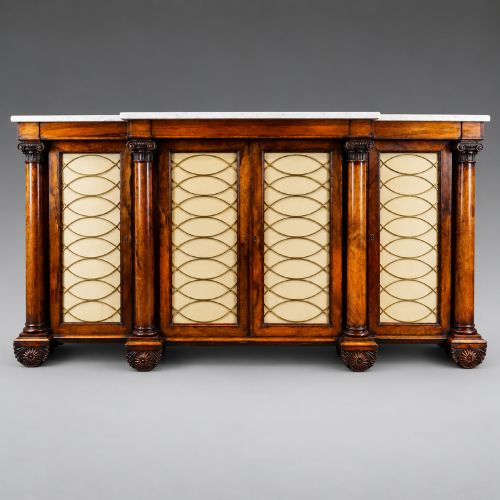
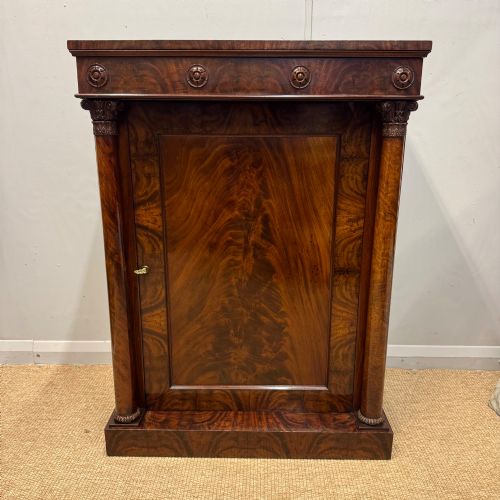
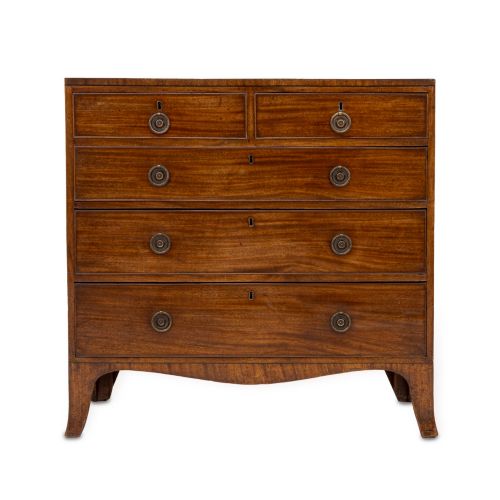


Late Regency Cabinet
These late regency cabinet pieces are formal timber storage forms from the early nineteenth century that bring refined domestic utility and architectural presence into a room.
Late Regency Cabinet
A late regency cabinet encompasses diverse storage forms created during the late Georgian and Regency eras, spanning side cabinets, wall cabinets, and linen presses. Pieces belonging to this category typically display the restrained classical lines and architectural proportions favoured during the early nineteenth century.
Buyers browsing these listings frequently encounter side cabinets, sideboards, and pier cabinets fitted with adjustable shelves or enclosed cupboard doors. These domestic furnishings reflect the changing storage needs of the period while maintaining a cohesive aesthetic across different room settings.
Originating predominantly from the Georgian and Regency periods, the examples on this page range from modest corner cupboards to substantial pedestal sideboards and collectors cabinets. Each piece demonstrates the functional adaptability expected from high-quality vernacular and formal cabinet work of the time.
Construction and materials
Makers constructed these cabinets using dense native and exotic timbers, most notably mahogany, flame mahogany, and rosewood, often enhanced with satinwood or burr elm veneers. Timber selection was central to the visual impact, allowing workshops to display rich grain patterns across flat surfaces and curved drawer fronts.
Surface details incorporate applied brass hardware, leather writing inserts, and delicate fabric panels such as pleated chiffon set behind glazed doors. Cabinet makers employed traditional joinery techniques to accommodate large expanses of timber while ensuring structural stability across varying domestic environments.
Late Regency Cabinet Retail Price Guide 2026
Typical asking prices for late regency cabinet among the pieces listed under this phrase on Sellingantiques today, from the lower quarter to the upper quarter. They describe what is for sale here now, not the wider market.
Current listings feature pieces constructed from mahogany, flame mahogany, rosewood, burr elm, and satinwood across side cabinets, chests of drawers, and linen presses.
Distinguishing quality
Quality in these pieces rests upon the precision of the timber matching, particularly where figured veneers like flame mahogany or burr elm wrap across multiple drawers or doors. Superior examples exhibit seamless continuity in the grain and meticulous attention to secondary timbers used in internal drawer construction.
The refinement of brass mounts, the integrity of original adjustable shelf mechanisms, and the crispness of inlaid details separate standard workshop production from exceptional cabinet work. Structural harmony and proportion remain the ultimate indicators of a maker's proficiency during this period.
Gillows
The Late Regency Cabinet Glossary
- Pier cabinet
- A low or tall display piece designed specifically to fit the narrow wall space between windows. These items often feature glazed doors and adjustable shelving for books or ornaments.
- Linen press
- A tall storage piece comprising an upper section with sliding trays for textiles above a lower chest of drawers. This form became a staple of domestic organisation in Georgian and Regency bedchambers.
- Secretaire
- A desk form incorporating a drop-front writing flap that conceals a fitted interior of small drawers and pigeonholes. It combines the utility of a writing surface with the enclosed storage of a standard cabinet.
- Caddy top
- A distinctive table or chest top shaped with a raised moulded border reminiscent of the lids found on tea caddies. This decorative edge profile signals careful carpentry from the late eighteenth and early nineteenth centuries.
- Chiffonier
- A compact sideboard or low cabinet equipped with shelves and enclosed lower cupboards, frequently featuring fabric-backed upper doors. The form gained popularity in Regency interiors for serving dining rooms or displaying porcelain.
Late Regency Cabinet: Frequently Asked Questions
What is a late regency cabinet used for?
These cabinets served various domestic functions ranging from the storage of linens and tableware to the display of books and scientific collections. Their adaptable interiors accommodated the specific organizational demands of households during the early nineteenth century.
Today, buyers utilise these versatile timber pieces to store modern tableware, media equipment, or collections while adding period character to living spaces and dining rooms.
How do I identify a Regency period piece?
Regency pieces typically display classical architectural restraint, drawing inspiration from ancient Greek and Roman design through clean lines, rosewood surfaces, and restrained brass mounts. Construction details such as cedar secondary timbers and specific drawer lining methods help confirm the era.
Comparing the proportions and timber choices against documented examples from the early 1800s assists in distinguishing true Regency work from later nineteenth-century revival furniture.
Where should I place a side cabinet?
Side cabinets suit dining rooms, hallways, and living spaces where surface area and enclosed storage are both required. Their shallow depths allow them to sit comfortably against walls without obstructing room traffic.
Ensuring stable placement away from direct heat sources protects the polished mahogany or rosewood surfaces and prevents timber movement in modern centrally heated homes.
What timber was most popular then?
Mahogany remained the dominant timber for high-end cabinet work throughout the Georgian and Regency periods, valued for its stability and rich reddish-brown colour. Flame mahogany and exotic imports like rosewood were frequently employed for decorative veneering on prominent exterior surfaces.
Complementary woods such as satinwood and burr elm provided contrast in banded borders and specialised desk interiors, showcasing the diverse material palette available to period workshops.