



Late Qing Hardwood Tables
Late qing hardwood tables encompass intricately carved plant stands, nests, and low altar surfaces that bring distinctive Qing Dynasty craftsmanship into modern interiors.
Late Qing Hardwood Tables
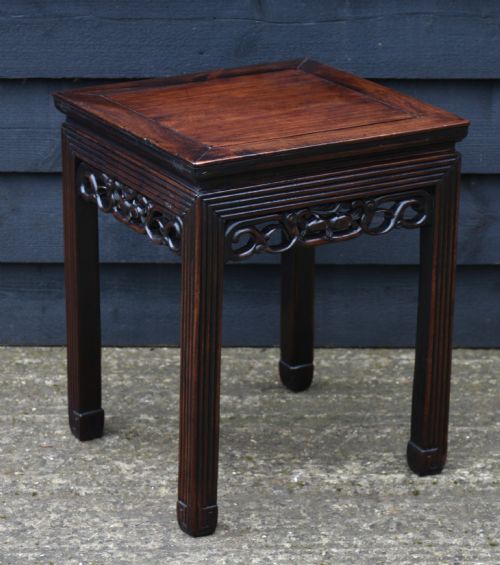
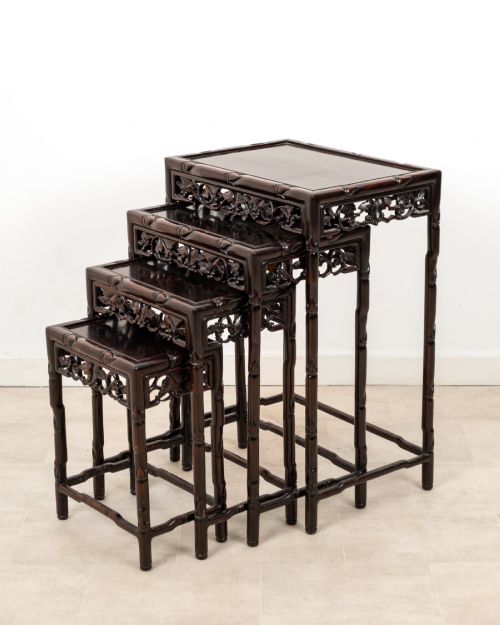
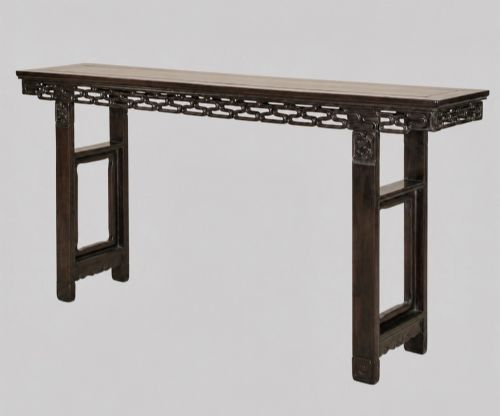
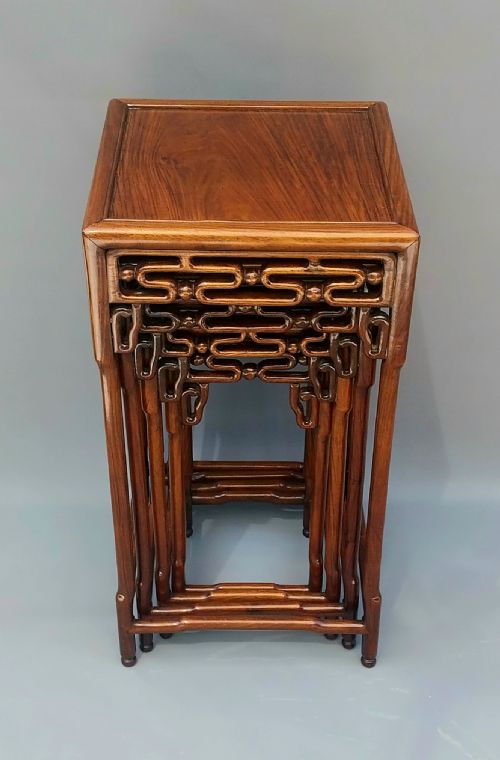
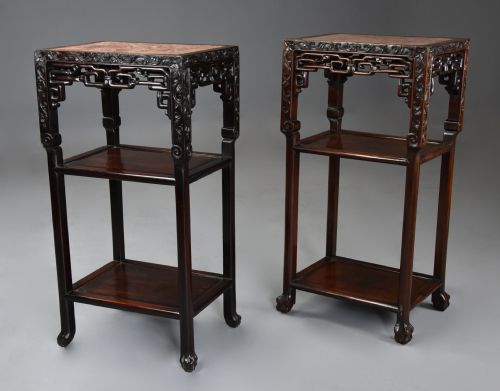
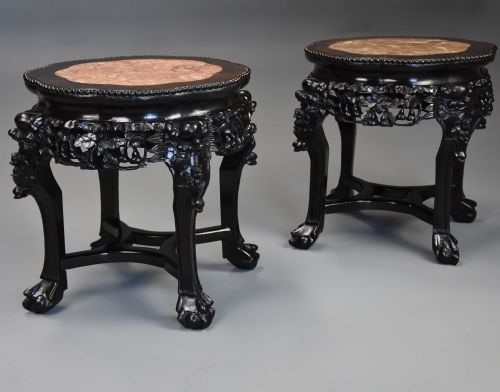
Late qing hardwood tables include a diverse assortment of forms ranging from compact pot stands and jardiniere holders to nested sets, altar tables, and low kang opium tables.
Buyers seeking late qing hardwood tables frequently encounter pieces designed for specific domestic display, such as tall vase pedestals or low square tables meant to hold porcelain and scholarly objects.
Originating largely from the late nineteenth century and early twentieth century, these objects reflect the traditional furniture arts of the Chinese export market and domestic Qing Dynasty production.
Materials and Construction
Cabinetmakers utilised dense Asian timbers such as hongmu, huali wood, padouk, and general rosewood, prized for their heavy weight and deep natural grain.
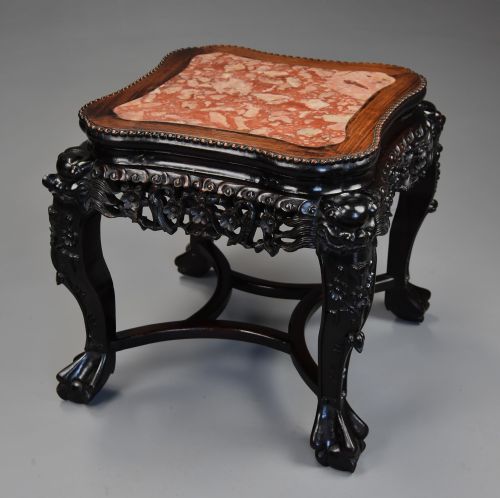
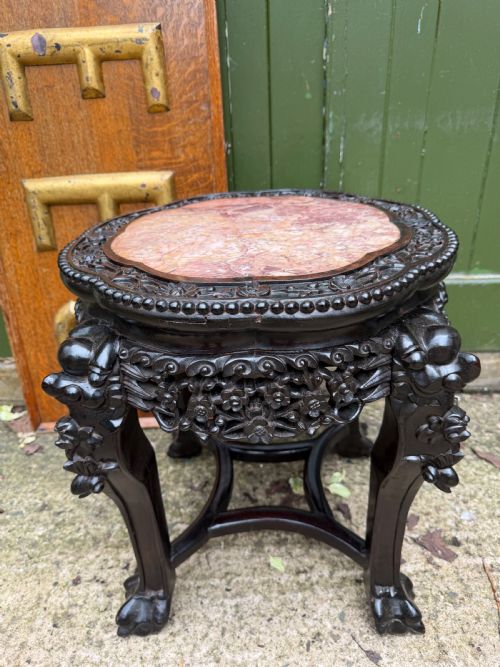
Many surfaces incorporate inset panels of smooth marble or variegated rouge marble, fitted tightly into carved wooden frames to support heavy ceramic vessels.
Joinery relied on traditional framing techniques supplemented by elaborate hand-carved floral, scroll, and geometric motifs across skirts, legs, and aprons.
Object types span from single pot stands and altar tables to nested sets of four graduated tables.
Assessing Quality
The standard of a piece depends heavily on the crispness and depth of the hand carving, where superior examples exhibit sharp undercut relief rather than shallow tooling.
The selection of the timber also dictates value, with dense hongmu and figured huali wood showing greater visual depth and stability than simpler domestic hardwoods.
Original fitted marble panels that remain unbroken and flush within their surrounds indicate higher manufacturing standards and careful preservation.
The Late Qing Hardwood Tables Glossary
- Hongmu
- A traditional Chinese term denoting dense, heavy hardwoods of reddish-brown hue. These woods were favoured for formal Qing Dynasty furniture.
- Huali wood
- A prized fragrant hardwood species utilised for fine scholar's furniture and decorative stands. It displays a distinctive and decorative grain pattern.
- Kang table
- A low domestic table traditionally used on a heated brick bed or platform in northern China. These pieces function well today as low coffee or display tables.
- Jardiniere stand
- A tall or low pedestal specifically built to support heavy ceramic flower pots and jardiniere bowls. They often feature inset marble tops to prevent water damage.
- Quartetto
- A matched set of four graduated tables designed to nest neatly beneath one another. This form became popular during the late nineteenth century for flexible entertaining.
Late Qing Hardwood Tables: Frequently Asked Questions
What were late qing hardwood tables used for?
These tables served specific practical and decorative functions within traditional Chinese domestic spaces, acting as elevated stands for heavy ceramic jardiniere pots, ritual bronze vessels, or scholar's rocks.
Smaller low tables were placed upon heated sleeping platforms for dining or writing, while nests of tables provided portable surfaces for serving tea to guests.
How do I clean marble-topped tables?
Marble inset panels require gentle maintenance using a soft damp cloth without harsh chemical detergents that can etch the polished stone surface.
The surrounding hardwood frame should be dusted regularly and occasionally treated with appropriate natural wax to nourish the timber grain.
Can I use a kang table as a coffee table?
The low proportions and sturdy construction of traditional kang tables make them suitable alternatives to standard modern coffee tables in contemporary rooms.
Their scroll ends and carved aprons add architectural character while sitting comfortably at floor or rug level.
How do I identify huali wood?
Huali timber exhibits a varied, expressive grain pattern with natural chatoyancy that shifts in tone under changing light.
It feels noticeably heavy for its size and typically has a finer, tighter texture than coarser tropical hardwoods.