


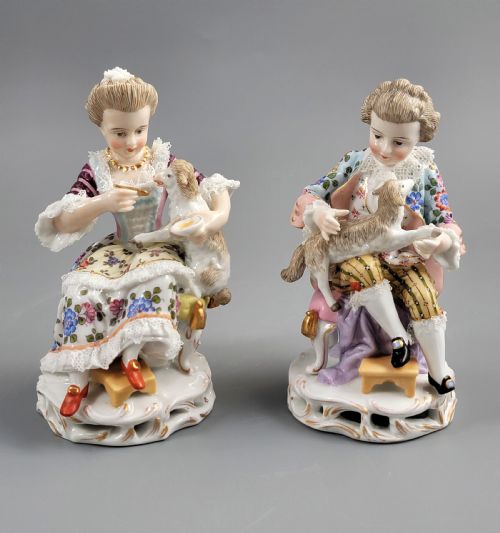


Late 19th Century Statuettes
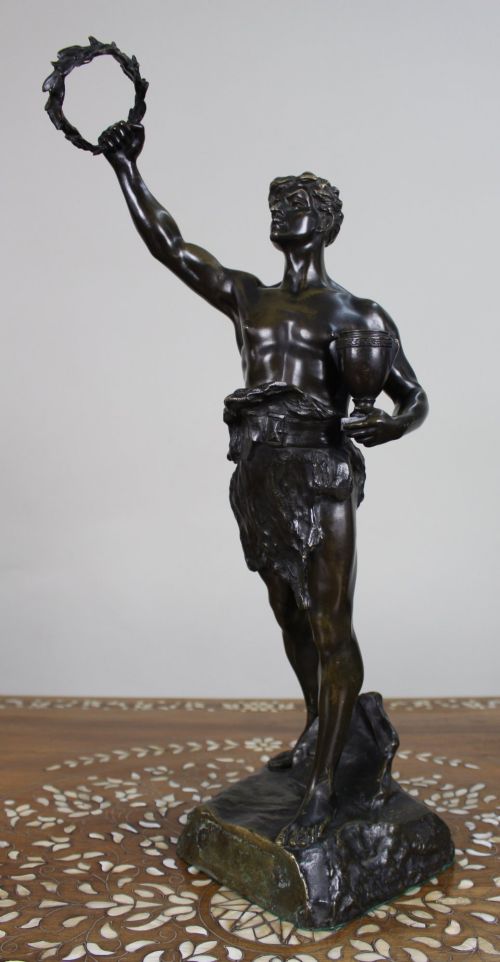
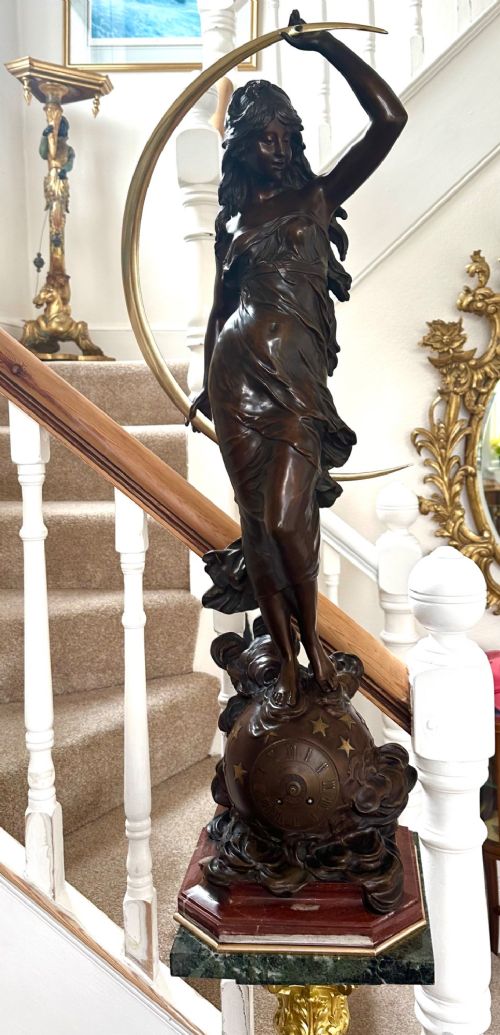
Late 19th century statuettes bring classical antiquity and animalier realism into the home through small bronze, marble, and porcelain figures.
Late 19th Century Statuettes
Late 19th century statuettes encompass small sculptural works produced across Europe during the Victorian era, drawing heavily on classical antiquity, mythological subjects, and naturalistic animal studies. These pieces served primarily as decorative ornaments for parlours and libraries, often taking inspiration from famous classical models or contemporary salon sculptures.
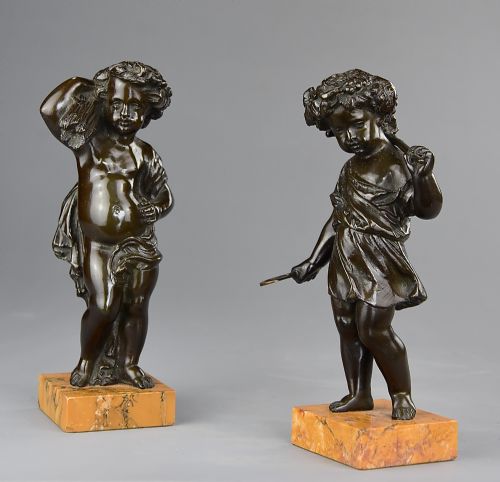
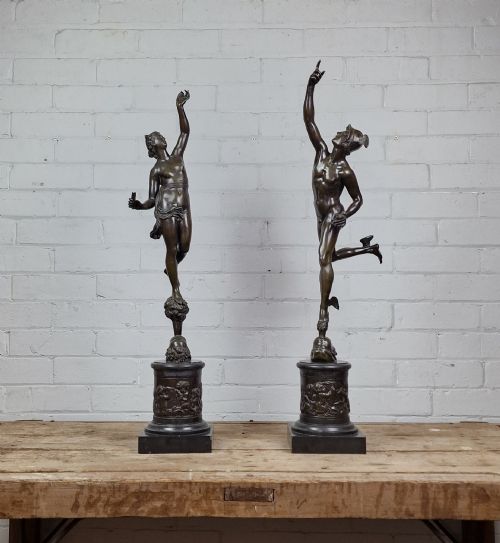
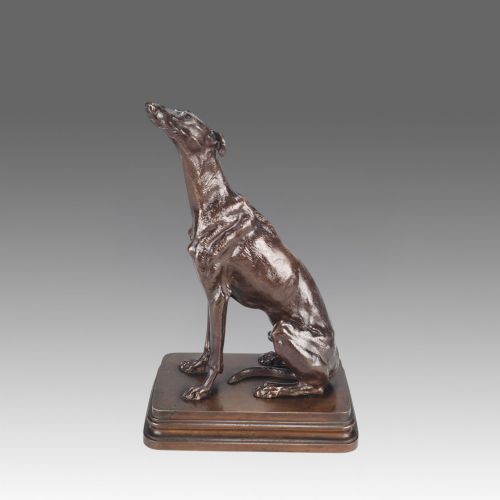
Buyers browsing late 19th century statuettes frequently encounter Grand Tour souvenirs originating from Italy alongside French bronze figures and German porcelain pairs. Forms range from allegorical putti and mythological deities such as Mercury and Bacchus to realistic animal subjects including hounds, stags, and tigers.
The materials utilised in these works vary widely, reflecting the diverse manufacturing centres of the period. While bronze remains prominent through patinated and gilt examples, ceramic pieces in bisque porcelain, Parian ware, and earthenware appear alongside carved serpentine marble and linden wood.
How they were made
Bronze statuettes of this era were predominantly cast using the lost-wax method or sand casting techniques, allowing for fine surface detail before receiving hand-applied chemical patination in shades ranging from dark green to rich brown. Many metal figures were mounted directly onto fitted marble bases, sometimes utilising gilt highlights or enamel accents.
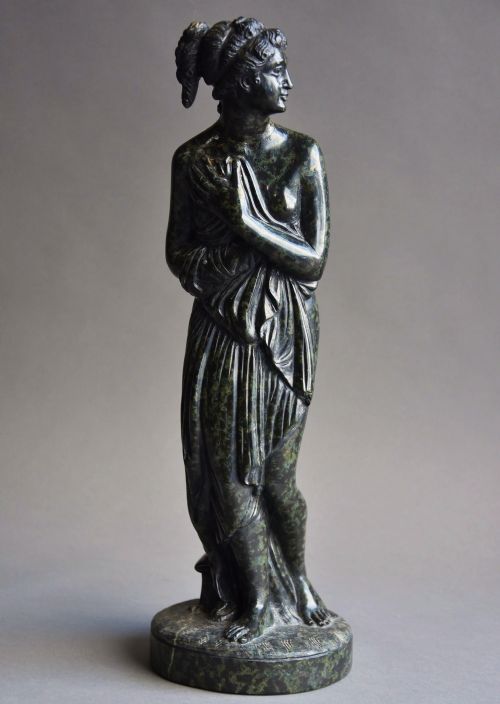
Ceramic and porcelain figures relied on precise mould-casting in factories across Germany, France, and England, followed by bisque firing or delicate hand-painting. Wooden and stone sculptures, such as Black Forest linden wood carvings and Italian green serpentine models, required meticulous hand-chizzling and polishing to define musculature and texture.
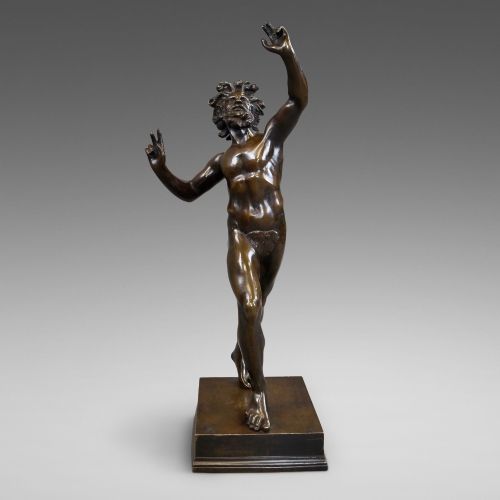
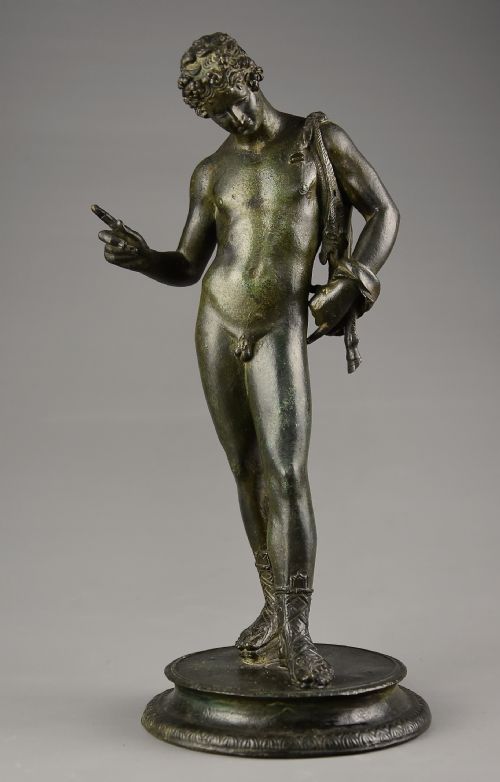
A dancing fawn modelled after ancient Roman excavation sites captures the joyful spirit of nineteenth-century travel souvenirs.
What varies in quality
In porcelain and ceramic figures, finer pieces exhibit delicate modelling of fingers, drapery, and floral elements without the surface blurring common in secondary pressings. The weight and integration of the base, whether veined marble or turned ebony, further distinguish workshop standards.
Lemoyne·Claude Michael Clodion·Antonio Canova·Alfred Dubucand·Alfred Grevin·Carl Kauba·Pierre Jules Mene
The Late 19th Century Statuettes Glossary
- Grand Tour
- A traditional trip through Europe undertaken by upper-class Europeans, generating a market for small bronze and marble souvenir sculptures of classical antiquities. These reductions replicate famous statues found in Italian galleries and archaeological sites.
- Animalier
- A nineteenth-century artistic genre focusing on the realistic depiction of animals, particularly in motion or repose. Sculptors in this tradition studied anatomy closely in menageries.
- Patination
- The surface coloration applied to bronze through chemical treatments or natural oxidation. This process yields varied tones from deep black to vibrant green.
- Bisque Porcelain
- Unglazed white porcelain fired to a matte, tactile finish resembling marble. It became popular for classical and figural groups during the Victorian period.
- Parian Ware
- A fine-grained type of unglazed biscuit porcelain developed in Britain to imitate white marble. It was widely utilised for portrait busts and classical statuary.
Late 19th Century Statuettes: Frequently Asked Questions
What is a Grand Tour statuette?
Grand Tour statuettes are small-scale souvenir sculptures purchased by travellers visiting cultural sites in Italy during the nineteenth century. They typically replicate famous classical antiquities in bronze or marble.
These pieces allowed collectors to bring classical art and archaeological discoveries into their private studies and drawing rooms.
How do you identify animalier bronzes?
Animalier bronzes focus specifically on realistic portrayals of wildlife and domestic animals, often capturing them in dynamic natural postures. Look for careful attention to anatomical accuracy in musculature and fur texture.
These works were produced extensively in France and frequently bear the cast signature of the sculptor on the integral bronze base.
What is the difference between bronze and spelter?
Bronze is an alloy of copper and tin known for its durability, weight, and capacity to hold a fine chemical patina. Spelter is a softer zinc-based metal alloy often used as an economical alternative.
Spelter figures are lighter and usually require applied metallic paint or bronze finishes to simulate genuine cast bronze.
Where were porcelain statuettes made?
Porcelain figures of this era were produced across major European ceramic centres in Germany, France, and Britain. Prominent regional styles emerged from factories utilising bisque porcelain, Parian ware, and hard-paste ceramic.
These factories frequently marked their output with impressed or painted stamps on the undersides of the bases.