


Late 18th Century Caddy
A late 18th century caddy is a domestic storage box designed for dry tea leaves, combining fine timberwork with period practicality.
Late 18th Century Caddy
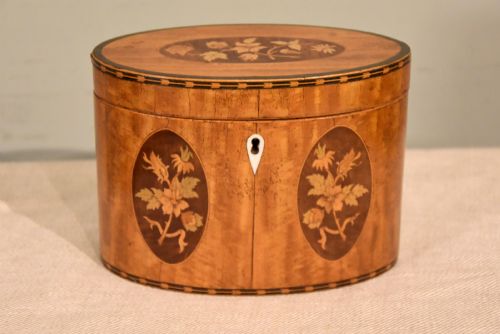
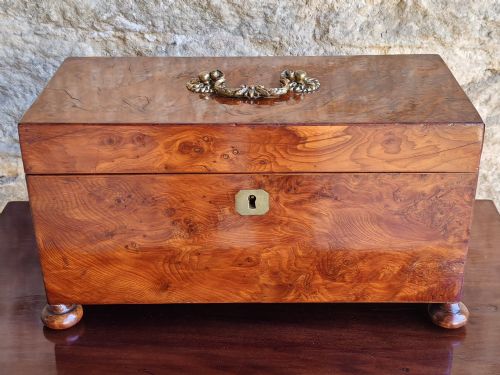
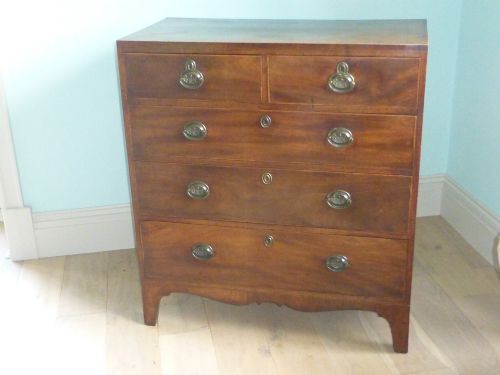
A late 18th century caddy is a container created during the Georgian period to store valuable tea securely under lock and key. The evidence shows these pieces take several distinct forms, including oval, octagonal, and navette shapes alongside small chests of drawers and cutlery boxes.
Buyers will encounter various timber constructions on this page, dominated by mahogany and satinwood alongside partridge wood, harewood, yew, fruitwood, and walnut. Many examples incorporate decorative veneers and stringing associated with the Sheraton and Hepplewhite styles of the era.
The historical record indicates these boxes served households when tea was an expensive commodity requiring careful rationing. Surviving items range from plain utilitarian vessels to highly decorated marquetry and inlaid specimens.
Materials and construction
Cabinetmakers utilised dense hardwoods like mahogany and figured timbers such as satinwood, applying them as veneers over secondary woods or building solid bodies. Decorative details often involved boxwood, ebony, bone, and ivory inlay, creating contrasting geometric or floral motifs.
Specialised techniques included marquetry, parquetry, and rolled paper work to adorn the exterior surfaces of the boxes. Metal components such as brass handles, escutcheons, and hinges provided structural reinforcement and security.
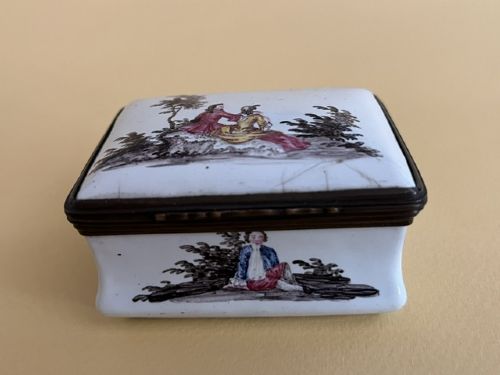
Selected pieces feature specialist materials like tortoiseshell, enamel, or pottery, demonstrating the diverse output of period workshops. Interior layouts frequently incorporated foil-lined compartments or wooden lids to preserve the aroma of the leaves.
Listings feature woods such as satinwood, mahogany, partridge wood, yew, and harewood, alongside materials like enamel, bone, and brass.
Judging quality in period boxes
The distinction between standard and superior pieces rests on the precision of the cabinetwork and the choice of timber figure. Master craftsmen selected highly figured satinwood, burr walnut, or rich mahogany, aligning the grain to accentuate the natural curves of oval and octagonal forms.
Surface patination and the integrity of the original inlay work differentiate exceptional survivals from heavily restored examples. Crisp execution of butterfly or shell marquetry and well-fitted internal components indicate workshop proficiency.
The survival of original brass hardware, working locks, and interior divisions heavily influences the standing of a piece. Subtle proportions and delicate stringing reflect the aesthetic standards of Georgian design at its peak.
The Late 18th Century Caddy Glossary
- Caddy
- A small box or chest designed originally for storing tea leaves. The word derives from catty, the Chinese unit of weight.
- Marquetry
- The art of applying pieces of veneer to a structure to form decorative patterns. Craftsmen used various tinted woods and bone to create pictorial or geometric designs.
- Navette
- A boat-shaped outline featuring pointed ends and a swelling centre. This curved profile appears frequently in late 18th century satinwood caddies.
- Sheraton
- A neoclassical design style associated with the late 18th century, characterised by straight lines, tapered legs, and delicate marquetry. Furniture and boxes from this period often display polite classical restraint.
- Stringing
- Thin lines of contrasting wood inlaid into the surface of a box to create borders and panels. This technique highlights the geometric form of mahogany and satinwood pieces.
Late 18th Century Caddy: Frequently Asked Questions
What were tea caddies used for?
These boxes stored black and green teas when the leaves were costly dry goods kept under lock by the head of the household. The containers protected the contents from dampness and loss of flavour.
Inside, compartments separated different leaf varieties, often featuring internal lids or foil linings to maintain freshness.
How do I date a Georgian caddy?
Dating relies on observing the timber choices, construction methods, and prevailing decorative styles such as Sheraton inlay or Neoclassical motifs. Examination of the interior fittings and secondary woods provides further clues to the decade of manufacture.
Most pieces belonging to this group date from the late 18th century through the early decades of the 19th century.
Are all these boxes made of mahogany?
Mahogany is common among the listings, but cabinetmakers also utilised satinwood, yew, walnut, partridge wood, fruitwood, and harewood. Some examples incorporate enamel, pottery, or tortoiseshell.
Inlay work frequently adds contrasting strips of boxwood, ebony, and bone to the primary timber body.
How should I care for antique wood?
Keep wooden boxes away from direct sunlight, central heating sources, and damp environments to prevent the timber from warping or the veneer from lifting. Maintaining a stable room temperature preserves the polish and structural integrity.
Apply occasional appropriate wax polish gently with a soft cloth to nourish the surface without building up excessive residue.