



Large Wooden Monastery Table
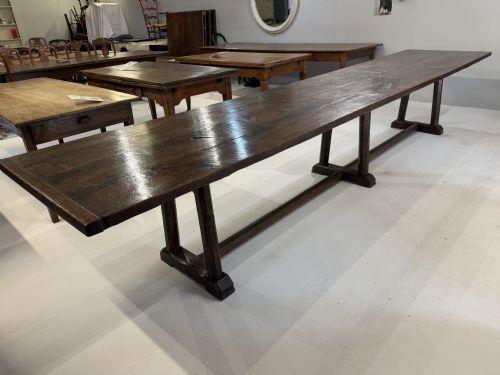
A large wooden monastery table brings weight and history to a room, offering sturdy proportions built from solid timber to seat many.
Large Wooden Monastery Table
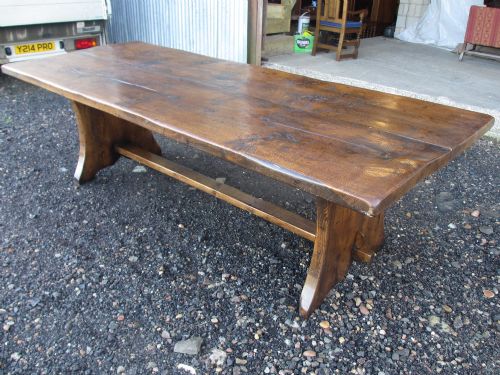
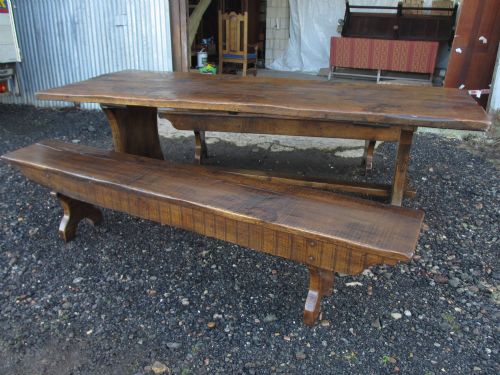
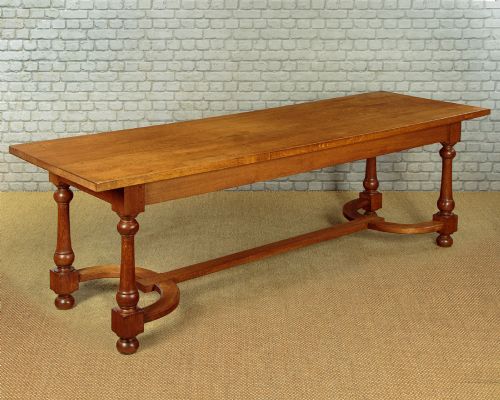
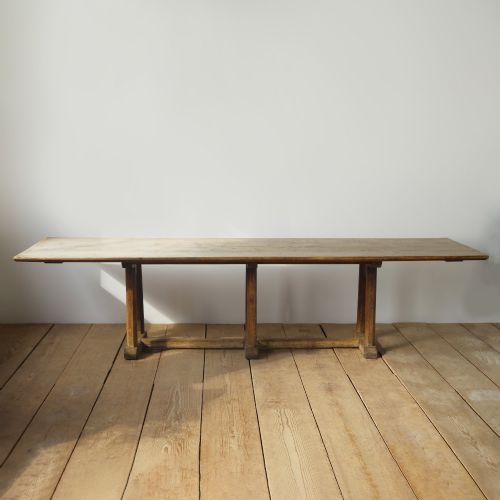
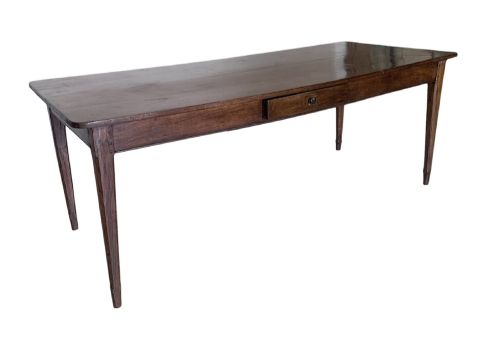
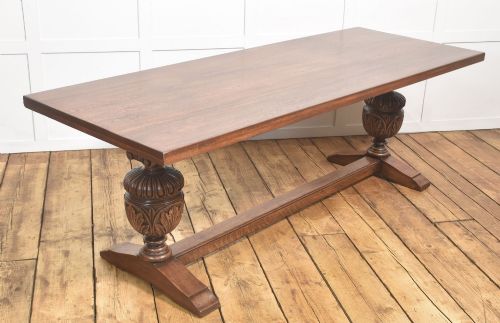
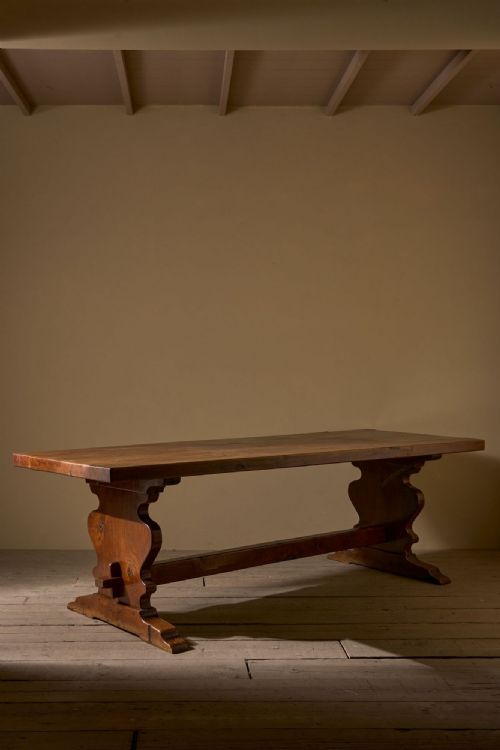
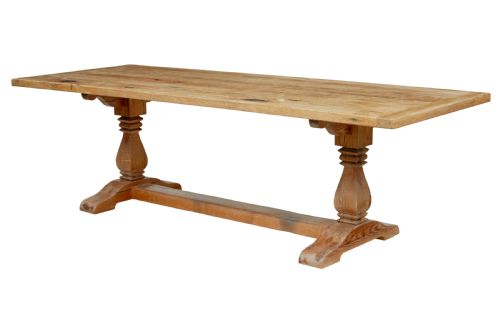
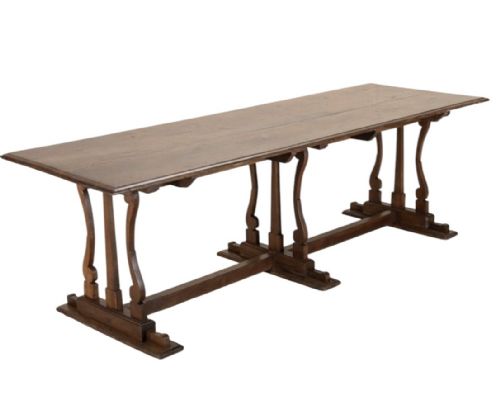
When you search for a large wooden monastery table, you encounter long dining surfaces designed to gather people in numbers. These pieces typically take the form of refectory or farm tables resting on trestle ends, pillar supports, or four-legged frames.
The selections available span several centuries, with heavy 19th-century interpretations and early examples sitting alongside Edwardian and 1930s revivals. Oak dominates the offerings, supplemented by walnut, pine, elm, and mahogany.
French and English country styles appear frequently, alongside Gothic Revival, Jacobean Revival, and rustic farmhouse designs. Dining tables and dining table sets represent the primary object types encountered within this selection.
How they were made
Carpenters constructed these tables predominantly using solid timber planks joined together to form expansive tops. Oak remains the primary material, often complemented by walnut, pine, elm, and mahogany depending on the regional origin and period.
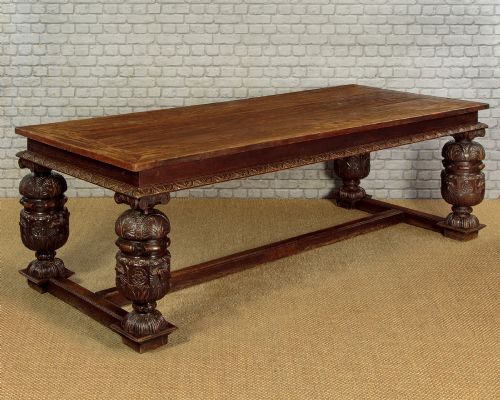
Support structures rely on heavy trestle ends, shaped bases, and substantial legs fixed securely to the top planks. Artisans occasionally integrated brass hardware or applied carved details, alongside bleached or natural finishes that highlight the grain of the wood.
Several listings note that the tables seat twelve comfortably, ensuring nobody misses out on the feast.
What varies in quality
The substance of the timber dictates much of the character, with thick solid oak and walnut planks offering superior weight and durability compared to lighter pine or mahogany builds. The integrity of the construction, particularly the stability of the trestle ends and joinery, separates robust examples from lighter decorative pieces.
Age and provenance influence the appeal, as authentic 17th- and 18th-century pieces carry the marks of centuries of use, whereas 19th-century and later revival pieces reflect the stylistic ambitions of periods like the Gothic Revival or Arts and Crafts movement.
The Large Wooden Monastery Table Glossary
- Refectory table
- A long narrow dining table originally built for monastic dining halls. These pieces often feature trestle bases and substantial wooden planks.
- Trestle ends
- Support structures placed at either end of a table top, connected by a central stretcher. This design allows maximum legroom along the length of the table.
- Jacobean Revival
- A style popular in the late 19th and early 20th centuries mimicking 17th-century English furniture. It employs dark oak, heavy turning, and carved ornamentation.
- French Provincial
- A regional style characterised by simple, functional forms and local timbers such as oak and walnut. These pieces suit country house interiors.
- Bleached oak
- Timber treated to lighten its natural colour while retaining the grain pattern. This finish appears across various 19th-century and Edwardian pieces.
Large Wooden Monastery Table: Frequently Asked Questions
What is a monastery table?
A monastery table is a long, heavy dining table historically used in communal dining halls for large groups. They are built for durability and frequent gatherings.
Today, these tables serve as principal dining surfaces in large kitchens and dining rooms, accommodating twelve or more people comfortably.
How do I identify the period?
Dating relies on examining the timber, joinery methods, and stylistic details such as Gothic Revival or Jacobean carving. 17th-century pieces show distinct hand-working signs.
Later revivals from the 19th and early 20th centuries imitate these earlier forms using period-appropriate machinery and historical revival aesthetics.
Are these tables good for daily use?
Solid timber construction makes these tables exceptionally sturdy for everyday meals and family gatherings. Their robust build handles heavy use well.
Maintenance involves regular cleaning and preserving the wood finish to protect against daily wear and spills.
What woods are commonly used?
Oak is the predominant material across the selection, appearing in solid, bleached, and heavy formats. Walnut, pine, elm, and mahogany also feature.
Each timber brings a distinct weight, grain pattern, and colour tone to the table, influenced by the origin and era of manufacture.