



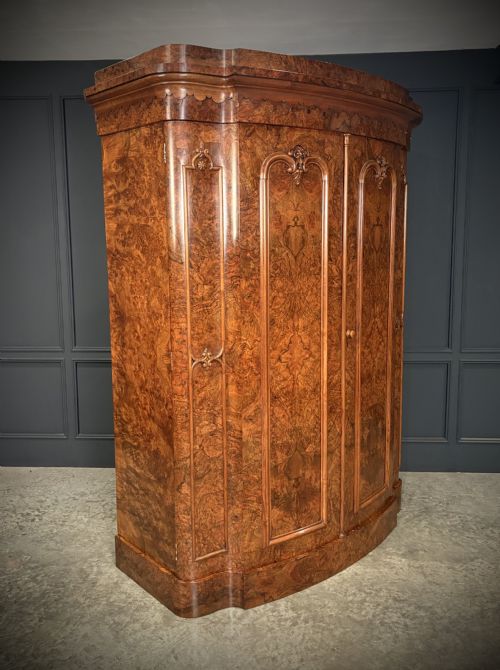


Large Walnut Linen Press
A large walnut linen press brings deep grain and commanding scale to a room, offering substantial storage with centuries of craftsmanship behind its doors.
Large Walnut Linen Press
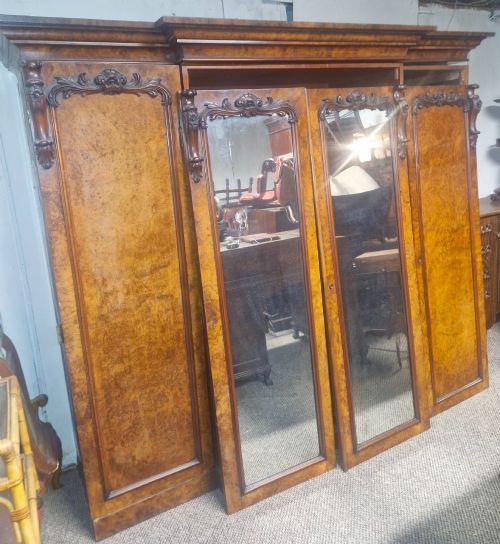
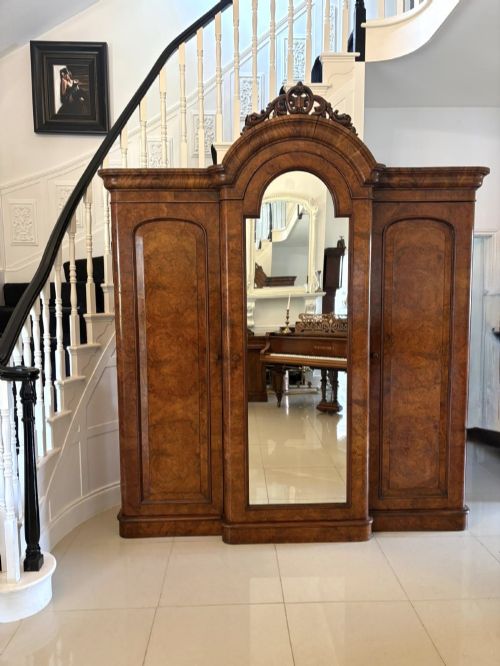
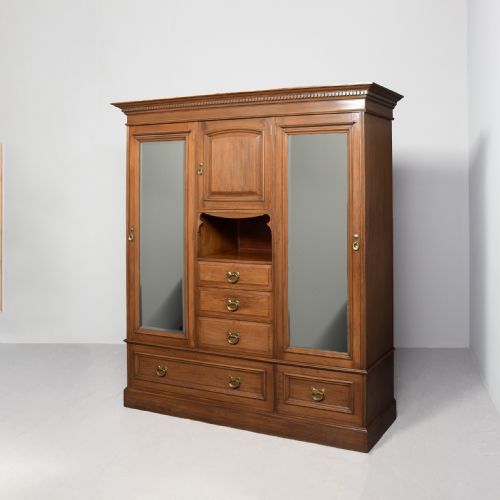
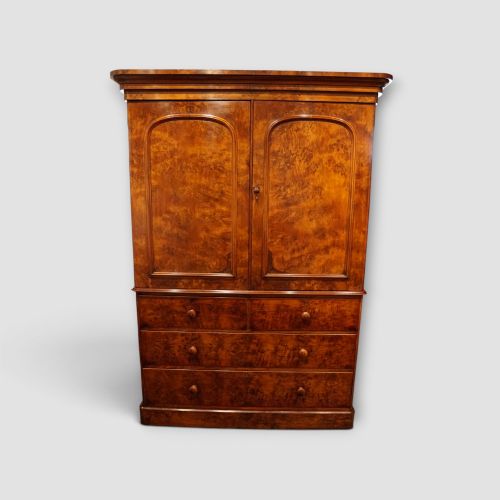
A large walnut linen press combines tall cupboard doors with internal sliding trays or lower drawers, serving as a monumental piece of bedroom storage. When exploring a large walnut linen press, buyers encounter configurations ranging from traditional multi-door wardrobes to combination presses built during the Victorian and Edwardian eras.
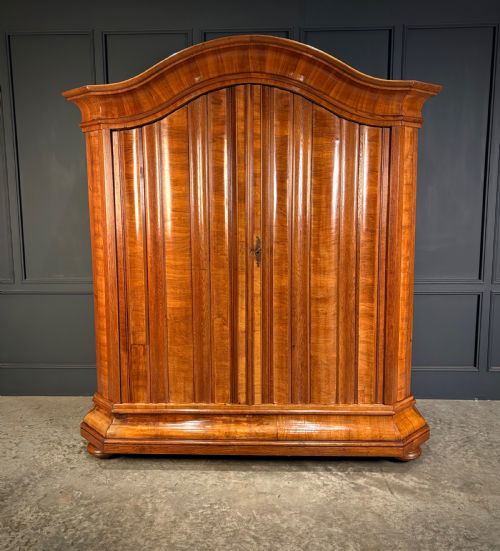
The material palette spans straight-grained walnut, burr walnut, and satin walnut, often complemented by oak and iron internals. Pieces originate from diverse stylistic traditions, including Victorian, Edwardian, and Dutch Baroque influences, alongside Continental and Italian forms.
Most examples date from the nineteenth century, featuring robust construction designed to hold household linens and garments. These tall cabinets anchor a space through their imposing height and rich, figured timber surfaces.
Materials and construction
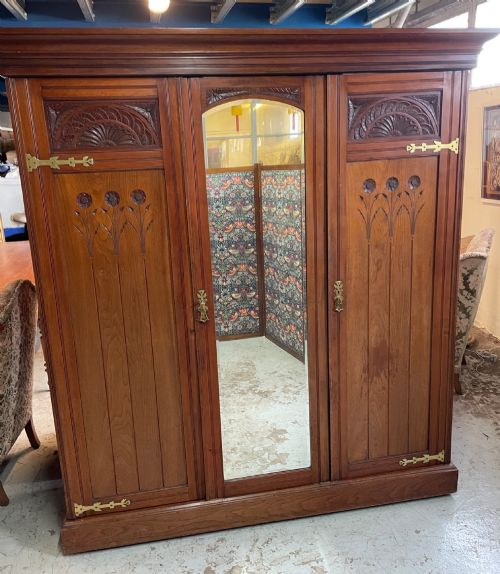
Cabinet makers utilised solid walnut and decorative burr walnut veneers applied to secondary timbers such as oak, creating striking figured surfaces on primary doors and drawer fronts. Brass hardware and glass mirror panels appear frequently as functional and decorative additions.
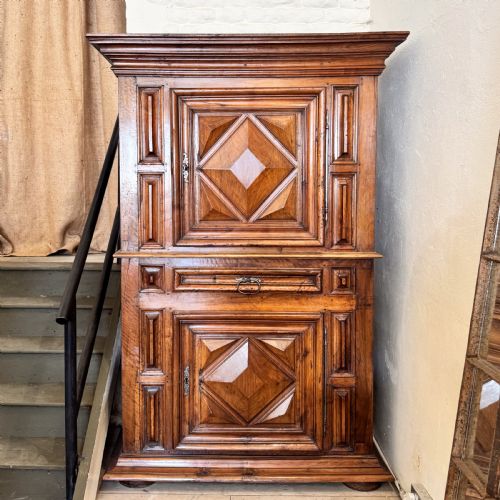
Structural joinery relied on traditional framing techniques to support the heavy proportions of triple wardrobes and armoires. Carved elements and marquetry inlay ornament specific Continental and Dutch pieces, marking distinct regional workshops.
Large Walnut Linen Press Retail Price Guide 2026
Typical asking prices for large walnut linen press among the pieces listed under this phrase on Sellingantiques today, from the lower quarter to the upper quarter. They describe what is for sale here now, not the wider market.
Some sentry box combination wardrobes hide surprising interior configurations behind narrow doors designed for tight Victorian dressing rooms.
Evaluating quality and proportion
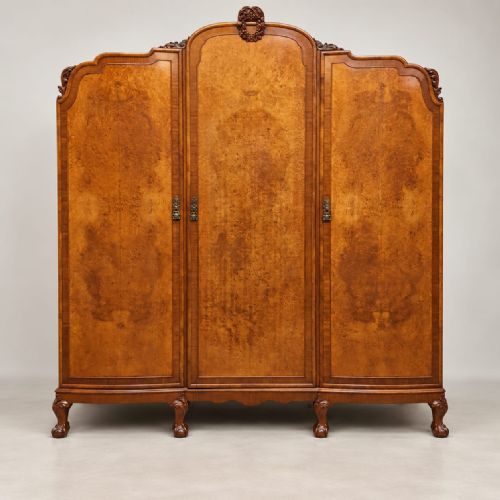
The distinction between standard storage and finer examples rests upon the selection of burr walnut veneers and the crispness of carved detailing. Superior pieces display book-matched grain patterns that flow evenly across wide door panels.
Proportion and internal configuration define the architectural merit of each cabinet, with triple sections and bow fronts commanding greater visual weight. The integrity of original brass fittings and the smooth operation of internal linen slides further separate exceptional examples.
The Large Walnut Linen Press Glossary
- Linen press
- A tall cabinet traditionally used for storing folded linen on internal sliding trays, often set above a chest of base drawers. These pieces evolved into comprehensive wardrobe storage by the nineteenth century.
- Burr walnut
- A wood harvested from the wart-like growths on walnut trees, yielding complex, swirling grain patterns. Cabinet makers prized this veneer for high-status furniture fronts.
- Compactum
- A multi-compartment wardrobe designed to house various types of clothing in dedicated sections. They incorporate hanging space, drawers, and linen shelves within a single unified carcass.
- Armoire
- A large European wardrobe or cupboard with doors enclosing shelving or hanging space. Continental and French examples often feature deep architectural cornices and carved walnut panels.
- Marquetry
- The art of applying decorative veneer pieces to a structure to form intricate geometric or floral designs. Dutch pieces frequently showcase this detailed woodworking technique.
Large Walnut Linen Press: Frequently Asked Questions
What is a linen press?
A linen press is a tall storage cabinet designed specifically to keep household textiles flat and organised on interior sliding shelves. The upper section houses these trays, while the lower section typically contains deep drawers.
Over time, many of these presses evolved into combination wardrobes that incorporate hanging space alongside the traditional linen slides.
How do I date a walnut wardrobe?
Dating relies on examining the construction methods, hardware, and prevailing stylistic influences of the period. Victorian and Edwardian examples often feature substantial proportions and machine-sawn secondary timbers, whereas eighteenth-century Dutch pieces show hand-cut joinery and distinct marquetry.
Secondary woods like oak and satin walnut, combined with specific brass handles, provide further clues to the manufacturing decade.
Where should I place a large armoire?
These imposing cabinets require a wall capable of supporting significant height and depth without overwhelming the floor plan. Bedrooms and dressing rooms offer the most logical setting, matching their original domestic purpose.
Ensure adequate clearance for wide opening doors and check ceiling heights before positioning a triple wardrobe or Continental armoire.
How do I care for walnut furniture?
Walnut timber benefits from stable indoor humidity levels away from direct sunlight and heat sources to prevent veneer lifting or wood splitting. Regular dusting with a soft, dry cloth preserves the polished finish of the burr grain.
Avoid silicone-based polishes and apply occasional traditional wax to nourish the antique wood surface.