

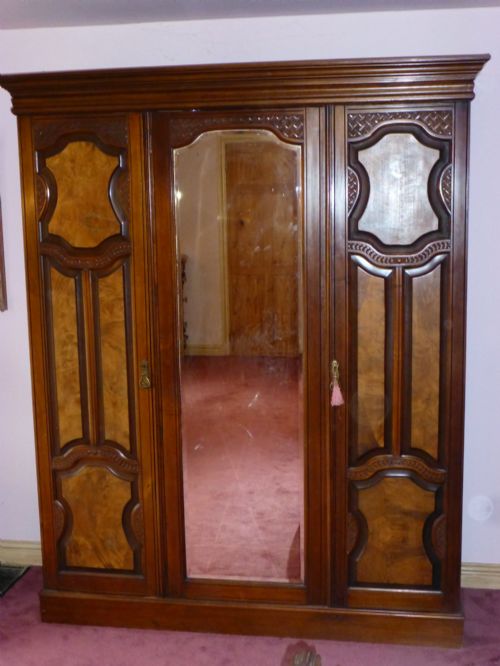


Victorian Walnut Compactum
A victorian walnut compactum offers serious bedroom storage in grand timber, combining hanging space, drawers and shelving within one imposing piece.
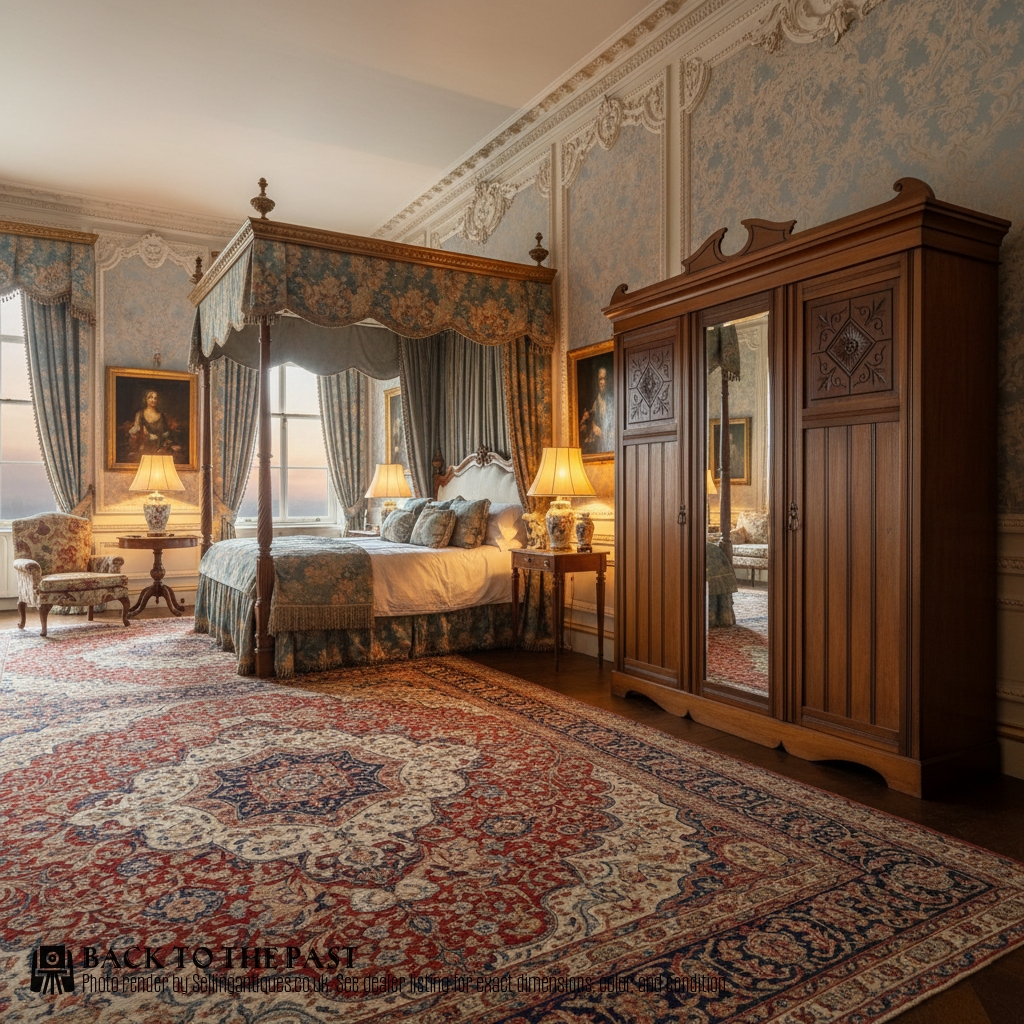
Victorian Walnut Compactum
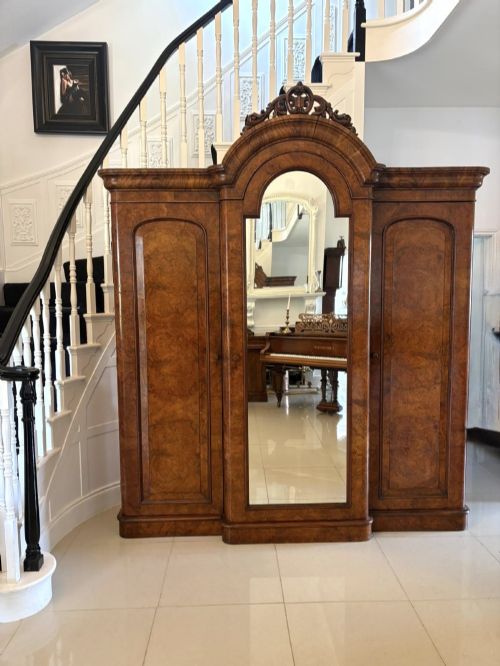
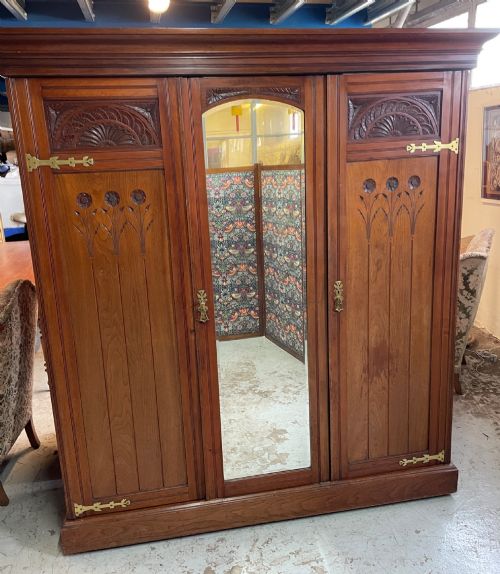
A victorian walnut compactum is a large multi-functional wardrobe designed to house a complete gentleman's or lady's wardrobe within a single fitted carcass. These substantial pieces typically incorporate central linen presses, sliding trays or drawers flanked by full-length hanging compartments.
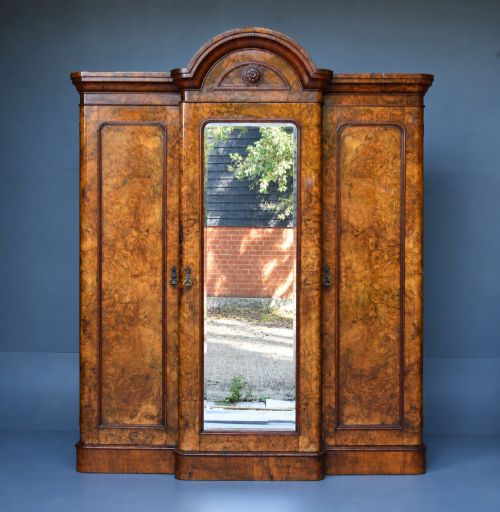
Most examples found here date from the mid to late nineteenth century, spanning the period from eighteen sixty to eighteen ninety. The dominant format is the triple wardrobe, often featuring mirrored central doors and breakfront profiles.
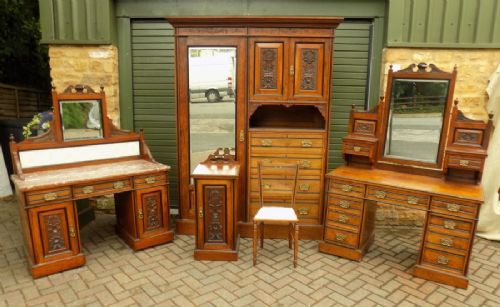
Makers utilised rich timbers such as burr walnut and figured walnut to create imposing bedroom suites. Variations include combination pieces incorporating ash, satin walnut, maple and marble dressing surfaces.
Distinguishing Quality
The standard of timber selection largely defines the hierarchy of these wardrobes, with matched burr walnut veneers demonstrating superior craftsmanship compared to plain plain walnut surfaces.
Internal complexity and original configurations separate standard production from bespoke commissions, particularly where custom linen slides, compartmentalised drawers and secure locking mechanisms remain intact.
Victorian Walnut Compactum Retail Price Guide 2026
Typical asking prices for victorian walnut compactum among the pieces listed under this phrase on Sellingantiques today, from the lower quarter to the upper quarter. They describe what is for sale here now, not the wider market.
Listings demonstrate that burr walnut is the primary timber choice, complemented by rarer appearances of ash, satin walnut, and maple.
Holland and Sons·H Ogden Manchester·Waring And Gillow·Gillow and Co·James Shoolbred and Co
The Victorian Walnut Compactum Glossary
- Compactum
- A multi-functional wardrobe designed with internal divisions for hanging, folding and drawer storage. It maximises bedroom organisation within a single integrated footprint.
- Burr Walnut
- A decorative wood veneer harvested from the irregular growth knots of the walnut tree. It produces highly prized, swirling grain patterns across large cabinet doors.
- Breakfront
- A cabinetry format where the central section projects forward from the flanking wings. This architectural arrangement creates depth and shadow on large wardrobes.
- Linen Press
- An enclosed piece of furniture containing sliding internal trays designed for flat garments and linens. It forms the central column in many larger wardrobe combinations.
- Sentry Box
- A narrow single-door wardrobe configuration designed for tight spaces. This vertical format maintains hanging capacity within a minimal footprint.
Victorian Walnut Compactum: Frequently Asked Questions
What is a compactum wardrobe?
A compactum is a specialised multi-functional wardrobe designed to hold hanging garments, folded clothes, and linen all within one fitted carcass.
These pieces divide the interior space into dedicated sections, usually featuring hanging space on the sides and drawers, shelves, or sliding trays in the middle.
How do I date a walnut wardrobe?
Dating relies on architectural styling, construction techniques, and the specific application of veneers across the facade.
Mid-nineteenth-century examples often display simpler lines, whilst pieces from eighteen eighty onwards frequently incorporate breakfront profiles, carved details, and mirrored doors.
Will a triple wardrobe dismantle for moving?
Most large nineteenth-century wardrobes were constructed to break down into manageable modular sections for transport and installation.
Typically, the piece disassembles into a heavy cornice, a base plinth, two hanging wings, and a central carcass component held together by internal bolts.
How do I care for burr walnut?
Walnut timber requires stable indoor humidity and protection from direct sunlight to prevent the decorative veneers from drying out or fading.
Regular dusting with a dry lint-free cloth and occasional application of traditional beeswax helps maintain the natural lustre of the polished surface.