


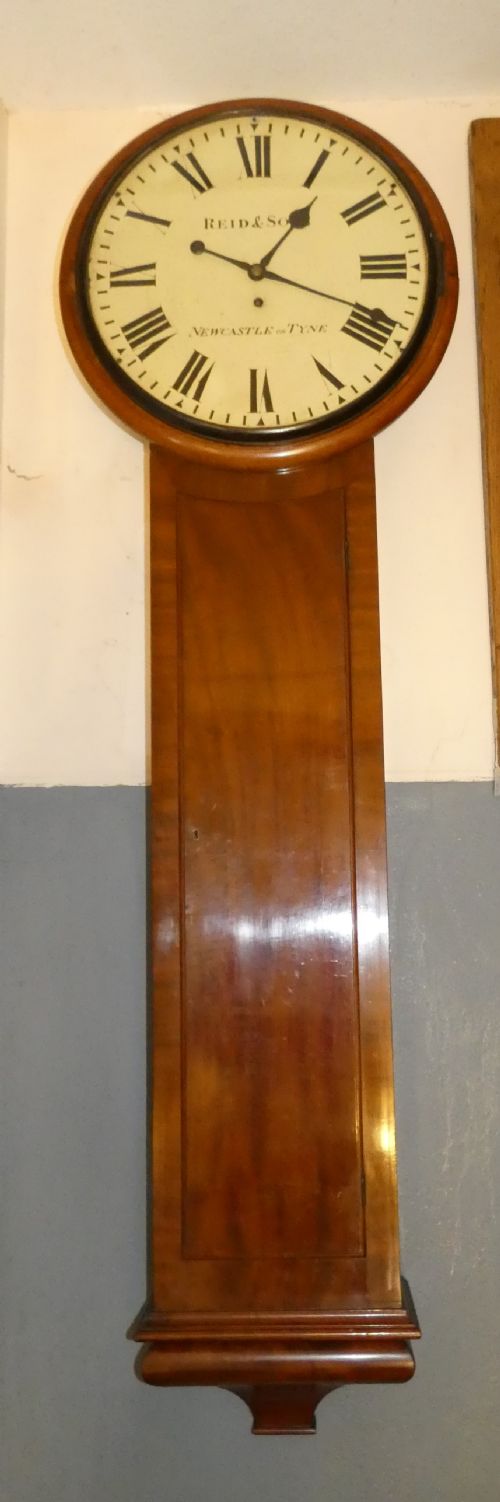


Large Vintage Wall Clock
A large vintage wall clock anchors a room with mechanical scale, bringing industrial heritage and architectural presence directly into modern domestic spaces.
Large Vintage Wall Clock
A large vintage wall clock serves as a focal point, drawing from utilitarian origins such as railway stations, factories, and schools. These pieces span multiple eras, including Victorian, Edwardian, and the 1930s, reflecting changing architectural and interior needs.
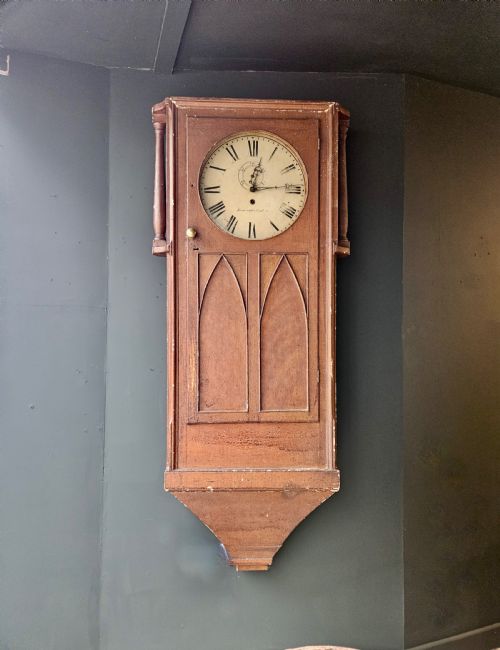
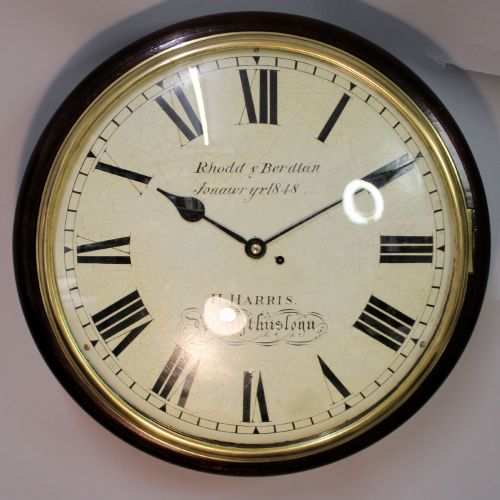
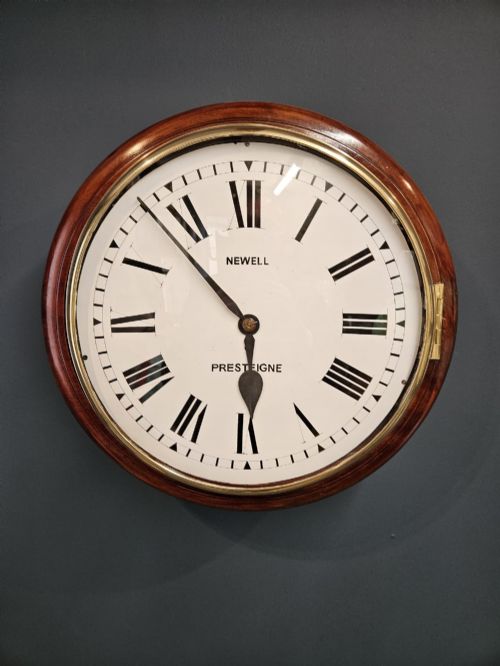
Buyers encounter various forms, from traditional fusee dial clocks housed in mahogany or walnut cases to industrial metal station pieces and rescued turret clock faces. Many specimens originate from institutional settings where legible timekeeping was essential across large spaces.
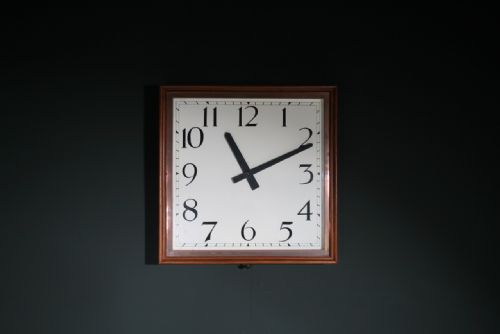
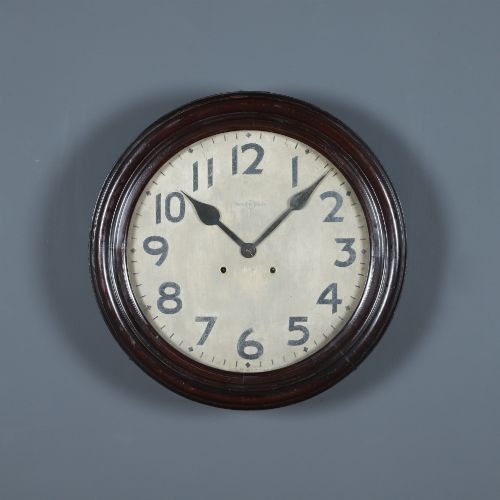
The selection ranges from carved wooden tavern clocks and octagonal wall pieces to double-sided factory indicators and ships bulkheads. Each object carries the specific aesthetic of its working environment, whether through painted numerals, brass bezels, or exposed copper frames.
Materials and construction
Cases and dials utilise dense hardwoods such as mahogany and walnut, often carved or turned to frame glass lenses securely. Metal elements incorporate brass, copper, iron, and zinc, frequently chosen for industrial endurance in public buildings.
Movements rely on traditional fusee mechanisms or electric synchronous systems like Smiths Sectric, depending on the decade of manufacture. Dials feature painted wood, enamel, or reverse-printed glass, designed for visibility from a distance.
Factors influencing quality
Quality rests in the original integrity of the movement, the preservation of the dial, and the grade of timber or metal used in the housing. High-grade fusee movements and untouched enamel faces represent superior craftsmanship compared to later replacements.
The clarity of lettering, the presence of original paint or patination, and the authenticity of institutional markings distinguish exceptional pieces. Structural soundness in large wooden cases ensures the heavy mechanical components remain properly supported.
Henry Harris of Monythuslwyn·Joyce Whitchurch·Josef Herzog·Palmer and Co·Smiths of London·Camerer Cuss
The Large Vintage Wall Clock Glossary
- Fusee
- A conical pulley used in clock movements to maintain even force as the mainspring unwinds. This mechanism ensures consistent timekeeping across the duration of the wind.
- Turret clock
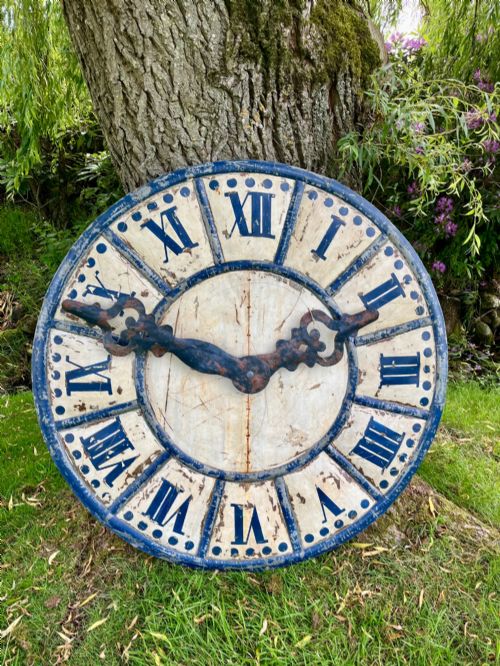
- A large clock designed for placement in a tower or exterior wall of a public building. These dials are oversized to enable reading from a distance.
- Dial clock
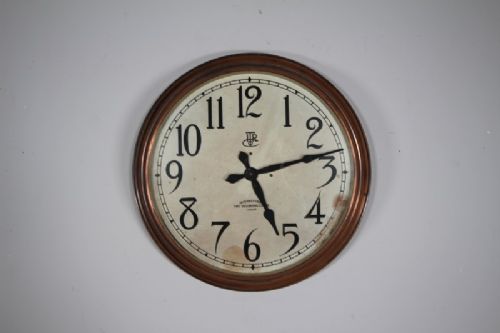
- A wall clock dominated by a prominent face with minimal case framing. They were standard in offices, railways, and schools.
- Bulkhead clock
- A rugged timepiece engineered for marine use on ships. Their waterproof housing and secure screw bezels protect the movement from moisture and vibration.
- Aneroid barometer
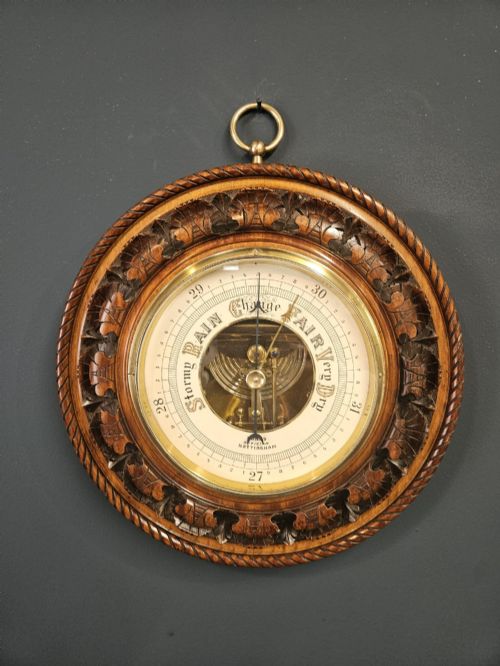
- An instrument for measuring atmospheric pressure without liquid. They frequently accompany clock dials in scientific and domestic wall instruments.
Large Vintage Wall Clock: Frequently Asked Questions
Where should I hang a large wall clock?
These clocks require a sturdy wall capable of supporting significant weight, particularly models housed in dense mahogany or iron frames. Position them at eye level in rooms with high ceilings to allow the dial proportions to balance the space.
Avoid areas exposed to excessive moisture or direct sunlight that might degrade painted timber dials and antique glass lenses over time.
How do fusee movements work?
A fusee movement uses a conical drum linked to the mainspring via a fine chain or cord. As the spring loses tension, the chain moves to a wider section of the cone, maintaining steady torque.
This clever mechanical device ensures the clock maintains accurate time throughout its running cycle without losing speed as the power diminishes.
Are these clocks suitable for daily use?
Many vintage wall clocks remain fully operational and keep reliable time when properly maintained. Fusee and mechanical models require regular winding, while electric variants from later decades operate via mains power.
Professional servicing helps preserve delicate internal gears and ensures the escapement functions correctly within historic housings.
How do I identify the age of a wall clock?
Dating relies on examining the materials, case construction style, and dial typography. Victorian and Edwardian examples often feature handcrafted wooden cases and hand-painted wooden or iron dials.
Later pieces from the 1930s frequently incorporate stamped metal bezels, electric movements, and institutional lettering associated with municipal buildings and transport networks.