


Bronze Wall Clock
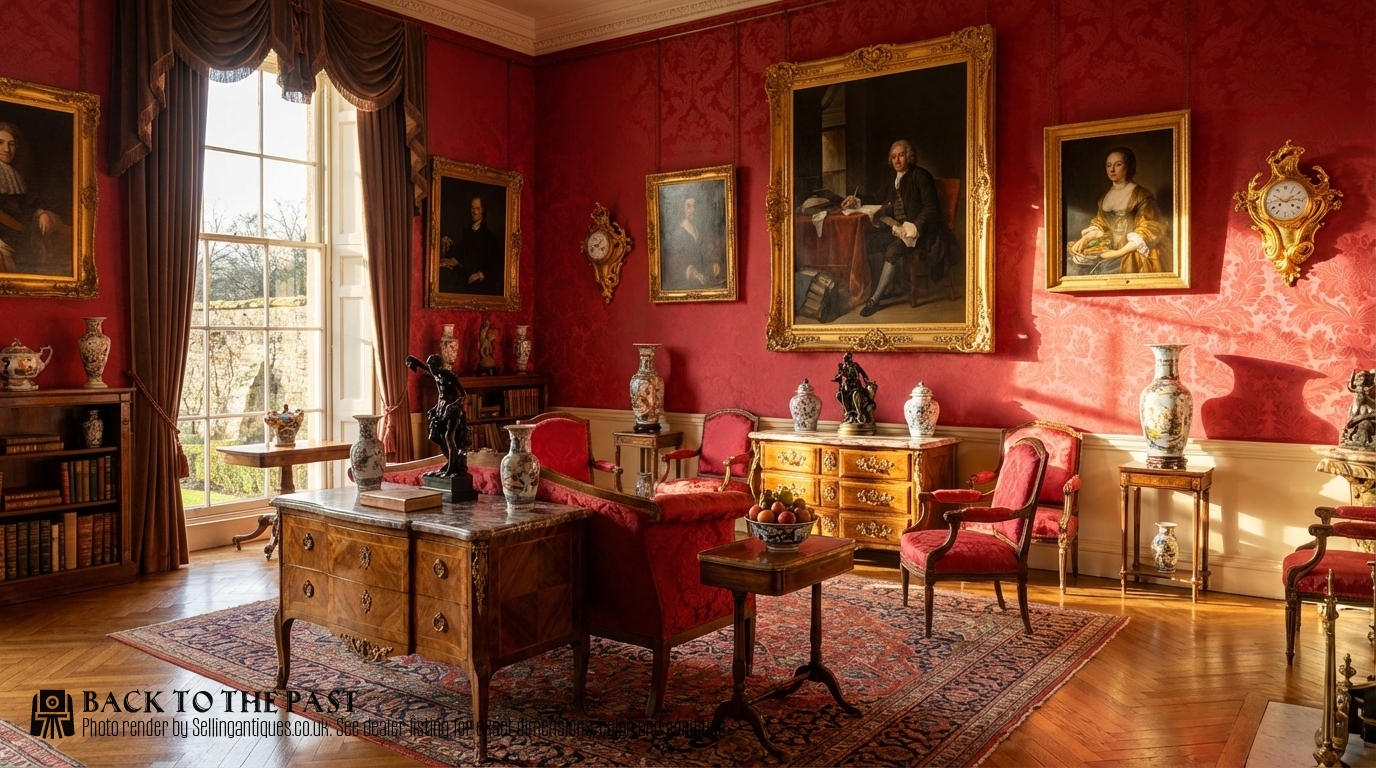
These heavy, decorative timepieces deliver formal presence to a room, ranging from ornate French cartel clocks to English factory pieces.
Bronze Wall Clock
A bronze wall clock brings substantial weight and intricate metalwork to an interior, most frequently appearing in French styles such as Rococo, Louis XVI, and Neoclassical designs from the nineteenth century.
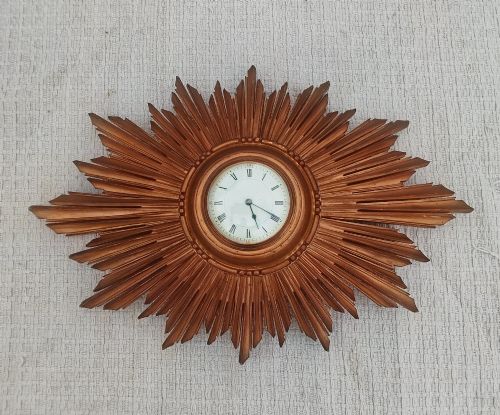
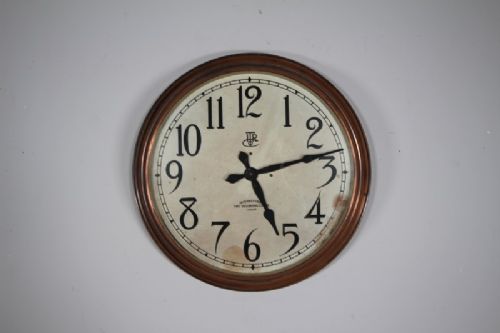
The selection here spans decorative cartel clocks cast in gilt bronze or ormolu, alongside occasional divergent forms like English factory clocks, star bursts, and Swiss Neuchatel pieces.
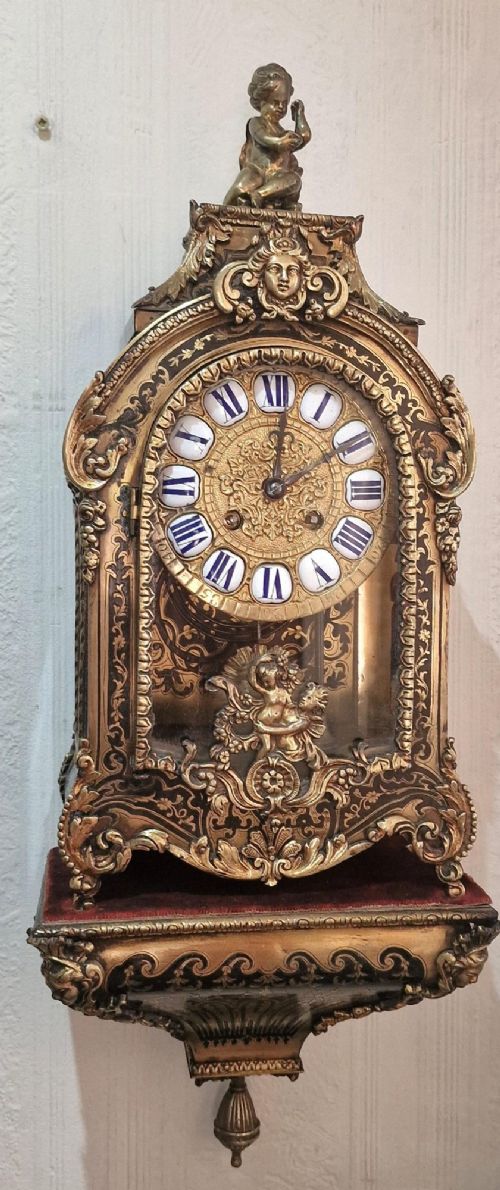
Buyers seeking this phrase encounter wall-mounted cartel clocks featuring elaborate chased foliage, asymmetrical scrolls, and glass-covered enamel dials framed in metal.
Judging the standard of execution
Quality rests primarily on the crispness of the chasing and the depth of the metal casting, where superior examples exhibit sharply defined foliage and scrolls rather than soft edges.
The integration of the original bracket and the preservation of the surface gilding separate exceptional workshop pieces from standard commercial production.
Among the formal gilt cartel clocks, a pair of fierce dragons guards one massive bronze wall clock.
HENRI MARC OF PARIS·Henri Dasson·Japy Freres·Raingo Freres·Samuel Marti
The Bronze Wall Clock Glossary
- Cartel clock
- A wall-mounted clock enclosed in an ornamental metal case, popular in France during the eighteenth and nineteenth centuries.
- Ormolu
- Finely ground high-carat gold applied to a bronze base using a mercury amalgam, creating a rich golden finish.
- Boulle
- Marquetry technique utilising tortoiseshell and brass inlay, named after the famous cabinetmaker.
- Chasing
- The manual tooling of cast metal surfaces with hammers and punches to sharpen details and create texture.
- Enamel
- Vitrified glass fused to a metal dial face under high heat, providing a smooth white background for painted numerals.
Bronze Wall Clock: Frequently Asked Questions
What is a cartel clock?
A cartel clock is an ornate wall-mounted timekeeper housed in a decorative metal frame, typically featuring elaborate cast scrollwork and foliage.
These pieces were designed to be hung directly on drawing room walls as both functional objects and prominent decorative focal points.
How do I distinguish Louis XV from Louis XVI styles?
Louis XV style pieces, often termed Rococo, display asymmetrical scrolls, flowing naturalistic curves, and exuberant organic motifs.
Louis XVI pieces introduce symmetry, straight lines, classical urns, and geometric restraint inspired by ancient architectural discoveries.
Are these clocks heavy to hang?
Cast bronze and ormolu cases possess significant weight, requiring secure wall fixings and occasionally a matching wall bracket for support.
Proper installation ensures the substantial metal frame and internal mechanism remain safely secured to structural wall studs.
What materials make up an ormolu case?
Ormolu consists of a bronze substrate finished with a layer of finely milled gold applied through a mercury-gilding process.
This technique produces the bright, enduring golden lustre characteristic of fine nineteenth-century French metalwork.